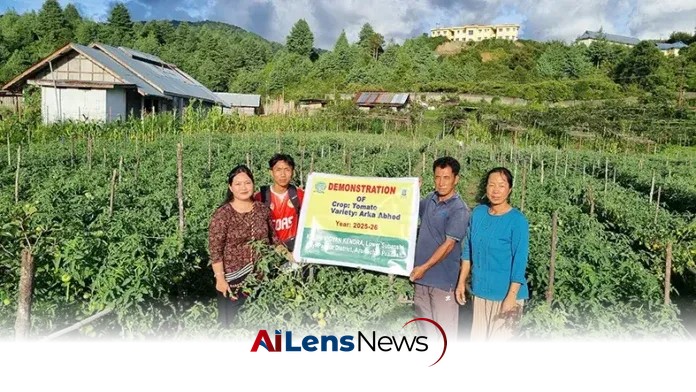


The introduction of the ArkaAbhed tomato variety is revolutionizing agriculture in Lower Subansiri, offering disease resistance and high yields for local farmers.
Itanagar, India Jul 15, 2026 ALN: ZIRO, 14 Jul: Farming in the humid, high-rainfall hills of Lower Subansiri district has never been easy. For years, tomato growers have battled erratic weather and devastating plant diseases that could wipe out entire harvests overnight. But today, a quiet agricultural revolution is taking root in the district, thanks to a remarkable new tomato variety called ArkaAbhed.
Introduced to the region by the Lower Subansiri Krishi Vigyan Kendra (KVK), this high-yielding, disease-resistant variety has quickly become a favourite among local farmers, transforming fields and breathing new life into the local agricultural economy. The introduction of ArkaAbhed represents a significant shift in farming practices, particularly in a region where traditional agricultural methods have often been outpaced by the challenges posed by climate change and plant diseases.
The journey began in 2023, when KVK scientists set up on-farm trials to see how the variety – originally developed by the Indian Institute of Horticultural Research – would handle the unique, challenging climate of the region. The results were so undeniable that by the 2024-25 season, KVK scaled up to frontline demonstrations, taking the seeds out of trial plots and putting them directly into the hands of local farmers. This proactive approach allowed farmers to witness firsthand the benefits of ArkaAbhed, fostering a sense of trust and enthusiasm around this new agricultural innovation.
What makes ArkaAbhed a genuine game-changer for the community is its sheer resilience. It is uniquely armed with ‘four-way’ resistance against the region’s most frustrating crop killers: tomato leaf curl virus, bacterial wilt, early blight, and late blight. These diseases have historically caused significant losses for farmers, leading to economic hardship and food insecurity in the region. The introduction of a variety that can withstand these threats is not just a boon for individual farmers but also a critical step toward ensuring food security in Lower Subansiri.
For the average farmer, this means peace of mind. By naturally resisting the blights that thrive in humid hill climates, the variety has drastically cut down the need for expensive chemical sprays. Farmers are spending less money on pesticides, saving gruelling hours of labour, and growing a much cleaner, safer product for consumers. This shift away from chemical dependency is also aligned with global trends towards sustainable agriculture, where the emphasis is on reducing chemical inputs and promoting environmentally friendly farming practices.
The financial rewards have been equally striking. ArkaAbhed boasts a massive yield potential of 70 to 75 tonnes per hectare. The tomatoes themselves are firm, beautifully shaped, and weigh around 90-100 grams. Because they are so firm, they have an exceptionally long shelf-life, meaning they don’t bruise or spoil during the bumpy journey along mountain roads to distant markets. Farmers can now sell their produce at premium prices without the constant fear of post-harvest losses. This economic upliftment is crucial for the farming community, which has often struggled to make a sustainable living due to the unpredictability of traditional crops.
“For a long time, our farmers were trapped in a cycle of heavy pesticide use just to save their crops from wilt and blight,” said a representative from the KVK. “Watching ArkaAbhed succeed, moving from small test plots in 2023 to thriving, abundant fields this past year, has been incredibly rewarding. It proves that when you give farmers the right, climate-resilient tools, they can completely transform their livelihoods.” This sentiment is echoed by many farmers who have already begun to see the benefits of adopting ArkaAbhed in their fields.
The implications of ArkaAbhed's success extend beyond immediate financial gains. The introduction of this variety has the potential to reshape the agricultural landscape of Lower Subansiri. As farmers become more confident in their ability to produce high-quality tomatoes, they may explore expanding their market reach, potentially exporting to larger cities or even other states. This could lead to an increase in local employment opportunities and stimulate the regional economy.
Moreover, the success of ArkaAbhed could inspire further research and development of other climate-resilient crops suitable for the region. As climate change continues to alter agricultural conditions worldwide, the need for varieties that can withstand such changes is becoming increasingly urgent. The work done by KVK in partnership with the Indian Institute of Horticultural Research could serve as a model for other regions facing similar challenges.
Building on this momentum, the KVK plans to continue its hands-on training and technical support, ensuring that more families across the district can access these high-performing seeds and secure a more prosperous, sustainable farming future. Workshops and training sessions are being organized to educate farmers on best practices for cultivating ArkaAbhed, as well as on pest management and post-harvest handling techniques. This comprehensive support system is essential for maximizing the benefits of this new variety.
As the agricultural landscape of Lower Subansiri continues to evolve, the story of ArkaAbhed serves as a beacon of hope for farmers everywhere. It illustrates the power of science and innovation in addressing real-world challenges and highlights the importance of investing in agricultural research and development. The success of ArkaAbhed could very well be the beginning of a new chapter in the region's agricultural history, one that promises not only resilience against climate challenges but also a pathway to economic stability and growth for the farming community.
In addition to the immediate benefits that ArkaAbhed provides, its introduction also plays a crucial role in addressing broader issues such as food security and sustainability. As the global population continues to grow, the demand for food, particularly nutritious crops like tomatoes, is expected to rise significantly. By cultivating varieties that are not only high-yielding but also resilient to diseases and climate variability, regions like Lower Subansiri can contribute to meeting this growing demand, ensuring that food supply chains remain robust and reliable.
Furthermore, the success of ArkaAbhed may lead to increased interest in agro-ecological practices that promote biodiversity and soil health. The reduction in chemical pesticide use not only benefits the farmers economically but also has positive implications for the environment. Healthier soils and ecosystems can lead to improved crop yields over time, creating a more sustainable agricultural framework for future generations.
As farmers in Lower Subansiri begin to adopt ArkaAbhed more widely, it is essential to monitor its long-term impacts on both agriculture and the local economy. Continuous assessment of the variety’s performance, along with feedback from farmers, will be crucial in optimizing its cultivation practices and ensuring that it meets the evolving needs of the farming community. This iterative process can enhance the resilience of local agriculture even further, allowing farmers to adapt to new challenges as they arise.
In conclusion, the introduction of the ArkaAbhed tomato variety in Lower Subansiri is more than just a story of agricultural innovation; it is a testament to the potential of science and community collaboration in overcoming significant challenges. As the region embraces this new chapter in its agricultural journey, the lessons learned from ArkaAbhed could resonate far beyond the hills of Lower Subansiri, inspiring similar initiatives across other regions grappling with the impacts of climate change and agricultural sustainability.
To learn more about the latest developments in Crime & Law, stay updated with our exclusive reports and analyses on AiLensNews.

