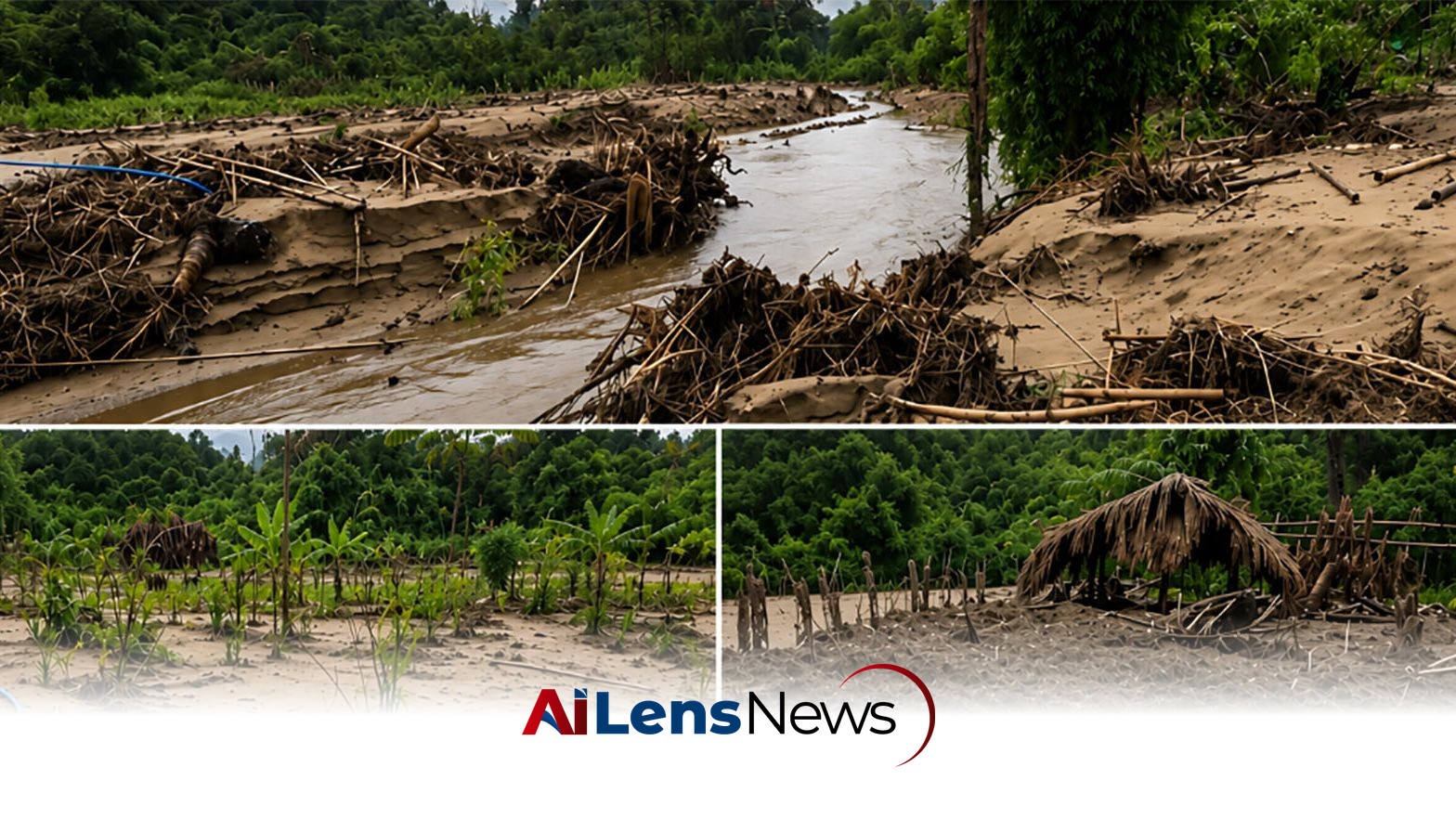


Historic Ledum village, known as the 'rice bowl' of East Siang, faces an uncertain future after flash floods destroy farmland and disrupt agriculture.
Itanagar, India Jul 14, 2026 ALN: The historic Ledum village, established in 1724 and recognized as the 'rice bowl' of East Siang district, is now confronting an uncertain future. A recent flash flood has washed away large stretches of farmland, leaving behind massive deposits of silt, stones, and sand.
The village, which has been a significant producer of high-quality rice for the entire region, has been left in shambles following a devastating cloudburst that triggered flash floods on June 28. This natural disaster has ravaged the agricultural landscape, which is crucial for the sustenance of many local communities. The loss of arable land not only threatens the immediate food supply but also jeopardizes the economic stability of the region, which relies heavily on agriculture.
Known for its rich agricultural heritage, Ledum has long been regarded as the primary source of rice for hundreds of villages in the district. Traditionally, both men and women would rise early each morning during the farming season to cultivate rice and various other crops. However, this year, farming activities have come to a grinding halt due to the extensive devastation caused by the floods. The community’s reliance on agriculture for their daily sustenance and income has put them in a precarious position, as they face the daunting task of rebuilding their lives from the ground up.
East Siang, one of the most prosperous districts in terms of agriculture and horticulture in the state, is among the worst-hit areas by the trail of destruction left by the flash floods. The flooding has not only affected Ledum but has also impacted neighboring villages, further complicating recovery efforts. Several feet of silt and sand deposits have rendered cultivation impossible, leaving a large number of farmers in despair. The flooding has obliterated years of hard work and dedication, and the psychological toll on the community is profound. Many families are left grappling with anxiety about their future and the well-being of their children.
The impact of the floods extends beyond just the immediate loss of crops. The livelihoods of many families are at stake as the agricultural sector is a primary source of income for the residents of Ledum and surrounding areas. The community, once vibrant and bustling with agricultural activities, now faces a bleak outlook as they assess the damage and contemplate the future. The loss of crops means that many families will struggle to meet their basic needs, leading to potential food insecurity and increased reliance on external aid.
Local authorities and agricultural experts are now working to evaluate the extent of the damage and explore potential recovery strategies. Initial assessments indicate that the recovery process will be long and complex, requiring coordinated efforts from government agencies, NGOs, and the community itself. Experts emphasize the need for a comprehensive approach that includes not only immediate relief but also long-term strategies for sustainable agricultural practices that can withstand future climate-related challenges.
As the villagers of Ledum begin to pick up the pieces, the need for immediate assistance and long-term solutions to restore their agricultural base becomes increasingly urgent. The resilience of this community will be tested as they navigate the aftermath of this natural disaster, hoping to reclaim their status as the 'rice bowl' of East Siang. Community leaders are calling for support from the state and central governments, as well as from charitable organizations, to provide the necessary resources for recovery.
In addition to immediate food relief, there is a pressing need for agricultural inputs such as seeds, fertilizers, and tools to help farmers re-establish their fields. Local authorities are also considering the implementation of training programs to educate farmers on more resilient agricultural techniques that could mitigate the impact of future floods. This may include the introduction of flood-resistant crop varieties and improved irrigation systems that can better handle extreme weather events.
The situation in Ledum reflects a broader issue facing many agricultural communities in India, where climate change is increasingly leading to unpredictable weather patterns and extreme events. The reliance on traditional farming practices, while culturally significant, may need to evolve to adapt to these changing conditions. As such, the recovery efforts in Ledum could serve as a case study for other regions facing similar challenges.
The socio-economic implications of the floods are far-reaching. With many families dependent on agriculture, the loss of crops threatens not only food security but also the educational opportunities for children in the community. Parents may be forced to withdraw children from school to help with recovery efforts or to seek alternative sources of income. This could have long-term effects on the educational attainment and future prospects of the younger generation.
Moreover, the psychological impact of such disasters should not be underestimated. The trauma of losing one's livelihood and the uncertainty of the future can lead to increased mental health issues within the community. It is essential for recovery plans to incorporate mental health support services to help individuals cope with the emotional aftermath of the disaster.
As the government and aid organizations mobilize to provide support, it is crucial for the voices of the affected community members to be included in the recovery planning process. Their insights and experiences can guide more effective and culturally appropriate interventions that align with the community's needs and values.
In conclusion, the flash flood that devastated Ledum village serves as a stark reminder of the vulnerability of agricultural communities to natural disasters exacerbated by climate change. The road to recovery will be fraught with challenges, but with concerted efforts and support, there is hope for the community to rebuild and adapt. The resilience of the people of Ledum will be a key factor in their ability to overcome this crisis and emerge stronger, preserving their agricultural heritage for future generations.
To learn more about the latest developments in Local & Regional, stay updated with our exclusive reports and analyses on AiLensNews.

