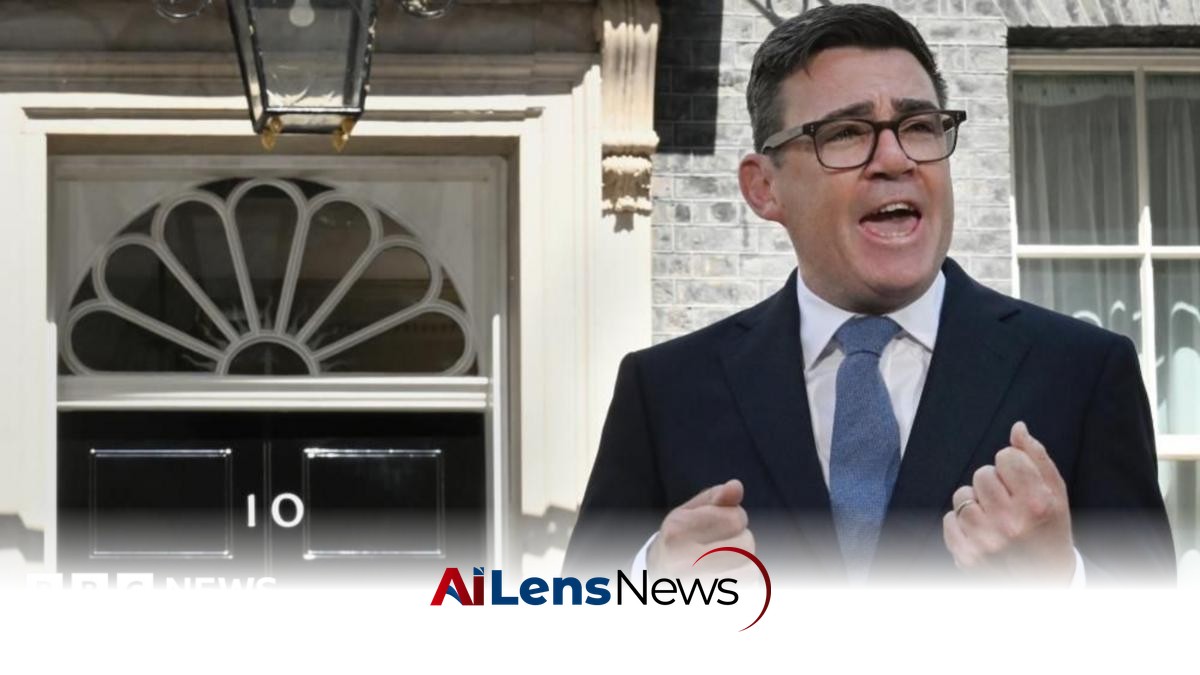


In his inaugural address, Andy Burnham promises significant changes for Britain and appoints John Healey as chancellor, aiming to tackle the cost of living crisis.
New Delhi, India Jul 21, 2026 ALN: Andy Burnham pledged to "bring back hope" to Britain, as he began his tenure as prime minister by appointing Labour stalwart John Healey as chancellor.
In his first speech to the nation in Downing Street, Burnham stated his desire to implement the "biggest changes in the last 40 years" to British politics. This ambitious declaration reflects not only his aspirations for the Labour Party but also a broader recognition of the significant challenges facing the UK in the wake of recent political upheaval and economic distress.
Burnham outlined his intention to unveil a 10-year "new plan for Britain" later this year, explaining that it would chart a path to where he believes "we all want Britain to be". This long-term vision suggests a strategic approach to governance, aiming to address systemic issues rather than relying on short-term fixes. The plan is expected to encompass various sectors, including healthcare, education, housing, and economic reform, with a focus on sustainability and social equity.
In the immediate term, Burnham promised to make announcements this week to "give people some breathing space now, some help with the cost of living" and explain how he would fund these initiatives. The cost of living crisis has been a pressing issue for many Britons, exacerbated by inflation and rising energy prices, and his administration's response will be closely scrutinized by both the public and political analysts.
Burnham also began making cabinet appointments after removing loyalists of former PM Sir Keir Starmer. Out went Rachel Reeves as chancellor, David Lammy as deputy prime minister and justice secretary, and Steve Reed as communities secretary. This reshuffle indicates a desire to distance his administration from the previous leadership while also signaling a shift in policy direction.
John Healey, who had resigned from Sir Keir's government due to a dispute over defense spending, was appointed as chancellor. His appointment is significant, as it underscores Burnham's commitment to maintaining the UK's defense spending obligations, which have been a contentious topic in recent years. Healey faces the challenge of identifying the additional funds that the previous government failed to secure for national safety, which could involve difficult decisions regarding budget allocations and priorities.
Speaking to broadcasters, Healey stated that he and Burnham would "work in lockstep to meet the fiscal rules with a buffer against uncertainty" and focus on making life more affordable for working people across the UK. This commitment to fiscal responsibility amidst economic uncertainty is crucial, as it reflects an understanding of the need for stability while also addressing the immediate needs of citizens.
Ed Miliband transitioned from energy secretary to foreign secretary, replacing Yvette Cooper, who is now the health secretary. Miliband's new role carries significant weight, especially in light of ongoing global geopolitical tensions and the need for a coherent foreign policy that aligns with Burnham's vision for the UK. Miliband described his new role as the "honor of my lifetime", a position previously held by his brother David from 2007 to 2010, which adds a personal dimension to his commitment to the role.
Shabana Mahmood remains as home secretary, while Louise Haigh takes on multiple roles, including first secretary of state and chancellor of the Duchy of Lancaster. Angela Rayner returns to a cabinet position as housing secretary, a role she previously held in Sir Keir's government. Wes Streeting, the former health secretary, is now the new defense secretary, marking a significant shift in the cabinet's composition and responsibilities.
Conservative Party leader Kemi Badenoch welcomed Burnham to his new role but criticized him for not presenting a clear government plan. She stated, "Britain needs a leader who can take difficult decisions, not a people pleaser," and condemned his promises to reverse Margaret Thatcher's policies. This critique highlights the ideological divide between the parties and sets the stage for a potentially contentious parliamentary landscape as Burnham seeks to implement his agenda.
Burnham's first policy pledge as PM was to eliminate rough sleeping in the country, a goal he had previously failed to achieve during his tenure as mayor of Greater Manchester. This acknowledgment of past shortcomings may resonate with voters, as it reflects a willingness to confront difficult issues head-on. He also expressed his ambition to assist more young people in finding employment, increase the number of council homes, and uphold the UK's defense spending commitments. These pledges align with the broader Labour Party platform of social justice and economic opportunity.
Burnham stated, "We will help people to live well, building a more preventative state, investing in people's success rather than paying for failure." This statement encapsulates his vision for a proactive government that prioritizes long-term solutions over reactive measures. He added, "Let's build a new national sense of unity, of common purpose and positivity. Let us make this the moment when Britain starts to believe again, the moment we bring back hope." This call for unity is particularly poignant in a time of political polarization and social division.
He later indicated that he would consider adjustments to the tax-free personal allowance ahead of his first budget in the autumn, an issue raised during his successful by-election campaign in Makerfield. However, he acknowledged that implementing such changes would be "difficult" given the current economic climate, reflecting the complexity of economic policymaking in a fluctuating market.
When asked if he could fund a change by reintroducing the 50p top rate of tax, he deemed it "premature to say that". The standard personal allowance currently stands at £12,570, which is the income threshold exempt from taxation. Adjusting tax allowances or rates is a politically sensitive issue that could have significant implications for his government’s support base.
Burnham also expressed his desire to reform the social care system before leaving office, criticizing Westminster's record on the issue over the past 30 years as "not defensible". Social care reform has been a longstanding issue in British politics, often overshadowed by other pressing concerns, yet it remains a critical area for many citizens, particularly the elderly and vulnerable populations.
Little more than a month after securing his return to Parliament as MP for Makerfield, Burnham had an audience with King Charles III at Buckingham Palace for nearly 35 minutes on Monday. He was invited to form a new administration, accepted, and made the short journey to Downing Street to announce his cabinet to cheers and applause from a large crowd of supporters. The public reception of his appointment may serve as a barometer for his initial popularity and the level of public support for his proposed policies.
Unlike his predecessors, Burnham chose not to use a lectern and did not have any notes as he addressed the nation in front of the iconic black No 10 door. This choice of presentation style may reflect a desire for authenticity and a connection with the public, contrasting with the often scripted nature of political speeches.
Burnham remarked, "I'm acutely conscious that I am the sixth person in the last 10 years to walk up this street, the seventh prime minister since 2016, making this a moment for reflection and new resolution." This acknowledgment of the turbulent political landscape underscores the urgency of his mandate and the expectations placed upon him by both party members and the electorate.
He emphasized the need for his generation of politicians to rise to the new challenges, stating, "Britain needs to show the world that we can regain our stability once again, and that is our challenge – to make politics work, to make it work better." This statement reflects a broader sentiment among many voters who are seeking a return to stability after years of political turmoil.
Burnham characterized the moment as a "circuit breaker for Britain, bringing forward the biggest changes in the last 40 years - a new political model and a new economic model". This bold assertion sets high expectations for his administration and may also invite scrutiny from both supporters and detractors alike.
After concluding his speech, the new PM embraced his wife, Marie-France van Heel, and shook hands with supporters before entering No 10. The personal connection displayed in this moment may serve to humanize him in the eyes of the public and reinforce his image as a relatable leader.
Liberal Democrat leader Sir Edward Davey expressed disappointment at the lack of mention of social care, Europe, or environmental protection in Burnham's address. This critique highlights the multifaceted nature of governance and the need for a comprehensive approach to address the myriad challenges facing the country.
Reform UK leader Nigel Farage called for a general election, asserting that Burnham "cannot be allowed to make the 'biggest changes in politics for 40 years' without a mandate". This call for a general election reflects ongoing tensions in the political landscape and the differing views on democratic legitimacy among party leaders.
Green Party leader Zack Polanski urged for "bold politics", suggesting that Burnham's speech left many skeptical about his intentions to challenge the wealth and power of the establishment. This sentiment underscores the need for Burnham to not only articulate his vision but also to demonstrate a commitment to meaningful change that resonates with a diverse electorate.
To learn more about the latest developments in Politics, stay updated with our exclusive reports and analyses on AiLensNews.

