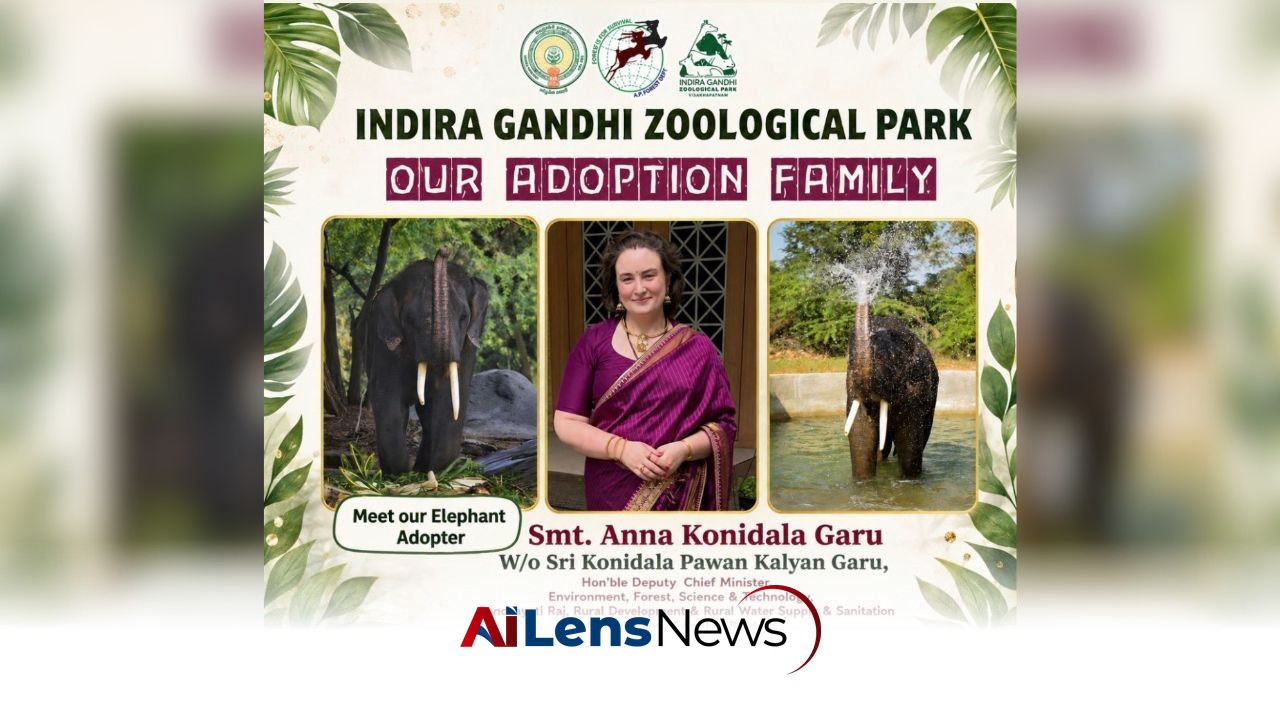


Anna Konidala, wife of Andhra Pradesh Deputy Chief Minister Pawan Kalyan, adopts an Asiatic elephant and a Royal Bengal tiger at Indira Gandhi Zoological Park.
Amaravati, India Aug 1, 2026 ALN: Visakhapatnam: Anna Konidala, wife of Andhra Pradesh Deputy Chief Minister Pawan Kalyan, has adopted an Asiatic elephant and a Royal Bengal tiger at the Indira Gandhi Zoological Park (IGZP) here for one year under its Animal Adoption Programme. This initiative not only emphasizes the importance of wildlife conservation but also highlights the role that individuals can play in supporting animal welfare.
The Indira Gandhi Zoological Park, commonly referred to as Vizag Zoo, is a prominent facility in Visakhapatnam, Andhra Pradesh. Established to promote wildlife conservation and education, the zoo is home to a variety of species, including several endangered animals. The adoption of animals by individuals or organizations is part of a broader strategy to engage the public in conservation efforts and to generate funds necessary for the upkeep and welfare of the animals housed within the zoo. This approach not only aids in financial sustainability but also fosters a connection between the community and wildlife.
G Mangamma, the curator of IGZP, announced that Anna Konidala adopted the two animals on her birthday, contributing a total of Rs 6.3 lakh towards their care and welfare for one year. This significant donation underscores the potential impact of philanthropic efforts on wildlife conservation. Mangamma expressed gratitude towards Konidala’s contributions, stating, “IGZP welcomes Anna Konidala to the Zoo’s Animal Adoption Family and sincerely appreciates her valuable contribution towards animal welfare, zoo management, and wildlife conservation.” Such acknowledgments are vital as they encourage others to consider similar contributions.
In detail, Anna Konidala allocated Rs 4.3 lakh towards the adoption of the Asiatic elephant, which is recognized as India’s National Heritage Animal. This species is particularly significant as it symbolizes the cultural and ecological heritage of the country. The Asiatic elephant is classified as endangered, primarily due to habitat loss and human-elephant conflict. The destruction of forests for agriculture and urban development, alongside poaching for ivory and other body parts, has significantly reduced their populations. By adopting an elephant, Konidala's contribution will directly support its care, nutrition, and overall wellbeing, ensuring that the animal receives the attention it requires for a healthy life.
Additionally, Rs 2 lakh was contributed towards the adoption of the Royal Bengal tiger, which serves as India's National Animal. The Royal Bengal tiger is a symbol of strength and grace, but it faces numerous threats, including poaching and habitat destruction. The illegal wildlife trade has decimated tiger populations, and their habitats are often encroached upon by human activities. The funds allocated for the tiger's care will ensure that it receives adequate nutrition, veterinary care, and environmental enrichment, which are crucial for its physical and psychological health. Proper care is essential not only for the survival of individual animals but also for the preservation of the species as a whole.
G Mangamma emphasized that such contributions not only enhance the quality of life for the animals but also reinforce the importance of wildlife conservation to the community. She remarked that Konidala’s gesture may inspire others to celebrate special occasions, such as birthdays or anniversaries, by supporting wildlife conservation initiatives. This approach can foster a culture of philanthropy and awareness regarding the plight of endangered species, encouraging individuals to think about how they can make a difference.
The Animal Adoption Programme at IGZP is designed to allow individuals, families, educational institutions, organizations, and corporate bodies to play an active role in animal welfare and wildlife conservation. Such programs are increasingly common in zoos worldwide, aiming to create a sustainable model for funding animal care while also raising awareness about the challenges faced by wildlife. By participating in these programs, adopters not only help financially but also become ambassadors for conservation efforts, spreading the message about the importance of protecting wildlife.
Furthermore, donations made under this programme are eligible for tax exemption under Section 80G(5) of the Income Tax Act, 1961, under the old tax regime, subject to applicable provisions. This tax benefit serves as an additional incentive for potential donors, making it easier for them to contribute to important conservation efforts. The financial implications of such incentives can significantly enhance the capacity of zoos and conservation organizations to undertake more extensive and impactful projects.
The implications of such adoption initiatives extend beyond immediate animal care. They play a crucial role in educating the public about the importance of biodiversity and the need to protect endangered species. By involving the community in these efforts, zoos can foster a sense of responsibility and stewardship towards wildlife. Educational programs that accompany these initiatives often include workshops, guided tours, and informative sessions that emphasize the ecological roles these animals play in their habitats, thus enhancing public understanding and appreciation of wildlife.
Moreover, the adoption of high-profile animals like the Asiatic elephant and the Royal Bengal tiger can help draw attention to broader conservation issues. As these species are often at the forefront of conservation campaigns, their adoption can serve as a catalyst for discussions about habitat preservation, anti-poaching efforts, and the need for sustainable practices that benefit both wildlife and human populations. Such discussions are vital as they can lead to increased community involvement in conservation activities and more robust policy advocacy for wildlife protection.
In summary, Anna Konidala’s adoption of an Asiatic elephant and a Royal Bengal tiger at the Indira Gandhi Zoological Park is a commendable act that highlights the intersection of personal celebration and public responsibility. It serves as a reminder of the significant role individuals can play in wildlife conservation, while also providing essential resources for the care and wellbeing of these majestic animals. As more people become aware of such opportunities, it is hoped that the collective efforts will contribute to the preservation of India’s rich wildlife heritage for future generations. The actions of individuals like Konidala can inspire a movement towards greater engagement in conservation, ultimately leading to a more sustainable coexistence between humans and wildlife.
To learn more about the latest developments in Crime & Law, stay updated with our exclusive reports and analyses on AiLensNews.

