

More
Checking your session
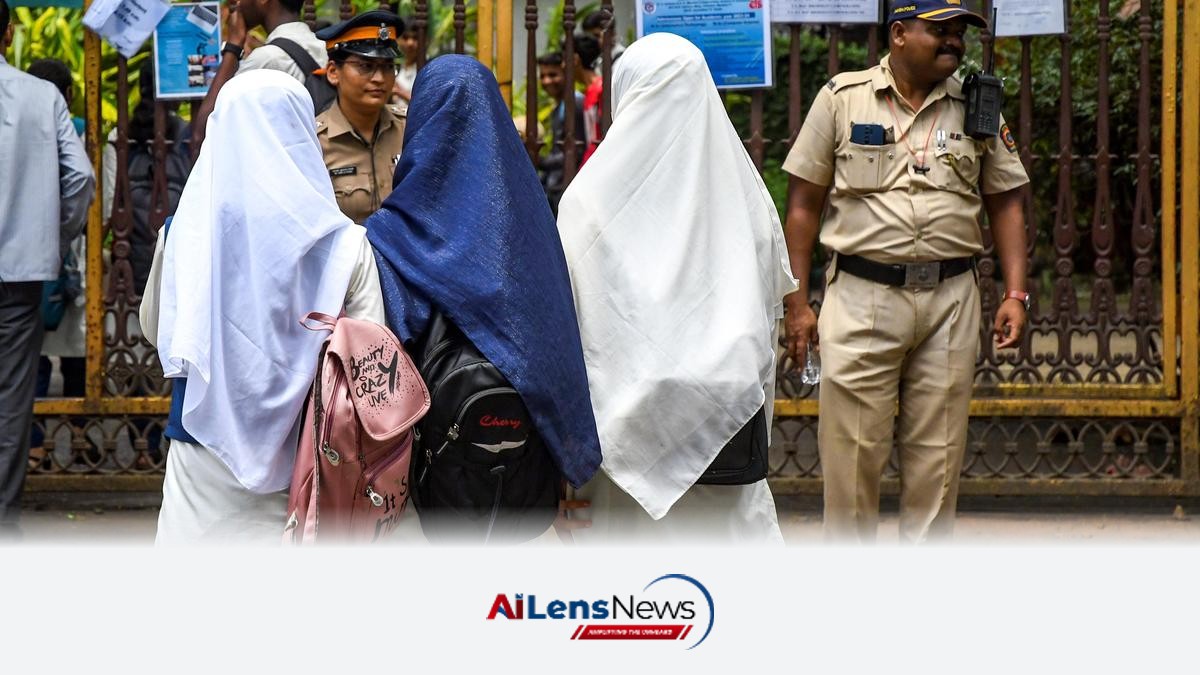



The Allahabad High Court has ruled that wearing a headscarf is not an essential religious practice in Islam, affirming school uniform policies do not violate religious freedoms.
New Delhi, India Aug 26, 2026 ALN: The Allahabad High Court recently delivered a significant ruling regarding the wearing of the hijab by Muslim women, stating that it cannot be classified as an "essential religious practice" within Islam. This decision arose from a case involving a Muslim student who sought permission to wear a headscarf while adhering to her school's uniform policy. This ruling not only addresses the specific case of the student but also touches on broader issues of religious freedom, educational discipline, and the interpretation of religious practices in the context of modern society.
The ruling was issued by a Division Bench composed of Justices J.J. Munir and Indrajeet Shukla on August 21, 2026. The case centered on a petition filed by a Class 11 student at Tagore Public School in Prayagraj, who argued that her right to wear a hijab was protected under the fundamental rights enshrined in Articles 14 and 19(1)(a) of the Indian Constitution. Article 14 guarantees the right to equality before the law, while Article 19(1)(a) provides the right to freedom of speech and expression, which the student claimed extended to her choice of religious attire.
In her plea, the student highlighted that she had been wearing the hijab at the same school since Class 6 without any prior objections from the school administration. This long-standing practice was presented as evidence of her commitment to her faith and her expectation that the school would honor her religious expression. However, the court's ruling emphasized that the mere act of wearing the hijab for several years did not create an enforceable right that would compel the school to modify its existing uniform policy.
The court noted that, upon reviewing photographs from various classes, it observed that the student was the only girl wearing a headscarf, even among her peers from the same religious community. This observation led the judges to conclude that the hijab was not a universally adopted practice among Muslim female students in that educational context. The court referenced previous judgments from other high courts, including the Bombay High Court and the Karnataka High Court, both of which had similarly ruled that the hijab does not constitute an essential religious practice in Islam. These precedents were pivotal in shaping the court's decision, highlighting a judicial consensus on the matter.
The Allahabad High Court further clarified that the absence of a hijab does not jeopardize a woman's faith or her identity as a Muslim. The judges articulated that no substantial evidence had been presented to support the claim that the hijab is an indispensable aspect of Islamic practice for women. In their view, the argument that forsaking the hijab would lead to a loss of faith was unfounded.
In its ruling, the court framed the issue as one of compliance with institutional dress codes rather than a violation of religious freedoms. The judges emphasized that the school's requirement for a uniform is a matter of institutional discipline. They argued that allowing individual students to deviate from the uniform policy based on subjective grounds would undermine the very concept of a uniform, which is designed to promote equality and unity among students. The court stated, "If individual students were permitted to deviate even slightly from the prescribed uniform on subjective grounds, it would undermine the concept of a uniform. It would transfer the authority to determine school discipline from the institution to individual students."
This ruling has broader implications for the ongoing debates surrounding religious expression in educational institutions across India. In recent years, there has been an increasing number of cases involving students' rights to express their religious beliefs through attire, particularly in schools and colleges. The hijab controversy has sparked discussions about the balance between individual rights and institutional regulations, raising questions about the role of educational authorities in defining and enforcing dress codes.
The implications of the Allahabad High Court's decision extend beyond this specific case, as it may influence future legal interpretations regarding religious attire in schools. The ruling could set a precedent for similar cases, reinforcing the notion that educational institutions have the right to enforce dress codes that promote discipline and uniformity. This could lead to further scrutiny of religious practices that are claimed to be essential, with courts potentially requiring more substantial evidence to support such claims.
Furthermore, the ruling might provoke responses from various religious and social groups, potentially leading to appeals or calls for legislative changes to protect religious expressions within educational settings. As the discourse surrounding religious attire continues to evolve, the balance between respecting individual religious rights and maintaining institutional discipline will remain a contentious issue in Indian society.
In conclusion, the Allahabad High Court's ruling underscores the complexities involved in navigating the intersection of religion, individual rights, and institutional policies. As society grapples with these issues, the legal landscape surrounding religious expression in educational contexts will likely continue to develop, reflecting the diverse perspectives and values inherent in a pluralistic society like India.
To learn more about the latest developments in Crime & Law, stay updated with our exclusive reports and analyses on AILensNews.