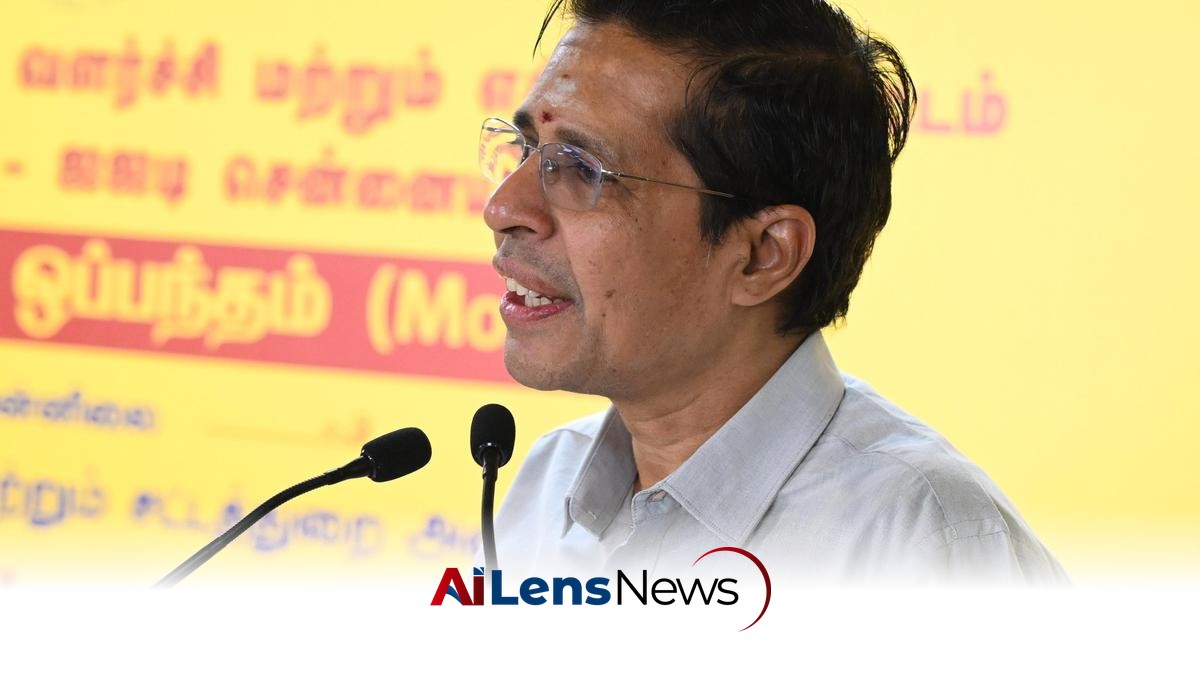


A group of 215 scholars and intellectuals criticize Priyanka Gandhi's remarks, emphasizing the importance of respectful discourse in scientific discussions.
New Delhi, India Jul 31, 2026 ALN: The recent political discourse surrounding Priyanka Gandhi Vadra's remarks in the Lok Sabha has sparked significant concern among academics and intellectuals in India. A collective of 215 concerned citizens, including Vice Chancellors of prominent universities and directors of esteemed institutions like the Indian Institutes of Management (IIMs) and Indian Institutes of Technology (IITs), issued an open letter expressing their disapproval of Gandhi's characterization of IIT Madras director V. Kamakoti as a "gaumutra expert." This remark was made during discussions on The Public Examinations (Prevention of Unfair Means) Amendment Bill, 2026, on July 28.
The letter highlights the importance of maintaining a respectful and substantive discourse in political debates, particularly when they involve figures of significant academic standing. The term "gaumutra," which refers to cow urine, has been associated with various traditional and alternative medicine practices in India, but its use in a derogatory context can undermine the scientific contributions of professionals like Prof. Kamakoti, who have dedicated their careers to advancing knowledge and technology.
In their open letter, the signatories took the opportunity to underscore Prof. Kamakoti's impressive credentials. He holds both M.S. and Ph.D. degrees in Computer Science and Engineering from IIT Madras and has a robust portfolio of over 150 research papers. His leadership in more than 50 Research and Development (R&D) projects has positioned him as a key figure in India's technological landscape. Furthermore, the letter notes that he has received numerous accolades, including the DRDO Academic Excellence Award and the Indian Electronics and Semiconductor Association Techno Visionary Award. His contributions include being a guiding force behind India’s first industry-grade microprocessor, marking him as one of the leading tech minds in the country.
This emphasis on Prof. Kamakoti's qualifications serves to reinforce the argument that academic figures should be treated with respect, irrespective of differing political ideologies. The letter argues that such respect is essential for fostering an environment where scholars can freely express their views and engage in meaningful dialogue.
The authors of the letter expressed concern that the use of dismissive labels, rather than engaging with the substance of a scholar's arguments, risks undermining the scientific discourse that is crucial for the advancement of knowledge. They contend that this type of rhetoric detracts from the critical examination of ideas, which is a cornerstone of scientific inquiry. The letter asserts that scientific temper is not just about skepticism towards unconventional ideas; it also embodies the willingness to evaluate claims objectively before forming conclusions.
Historical precedents demonstrate that many concepts once deemed implausible have eventually gained scientific validation, while widely accepted beliefs have been overturned. This underscores the importance of maintaining an open mind and fostering an environment where diverse ideas can be discussed without fear of ridicule or dismissal.
The letter's authors cautioned against the chilling effect that such political rhetoric can have on the broader scientific ecosystem in India. They warned that reducing educators and researchers to mere political soundbites could deter them from participating in essential public debates. This atmosphere of fear and ridicule can stifle innovation and discourage scholars from sharing their insights on critical issues.
Moreover, the letter emphasizes that scientists, scholars, and educators should feel secure in their ability to contribute to public discourse without the threat of being labeled or dismissed. While it is important to critique arguments and demand rigorous standards of proof, it is equally vital to uphold the integrity of scholarship itself. The authors argue that the ability to engage in constructive dialogue is essential for the growth of knowledge and the betterment of society.
In concluding their letter, the signatories made a direct appeal to the standards of parliamentary democracy, underscoring the profound influence that public representatives have over the tone of political conversations. They highlighted that disagreement is a fundamental aspect of democracy, but mockery should not replace reasoned engagement. When complex scientific questions are turned into objects of political ridicule, society loses the opportunity for informed debate and understanding.
The authors expressed hope that future discussions within Parliament will reflect values of respect and constructive engagement, emphasizing that democracy deserves nothing less. This call for a more respectful and substantive approach to discourse is particularly pertinent in an era where misinformation and polarization can easily derail meaningful conversations.
The signatories of the letter include prominent figures such as R.S. Dubey, Chancellor of the Institute of Educational Planning and Administration; V.K. Malhotra, Chairman of the Madhya Pradesh State Food Commission; Sachin Chaturvedi, Vice-Chancellor of Nalanda University; Rajiv Kumar, former Vice-Chairman of Niti Aayog; Alok K. Rai, Director of IIM Calcutta; and Rajat Moona, Director of IIT Gandhinagar, among others. Their collective voice represents a significant cross-section of India's academic and intellectual community, underscoring the importance of preserving the integrity of scholarly discourse in the face of political challenges.
In summary, the incident involving Priyanka Gandhi's remarks serves as a reminder of the critical need for respectful and substantive dialogue in political discourse, especially when it concerns figures of significant academic and scientific contribution. The open letter from concerned scholars and citizens advocates for a return to reasoned engagement, urging public representatives to foster an environment where ideas can be debated freely and respectfully, ensuring that the principles of scientific inquiry and academic integrity are upheld in the public sphere.
To learn more about the latest developments in Crime & Law, stay updated with our exclusive reports and analyses on AiLensNews.

