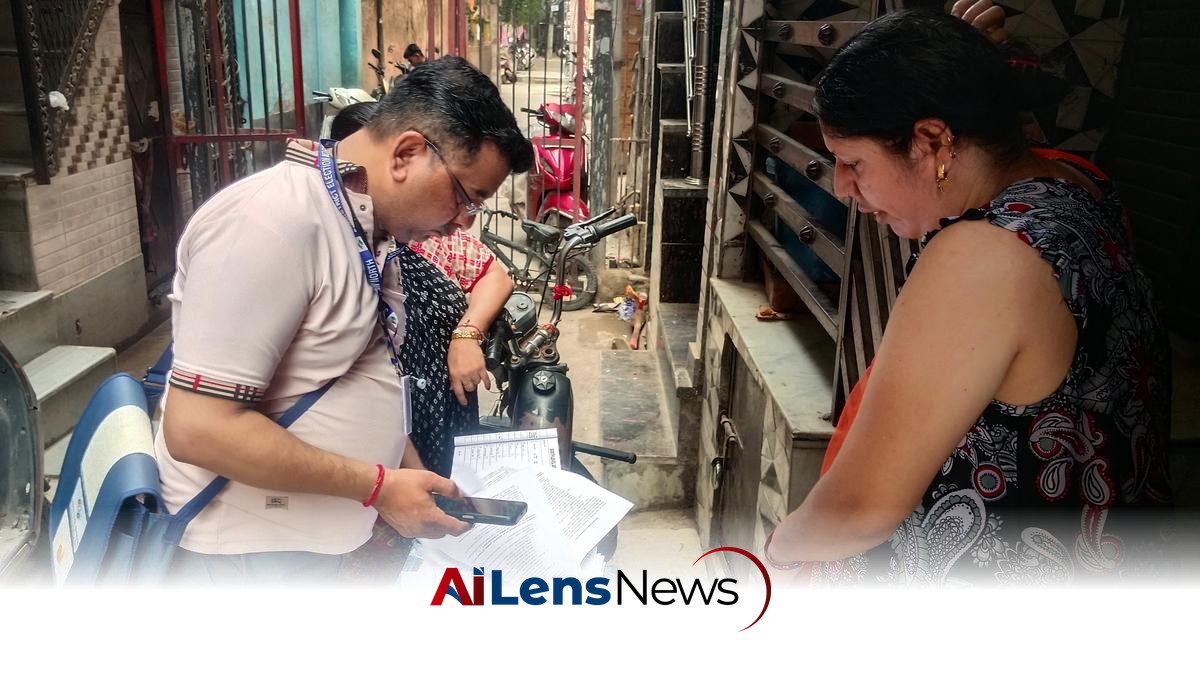


Census rehearsal introduces an open column for caste recording, shaping methodology for Census 2027 based on feedback from the test.
New Delhi, India Jul 7, 2026 ALN: The rehearsal for the second phase of the Census, which started in 16 States and Union Territories on Monday (July 6, 2026), has an “open column” for respondents to record their castes, several officials involved in the exercise told. This initiative marks a significant development in the methodology of the Census in India, as it aims to provide a more comprehensive picture of the diverse caste dynamics within the country.
While the open column allows respondents to self-identify their caste, officials have emphasized that this is merely a “pre-test” phase. The final methodology for the Census will be refined based on the feedback received during this rehearsal, which is scheduled to conclude on July 20, 2026. The implications of this exercise could be profound, as it seeks to address the long-standing demand for a more detailed enumeration of caste in India.
The castes of all residents will be recorded in the second phase of the Census, named Population Enumeration (PE). The 2027 Census is particularly noteworthy as it will be the first digital Census and the first to enumerate caste in independent India. Historically, the Census has focused on enumerating only the Scheduled Castes (SCs) and Scheduled Tribes (STs), leaving a significant portion of the population without formal recognition of their caste identities. This shift towards a more inclusive approach can be seen as a response to years of advocacy for comprehensive data on caste demographics.
The PE phase is planned to be conducted nationwide in February 2027. However, in regions such as Ladakh and certain snowbound areas of Jammu and Kashmir, Uttarakhand, and Himachal Pradesh, the enumeration process will be concluded by September 30, 2026. The final questionnaire for the Census is expected to be released by September 2026, providing clarity on how caste data will be collected and utilized.
The pre-test exercise also allowed for self-enumeration, which is a critical component of this phase. The online portal for this exercise was accessible from July 1 to July 5, limited to specific areas where the rehearsal was taking place. This approach not only empowers individuals to report their caste but also serves to test the digital infrastructure that will be utilized in the upcoming Census.
In Faridabad, Haryana, the rehearsal is being conducted across 17 enumeration blocks. Each block typically encompasses around 150 to 180 residential units, translating to a population of approximately 650 to 800 people. This localized approach allows for a focused evaluation of field procedures, digital applications, and operational arrangements ahead of the nationwide population enumeration. The office of the Deputy Commissioner in Faridabad has indicated that this pre-test is crucial for ensuring that the Census process runs smoothly when it is rolled out on a larger scale.
The PE phase in the previous Census, conducted in 2011, included 29 questions that covered a wide range of demographic, cultural, and economic parameters. These questions addressed literacy levels, migration patterns, marital status, travel to places of work, and fertility rates, among other factors. The data collected in 2011 provided valuable insights into the socio-economic landscape of India, although it was criticized for its handling of caste data.
Currently, the first phase of the Census, known as the Housing and House Listing Operations (HLO), is still pending completion in eight States, including Himachal Pradesh, Kerala, Nagaland, Tamil Nadu, Tripura, West Bengal, Assam, and Manipur. This delay raises questions about the overall timeline of the Census and the potential impact on the subsequent phases of data collection.
Another official involved in Census operations has clarified that while SC and ST communities will continue to be enumerated using established codes for communities listed under these categories, other individuals will have the opportunity to fill in their caste in the open column. Enumerators will record whatever caste identity respondents provide, which could lead to a wide array of responses, reflecting the complex caste landscape of India.
The decision to include an open column for caste enumeration has sparked considerable debate among scholars and experts. Since the Union Cabinet approved the enumeration of caste in 2025, discussions have revolved around the methodology that should be employed. Some experts advocate for an open column similar to the 2011 Socio-Economic Caste Census (SECC), while others suggest creating a standardized list of castes, akin to the approach taken by the Bihar government in its 2022-23 Caste-Based Survey.
The 2011 SECC employed an open column methodology, which resulted in the identification of over 46 lakh different “caste names.” This vast number of responses highlighted the complexities and variations in how caste is understood and articulated across different regions and communities in India. However, the Prime Minister Narendra Modi-led government has consistently criticized the reliability of the 2011 SECC's caste data, citing “errors” in data collection as a primary concern. This skepticism has influenced the current approach to caste enumeration, as the government seeks to ensure that the upcoming Census yields more accurate and meaningful data.
Historically, the enumeration of castes in India dates back to the 1931 Census, which recorded a total of 4,147 castes. The absence of a comprehensive caste enumeration in subsequent Censuses has left a gap in understanding the socio-economic conditions and needs of various communities. By reintroducing caste enumeration in the 2027 Census, the government aims to address this gap and provide a clearer picture of the demographic landscape.
The implications of accurately enumerating castes extend beyond mere data collection. They have the potential to influence policy decisions, resource allocation, and the implementation of affirmative action programs aimed at uplifting marginalized communities. As the Census approaches, the effectiveness of the methodology employed will be scrutinized, and its outcomes will likely shape the discourse on caste and social justice in India for years to come.
To learn more about the latest developments in Politics, stay updated with our exclusive reports and analyses on AiLensNews.

