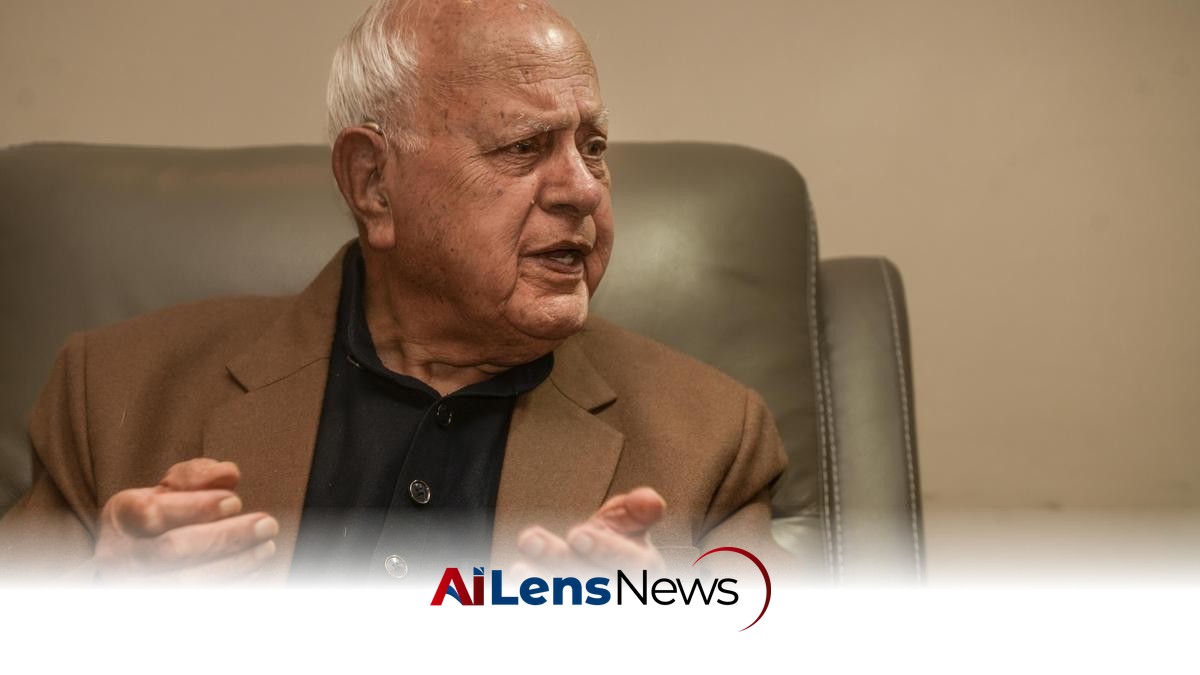


Farooq Abdullah urges INDIA bloc leaders to unite for a peaceful protest advocating for Jammu and Kashmir's Statehood and rights.
New Delhi, India Jul 10, 2026 ALN: Former Jammu and Kashmir Chief Minister and Conference (NC) president Farooq Abdullah has initiated a significant political outreach as the region continues to grapple with its unique status within the Indian Union. On July 9, 2026, Abdullah wrote a letter to members of the INDIA bloc—an alliance of non-BJP parties—and local leaders, including prominent religious and political figures like Mirwaiz Umar Farooq. The purpose of this correspondence is to rally support for an upcoming protest centered on the demand for the restoration of Statehood and constitutional rights for Jammu and Kashmir.
Abdullah's call to action comes at a critical juncture, coinciding with the opening day of the Monsoon Session of Parliament. The protest is scheduled for July 20 at Jantar Mantar in New Delhi, where the Conference aims to express its discontent over what it describes as an unconscionable delay in restoring Statehood to Jammu and Kashmir. A spokesperson for the NC emphasized that the protest transcends party lines, regions, and communities, framing it as a collective effort to uphold India's federal spirit and the Constitution.
In his letter, Abdullah reflects on the turbulent history of Jammu and Kashmir, which has been marked by conflict and political strife. He asserts that the people of the region have chosen a path of hope, opting for democratic processes and constitutional means to express their aspirations. "We deserve to be treated with the same dignity and respect," he stated, underscoring the need for solidarity among political leaders across the country. This call for unity is not only a plea for support but also an appeal to the democratic conscience that binds various political entities together in service to their constituents.
The context of this protest is rooted in the dramatic political changes that occurred on August 5, 2019, when the Government of India abrogated Article 370 of the Constitution. This article had granted special autonomy to Jammu and Kashmir, allowing it to operate with a degree of independence not afforded to other states. The abrogation led to the bifurcation of the state into two Union Territories—Jammu and Kashmir, and Ladakh—effectively stripping it of its prior status and legislative powers. This decision was met with widespread criticism and protests, both within the region and from various political factions across India.
In his correspondence, Abdullah pointedly recalls the promises made by the ruling Bharatiya Janata Party (BJP) regarding the restoration of Statehood. He emphasizes that the people of Jammu and Kashmir have remained patient and dignified in their response to these assurances, opting for electoral participation rather than street protests. The NC leader highlighted the peaceful conduct of the 2024 elections, where an elected government now functions in the region, yet he laments that Statehood remains elusive.
Abdullah's letter articulates a deep sense of frustration regarding the lack of clarity from the central government about the timeline for restoring Statehood. He argues that the delay is not merely a bureaucratic oversight but an affront to the democratic will of the people of Jammu and Kashmir. By reducing the region's status to that of Union Territories, he posits, the central government has undermined the very foundations of federalism in India, where states are expected to have a certain level of autonomy and self-governance.
In preparation for the July 20 protest, the NC is also organizing gatherings in Srinagar on July 11 and 13. These events are intended to galvanize local support for the demands for Statehood and constitutional guarantees. Abdullah's insistence that the upcoming protest will be peaceful and constitutional is significant, particularly in light of the region's history of civil unrest and violence. By framing the protest as a constitutional right, he aims to assert the legitimacy of the demands being made by the people of Jammu and Kashmir.
The implications of this protest extend beyond the immediate political landscape of Jammu and Kashmir. It raises fundamental questions about the nature of federalism in India, the rights of states within the Union, and the ongoing relationship between the central government and regional political entities. The Conference's efforts to rally support from other political parties signal a potential shift toward greater unity among opposition groups in advocating for the rights of Jammu and Kashmir.
Moreover, the protest could serve as a litmus test for the current government's approach to regional autonomy and its responsiveness to the concerns of various communities within India. As the political climate evolves, the outcomes of such protests may influence future discussions about governance, representation, and the balance of power between the center and the states.
Abdullah's appeal for solidarity also touches on broader themes of democratic engagement and accountability. By urging leaders from across the political spectrum to join the protest, he is not only seeking to amplify the voice of Jammu and Kashmir but also to remind the nation of the importance of upholding democratic principles and ensuring that all regions are treated with equity and respect. The call to action resonates with the historical struggles of various marginalized groups within India, highlighting the ongoing need for vigilance in protecting constitutional rights and ensuring that the promises made to citizens are fulfilled.
In conclusion, Farooq Abdullah's letter to the INDIA bloc and local leaders represents a significant moment in the ongoing discourse surrounding Jammu and Kashmir's political status. As the Conference prepares for its protest, the implications of this movement will likely reverberate throughout the political landscape of India, prompting discussions about federalism, regional autonomy, and the importance of upholding democratic values in a diverse nation. The upcoming events will be closely watched, not only for their immediate impact but also for their potential to shape the future trajectory of Jammu and Kashmir within the Indian Union.
To learn more about the latest developments in Politics, stay updated with our exclusive reports and analyses on AiLensNews.

