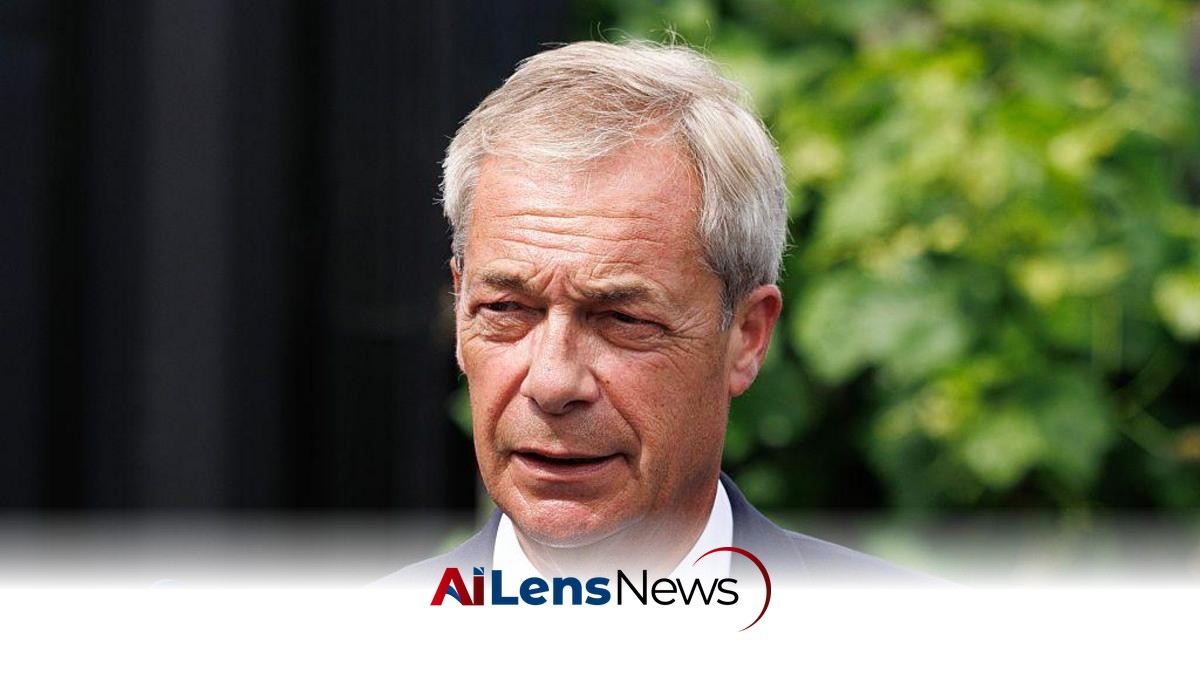


The by-election in Clacton has been triggered following Nigel Farage's resignation, with a likely date set for August 13.
New Delhi, India Jul 9, 2026 ALN: A by-election in Clacton has been formally triggered, following Reform UK leader Nigel Farage's resignation as MP.
Reform MP Lee Anderson moved the writ in the Commons on Thursday morning, meaning there will be a likely by-election date of Thursday, 13 August, though this has yet to be confirmed. The by-election comes at a time of significant political scrutiny and tension, particularly surrounding Farage's financial dealings and the implications of his resignation.
Farage has stated he will re-fight the Essex seat in what he billed as a "people versus the establishment" by-election. This framing is significant, as it taps into a broader narrative that Farage has cultivated throughout his political career, positioning himself as an outsider challenging the established political order. His resignation and subsequent decision to run again may reflect his belief that he can mobilize support by appealing to voters' sentiments about the political elite.
In the lead-up to the by-election, key political parties have made strategic decisions regarding their participation. Labour, the Conservatives, the Liberal Democrats, the Green Party, and Restore Britain have all ruled out contesting the seat. This decision by major parties to abstain from the race raises questions about the political landscape in Clacton and whether it reflects a broader strategy to allow Farage to regain his seat unchallenged, or if it is indicative of a lack of confidence in their ability to win against him.
Questions surrounding Farage's finances began over a £5 million gift he received before entering Parliament from Christopher Harborne, a Thailand-based British cryptocurrency investor and major donor to Reform UK. The nature of this financial support has drawn scrutiny, particularly in light of parliamentary standards that require MPs to declare significant financial interests. Parliament's standards commissioner is currently investigating whether Farage should have declared that sum upon becoming an MP in his published register of financial interests.
In addition to the investigation into the £5 million gift, the Sunday Times has reported that Farage also received support ahead of the 2024 election from George Cottrell, a political ally who was jailed for eight months in the US in 2017 after pleading guilty to a charge of wire fraud. This association raises further questions about the integrity of Farage's financial dealings and whether they could impact his political future.
The Reform leader has denied any wrongdoing in relation to these financial matters. He has accused the parties of being "scared" to face him in the by-election and stated that their lack of cooperation does not make it a "fake" contest. This rhetoric is consistent with Farage's long-standing approach to politics, where he often frames himself as a champion of the common people against a corrupt or complacent elite.
In a show of solidarity with the investigation's call for transparency, Liberal Democrat leader Sir Ed Davey urged Chancellor Rachel Reeves to refuse to let Farage resign as an MP until the parliamentary investigation into him had concluded. "The people of Clacton deserve the facts first," he wrote on social media platform X. This call for accountability underscores the tension between the need for political expediency and the demand for ethical governance.
Under parliamentary rules, an MP wishing to resign their seat must write to the chancellor, who can formally refuse but usually accepts the request as a matter of convention. This procedural aspect highlights the formalities of parliamentary procedure, yet it also raises questions about the implications of allowing a politically contentious figure like Farage to step down amid ongoing investigations.
Reeves posted on X on Wednesday that the by-election was a "farce and a desperate distraction," adding that the "people of Clacton deserve better." Her comments reflect a growing frustration among some political figures regarding the timing and context of the by-election, suggesting that it may serve more to benefit Farage politically than to address the needs of constituents.
In a light-hearted jab, she remarked, "But if he wants to spend the summer arguing with a bin, I won't stop him," referring to serial election candidate Count Binface, who has also announced his intention to stand against Farage. This comment illustrates the sometimes absurd nature of political contests, where unconventional candidates can emerge, adding to the complexity of the electoral landscape.
Actor-turned-politician Laurence Fox, leader of the Reclaim Party, who lives in nearby Peldon, announced on Tuesday evening he would also be standing, as has Adham Alkhatip, who leads the Forward Party. The entry of multiple candidates into the race could complicate the dynamics of the by-election, potentially drawing votes away from Farage and creating an unpredictable electoral outcome.
Reform UK's Robert Jenrick has rejected suggestions that Farage is "cowardly" for not waiting for the outcome of the investigation. "I don't think you can ever call people cowardly who call by-elections," he told a phone-in programme on LBC. His defense of Farage suggests a commitment to the party's narrative of standing firm against perceived establishment pressures.
Jenrick added that should Farage win the upcoming by-election but a second by-election is triggered by the outcome of the parliamentary investigation, people would think "the establishment is persecuting this man." This statement reflects a concern among some political observers that the scrutiny of Farage could backfire, potentially galvanizing his support base and portraying him as a victim of political machinations.
Farage's party has offered to cover the cost of the by-election, which is normally paid for from central government funds. A government estimate from 2016 put the cost of by-elections at £228,964, but that figure will have risen since then, reflecting inflation and changes in electoral processes. However, the government has ruled this out, with the Prime Minister's official spokesman stating on Wednesday: "To maintain independence and impartiality of the electoral process, the law is clear that the cost of running an election must be met from public funds and not from candidates for political parties." This statement emphasizes the importance of public funding in maintaining the integrity of the electoral process and preventing undue influence from private interests.
From the moment a writ is moved in Parliament—the process of formally triggering a by-election—it usually takes place between 21 and 27 working days. This timeline means that the political landscape in Clacton will be closely watched as the election date approaches. With elections normally held on Thursdays, this gives a likely date of 13 August. As the date draws near, the implications of this by-election will likely resonate beyond Clacton, potentially influencing national political dynamics and the future of Reform UK as a political entity.
To learn more about the latest developments in Politics, stay updated with our exclusive reports and analyses on AiLensNews.

