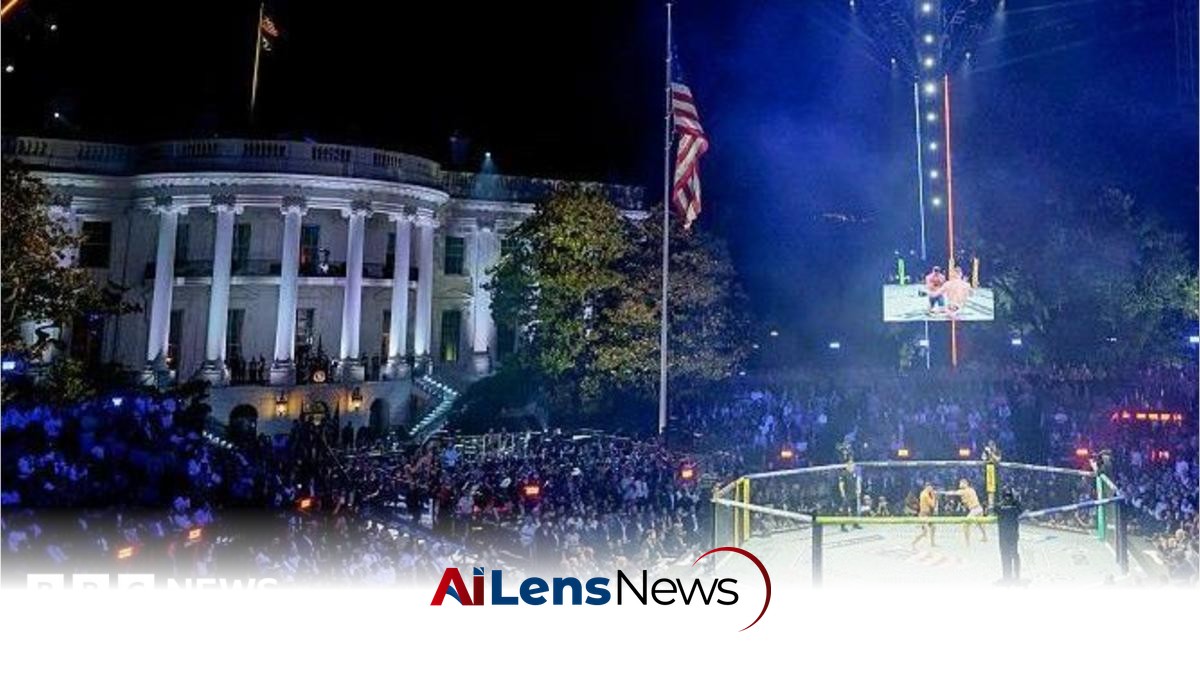


Eight individuals face terrorism charges for plotting to attack the UFC Freedom 250 event at the White House, which included President Trump.
New Delhi, India Jul 11, 2026 ALN: Eight people have been charged with terrorism offences over an alleged plot to kill government officials and other high-profile figures, including President Donald Trump, at last month's UFC Freedom 250 event at the White House.
The men, aged 19 to 32, are all charged with conspiracy to provide material support to terrorists, as well as conspiracy to commit murder on federal government territory and to murder a federal government official. The seriousness of these charges reflects the potential threat posed by the alleged conspiracy, particularly given the high-profile nature of the targets involved.
This week, one of the accused was arrested in West Virginia, adding to a list of suspects already detained. The arrests have drawn significant attention from law enforcement and the public, highlighting ongoing concerns regarding domestic terrorism and the safety of public officials in an increasingly polarized political climate.
The accused could face life in prison if convicted on the murder charges and up to 15 years if they are found guilty on the terror offences. These potential sentences underscore the gravity of the situation and the legal repercussions that the accused could face if convicted.
The alleged plot was discovered after the mother of one of the suspects, Tycen J Proper, called local authorities on 10 June, just days before the televised mixed martial arts event on 14 June, which was part of celebrations for the nation's 250th anniversary. This proactive step by Proper's mother highlights the importance of community awareness and vigilance in identifying potential threats.
Proper's mother was concerned about his large firearms purchases and what she had seen of his online communication with a group that claimed to be made up of former military members and Christian-based. The concerns raised by Proper's mother led to an investigation that ultimately revealed a deeper conspiracy involving multiple individuals. The communication patterns and activities of the group indicate a well-coordinated effort to plan a significant attack.
They had specifically discussed "grievances about government corruption, the handling of the Epstein files, data centres taking up all the water in communities, and other government actions," prosecutors previously said. The grievances mentioned reflect a broader sentiment among certain groups who feel disenfranchised by the government and its actions, suggesting that the motivations behind the alleged plot may be rooted in a larger ideological framework.
According to the FBI, Proper said the group wanted to "jumpstart a revolution in the United States" by attacking the event. This statement reveals the ambitious nature of their plans and the ideological motivations driving the group. The use of violent actions to achieve political aims is a hallmark of extremist groups, which often resort to such measures when they believe that their grievances are not being addressed through conventional means.
Part of the plan involved striking nearby buildings with explosive-laden drones and firing on "high value targets," prosecutors alleged. The utilization of drones in this context raises significant concerns about the evolving nature of threats facing public events, as technology increasingly enables individuals or groups to carry out attacks from a distance, complicating law enforcement's ability to prevent such incidents.
By using the drones, the alleged plotters aimed to spark panic and draw the fleeing crowd toward a sniper team, according to federal prosecutors. A "second wave" of attackers was then allegedly supposed to storm the White House gate. This tactical approach demonstrates a level of planning and coordination that is alarming, as it indicates that the group was not only prepared to carry out a violent act but had also developed a strategy to maximize chaos and inflict harm.
An estimated 4,300 people, including the president, Vice President JD Vance, senior cabinet officials, and lawmakers, were present for the invite-only event on the South Lawn of the presidential compound. The presence of such high-profile individuals at the event heightened the stakes, making the alleged plot even more serious in its implications for national security.
Court filings related to another accused, Abraham Hermosillo Alvarez, said the group allegedly eyed potential targets that included Trump and Vance, as well as Israeli Prime Minister Benjamin Netanyahu, Elon Musk, and several elected officials - though not all attended the UFC event. The inclusion of a diverse range of targets suggests that the group's motivations were not limited to domestic political grievances, but also extended to international figures and prominent private citizens, reflecting a broader narrative of discontent.
Proper reportedly admitted to being part of planning the attack, telling law enforcement officials the group began communicating with one another in March and that members were primarily recruited through TikTok. This revelation highlights the role of social media in facilitating the organization of extremist groups, as platforms like TikTok can serve as a breeding ground for radical ideas and recruitment efforts.
Officials said the men used online platforms including Signal, Instagram, TikTok, and Discord to plan the attack. The use of encrypted messaging apps like Signal indicates a level of sophistication in their planning, as these platforms provide privacy and security for users, making it more challenging for law enforcement to monitor communications.
It is unclear if the group is affiliated with any larger, established organization. This ambiguity raises questions about the nature of domestic extremism in the United States, as many individuals and small groups operate independently, motivated by a variety of ideologies without formal ties to larger extremist organizations.
As well as Proper and Alvarez, US officials identified the accused as Daniel K Eskridge, William LS Falkner, Jordan W Rincker, Bryan O Roa, Michael A Thomas, and Chandler D Scaggs, who was arrested this week in West Virginia. The geographic diversity of the accused, with individuals based all over the country from California to Missouri and Nebraska, illustrates the widespread nature of the threat and the potential for similar plots to emerge in other regions.
A ninth person, Alexander Iniguez Mercado, was arrested last week and charged with obstruction of justice. Mercado is accused of deleting the Signal app from his phone after being contacted by an FBI agent - wiping evidence of an alleged connection to the group. He has pleaded not guilty to the charge. The actions of Mercado, if proven, could indicate an attempt to hinder the investigation and conceal evidence, further complicating the legal proceedings surrounding the case.
The UFC event coincided with Trump's 80th birthday and came two months after a shooting at the White House Correspondents Dinner that he attended and one month after a man was killed by Secret Service agents after opening fire at a White House checkpoint. These incidents underscore the heightened security concerns surrounding public events involving government officials, particularly in light of recent violence directed at political figures. The combination of these factors serves as a stark reminder of the challenges that law enforcement faces in protecting public safety while also respecting the rights of individuals to assemble and express their views.
To learn more about the latest developments in Crime & Law, stay updated with our exclusive reports and analyses on AiLensNews.

