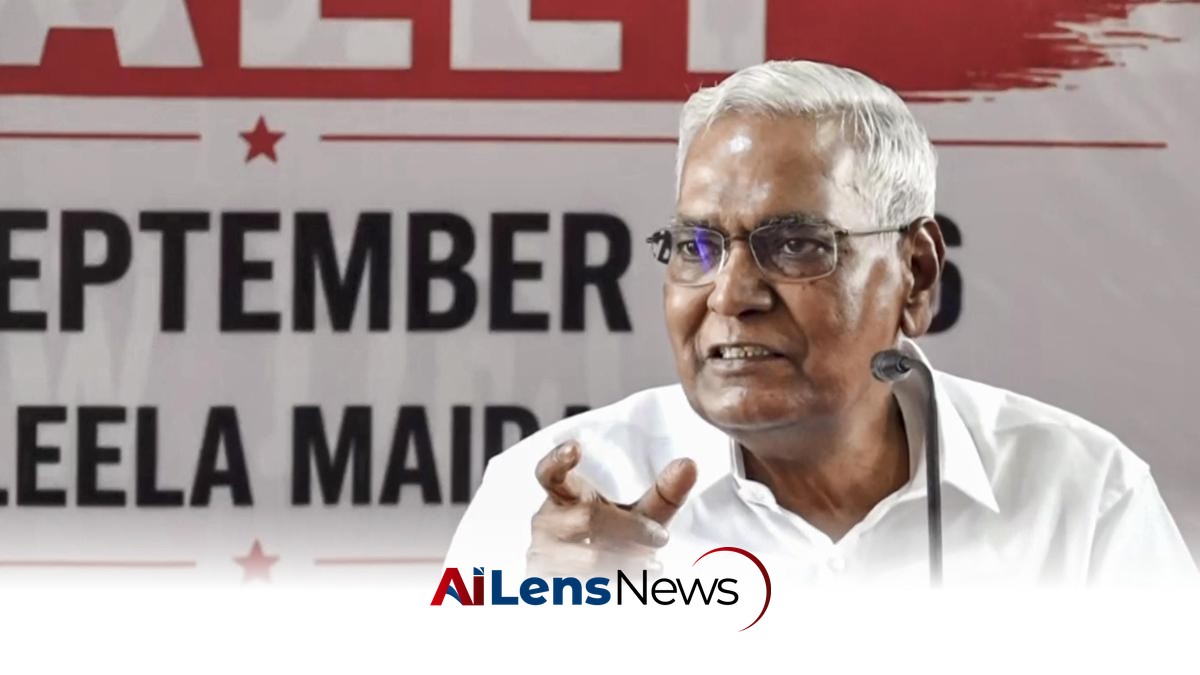


CPI criticizes PM Modi's silence on Ram Temple fund embezzlement, demanding accountability and a judicial probe into the matter.
New Delhi, India Jul 11, 2026 ALN: The Communist Party of India (CPI) has recently intensified its scrutiny of Prime Minister Narendra Modi's administration, particularly focusing on the contentious issue of donation funds collected for the Ram Temple in Ayodhya. On July 10, 2026, CPI general secretary D. Raja publicly called for a judicial investigation into allegations of embezzlement associated with these funds. This demand comes amid broader concerns regarding transparency and accountability in governance, especially within institutions that have a significant cultural and religious significance in India.
The Ram Temple, located in Ayodhya, is a site of immense historical and religious importance for many s. The temple's construction has been a focal point of political and social discourse in India, particularly since the landmark Supreme Court ruling in 2019 which paved the way for the temple's construction on a disputed site. This ruling marked a significant moment in the long-standing Babri Masjid-Ram Janmabhoomi dispute, which had been a source of communal tension for decades. The temple's foundation stone was laid in August 2020, and since then, it has attracted significant donations from across the country, with supporters viewing their contributions as a means of participating in a pivotal moment for identity and heritage.
However, the CPI's allegations suggest that there may be issues of mismanagement or corruption concerning these donations. D. Raja criticized the Bharatiya Janata Party (BJP)-led central government for its apparent inaction regarding these allegations, asserting that Prime Minister Modi's silence is particularly troubling given the government's previous vocal stance on issues of religious significance, such as the security of temple properties. Raja noted that Modi had spoken out during the 2024 Odisha Assembly election campaign regarding alleged theft from the Jagannath Temple’s Ratna Bhandar, raising questions about the inconsistency in the government's response to different religious sites.
Raja's statements reflect a growing sentiment among some political factions that the current administration is failing to uphold the principles of transparency and accountability. He emphasized that mere resignations of officials involved in the Ram Temple Trust would not suffice to restore public trust. Instead, he insisted on a comprehensive and transparent judicial probe to investigate the alleged misappropriation of funds, underscoring the need for a thorough examination of the financial practices surrounding the temple's fundraising efforts. This call for accountability resonates with broader societal demands for ethical governance, especially in a country where religion and politics are often deeply intertwined.
The CPI's call for a judicial inquiry is not an isolated demand but part of a broader narrative concerning governance in India, particularly regarding the handling of public funds and the accountability of political leaders. This situation raises significant questions about the ethical responsibilities of political leaders and the institutions they oversee, especially when dealing with funds that are often collected under the auspices of religious devotion and community support. The allegations of embezzlement could potentially tarnish the reputation of the Ram Temple Trust, which has been seen as a symbol of resurgence and a project of importance.
In response to these issues, the CPI has also announced plans for a nationwide campaign aimed at addressing various socio-economic concerns that they believe have been neglected by the Modi government. This campaign will include padyatras—a form of protest march—across different states, focusing on issues such as unemployment, rural distress, and the rights and welfare of workers, farmers, youth, students, and women. The culmination of this campaign is set for a rally in Delhi on September 1, which is expected to draw significant attention to the party's grievances against the government. The CPI aims to mobilize public sentiment around these issues, leveraging the discontent among various demographics who feel marginalized or neglected under the current administration.
The implications of the CPI's demands and actions could be far-reaching. If a judicial inquiry is initiated, it may lead to greater scrutiny of the Ram Temple Trust and potentially expose any mismanagement or corruption, which could have political repercussions for the BJP. The party has historically positioned itself as a champion of causes, and any scandal involving the Ram Temple could undermine its support base, especially among devout s who see the temple's completion as a fulfillment of a long-standing aspiration. This situation could lead to a significant shift in the political landscape, particularly as the country approaches future elections.
Furthermore, the CPI's campaign may resonate with various demographics, particularly those who feel marginalized or neglected under the current administration. Issues such as unemployment and rural distress are pressing concerns in India, and if the CPI can effectively mobilize public sentiment around these issues, it could strengthen their political position ahead of future elections. The party's focus on socio-economic issues may attract voters who prioritize economic stability and social justice, potentially increasing their electoral viability.
In conclusion, the CPI's call for a judicial probe into the Ram Temple donation funds reflects broader concerns about governance, accountability, and transparency in India. As the political landscape continues to evolve, the implications of these demands could significantly impact the relationship between the government and its constituents, as well as the future of political discourse in the country. The upcoming Monsoon Session of Parliament, beginning July 20, will likely serve as a critical platform for these discussions, with the potential for heated debates surrounding accountability and the management of public trust in religious institutions. The outcome of these discussions may determine not only the fate of the Ram Temple Trust but also the future trajectory of the BJP and its standing among the electorate.
To learn more about the latest developments in Politics, stay updated with our exclusive reports and analyses on AiLensNews.

