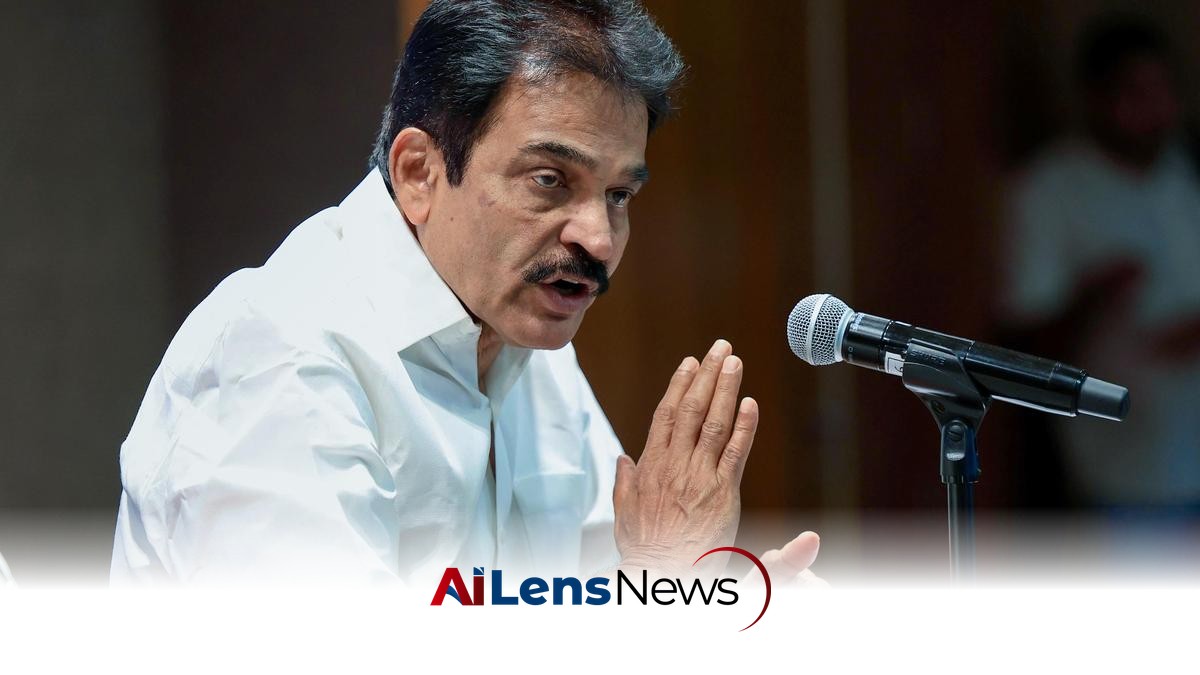


Congress condemns VHP's letter to police regarding donation theft claims, calling it hypocritical amid ongoing scrutiny of the Ram temple's finances.
New Delhi, India Jul 6, 2026 ALN: The recent political clash between the Congress party and the Vishva Parishad (VHP) has drawn significant attention, particularly in the context of the ongoing discussions surrounding the Ram Temple in Ayodhya. The VHP, a prominent right-wing organization, has been at the forefront of the Ram Temple movement, which carries deep historical and cultural significance in India. The temple is constructed at a site believed to be the birthplace of Lord Ram, a central figure in mythology, and has been a focal point of religious and political contention for decades.
The backdrop of this controversy is the long-standing dispute over the Ram Janmabhoomi site, which was the location of the Babri Masjid until its demolition in 1992. This event triggered widespread communal riots across the country, leading to significant loss of life and property, and has since remained a polarizing issue in Indian politics. The Supreme Court of India ultimately ruled in favor of building the Ram Temple on the disputed land in 2019, a decision that was hailed by many as a historical victory for groups. This ruling led to the establishment of the Ram Temple Trust, which is responsible for overseeing the construction and funding of the temple. The temple's construction is seen not just as a religious act, but also as a symbol of pride and identity.
The VHP's recent letter to the Ayodhya police has escalated tensions, as it calls for an investigation into allegations made by several opposition leaders regarding the misappropriation of donations meant for the temple's construction. Prominent figures such as Congress MP Priyanka Gandhi Vadra and Aam Aadmi Party leader Arvind Kejriwal have raised concerns about potential financial misconduct, claiming that there have been irregularities in the handling of funds collected for the temple. These allegations have sparked a debate about the transparency and accountability of organizations involved in religious fundraising, particularly those that are closely linked to political parties.
In response to these allegations, Congress general secretary K.C. Venugopal has characterized the VHP's actions as hypocritical, suggesting that the organization is attempting to shift focus away from its own controversies. He referred to the VHP's history of allegations, including a significant claim from the Nirmohi Akhara, a religious organization, which accused the VHP of involvement in a "₹1,400 crore Ram Mandir scam." This accusation highlights the complex and often contentious nature of the Ram Temple movement, where financial transparency has been a recurring issue and where the stakes are not only religious but also political.
Venugopal's critique of the VHP's moral standing raises important questions about accountability and governance within organizations that claim to represent religious interests. He pointed out that many key figures within the Ram Temple Trust have close ties to the ruling Bharatiya Janata Party (BJP), suggesting a potential conflict of interest. This connection has led to skepticism about the VHP's motives in calling for investigations into opposition leaders while facing scrutiny over its own financial practices. The intertwining of religion and politics in this context complicates the public's perception of the legitimacy and integrity of the Ram Temple initiative.
Moreover, the Ram Temple movement has historically been intertwined with political agendas, particularly those of the BJP and its affiliates. The construction of the temple is often portrayed as a triumph for ism, and allegations of financial misconduct can undermine the credibility of the movement. Venugopal's assertion that the VHP and the Sangh Parivar, which includes various right-wing organizations, have been discredited adds another layer to the ongoing debate about the integrity of the Ram Temple initiative. The implications of this discrediting can resonate beyond the immediate political landscape, potentially affecting the broader community's trust in these organizations.
In a broader context, the allegations of financial misconduct at the Ram Temple reflect a growing concern among the public and political observers regarding transparency in religious fundraising. The VHP's request for evidence from opposition leaders, as criticized by Congress media head Pawan Khera, raises questions about the expectations placed on political opponents in a situation where the accused party is also under investigation. Khera's comments suggest a belief that the VHP is attempting to deflect attention from its own issues by demanding proof from others. This dynamic illustrates the complexities of political discourse in India, where accusations and counter-accusations often cloud the public's understanding of the issues at hand.
The dynamics of this political confrontation are further complicated by the rapid emergence of new allegations and evidence regarding the alleged theft of donations. Khera emphasized that these developments are not isolated incidents but part of a larger pattern of behavior that reflects the VHP's intentions. He accused the VHP of lacking a genuine commitment to uncovering the truth and instead focusing on political maneuvering that exploits the faith of devotees. This sentiment echoes a broader concern among the populace about the ethical implications of fundraising practices in religious contexts, particularly when intertwined with political ambitions.
As the situation unfolds, Congress has reiterated its demand for an independent investigation into the allegations surrounding the Ram Mandir donations, calling for oversight from the Supreme Court. This demand highlights a broader call for accountability in religious and political organizations, particularly those that wield significant influence in the public sphere. The current Special Investigation Team (SIT) has been deemed insufficient by Congress, indicating a lack of confidence in the existing mechanisms for addressing these serious allegations. This lack of trust underscores the need for transparent processes in handling such sensitive matters, especially when public faith and financial contributions are involved.
The VHP's letter, dated July 4, from its president Alok Kumar, called for the Ayodhya Deputy Superintendent of Police to summon opposition leaders to substantiate their claims. This move is seen by some as an attempt to assert authority and control over the narrative surrounding the Ram Temple, but it also raises concerns about the politicization of religious issues and the potential for further division among the public. The call for investigations and the subsequent political backlash reflect a broader trend in Indian politics, where religious sentiments are often leveraged for political gain.
In conclusion, the ongoing dispute between the Congress party and the VHP over the Ram Temple donations reflects deeper issues related to transparency, accountability, and the intersection of religion and politics in India. As both sides continue to engage in this contentious dialogue, the implications for the Ram Temple movement and its associated organizations remain significant, potentially influencing public perception and political alignments in the future. The call for an independent investigation could serve as a pivotal moment in addressing the allegations and restoring faith in the integrity of the Ram Temple initiative. The outcome of this political confrontation may not only affect the immediate stakeholders but could also have lasting repercussions for the broader socio-political landscape in India.
To learn more about the latest developments in Politics, stay updated with our exclusive reports and analyses on AiLensNews.

