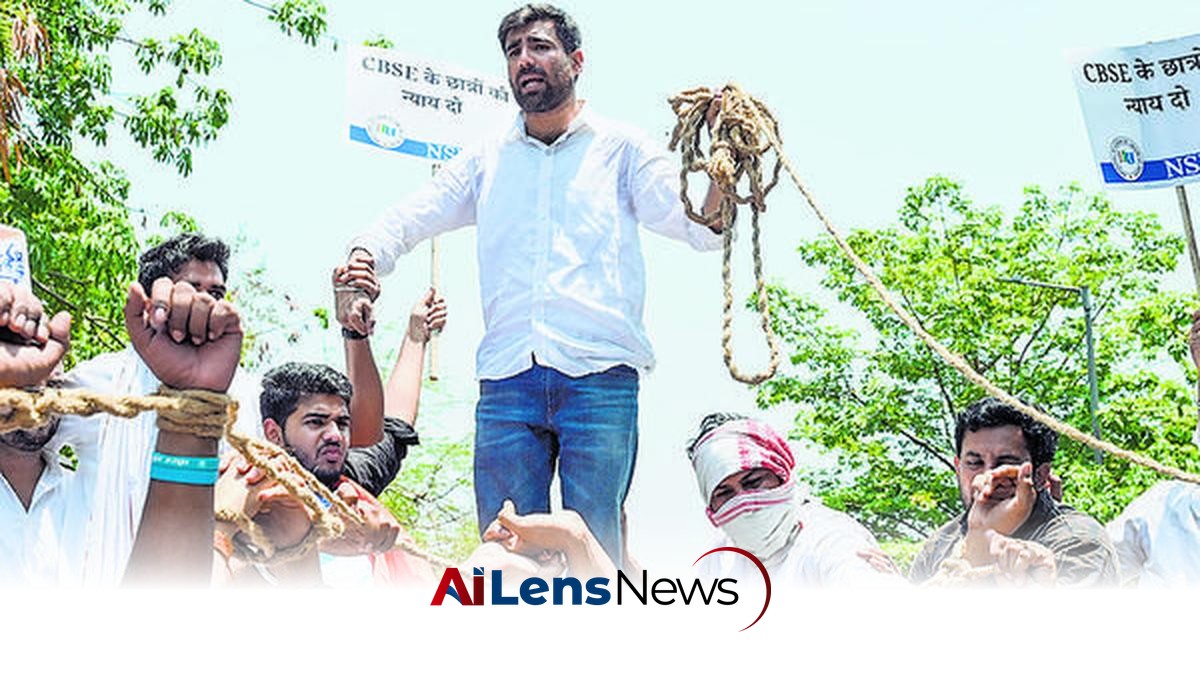


The Congress party blames the Modi government for the deteriorating education system in India, demanding reforms and the resignation of Education Minister Dharmendra Pradhan.
New Delhi, India Jul 6, 2026 ALN: The Congress party has publicly accused the Modi government of placing India's education system in a critical state, likening it to being in the "ICU." This assertion was made during a press conference on July 6, 2026, where party leaders called for the resignation of Education Minister Dharmendra Pradhan and demanded a thorough investigation into his alleged ties with the so-called paper leak mafia, a term used to describe individuals and groups involved in the illegal distribution of examination papers ahead of official tests.
This accusation comes in the context of ongoing debates about the quality and accessibility of education in India, a country that has long struggled with disparities in educational resources and opportunities. The Congress party's statements reflect broader concerns among various stakeholders about the integrity of educational institutions, particularly in light of recent scandals that have raised questions about the fairness of competitive examinations.
Party leader and Students' Union of India (NSUI) in-charge Kanhaiya Kumar emphasized that Rahul Gandhi, the Leader of the Opposition in the Lok Sabha, is actively engaging with students nationwide to address their concerns and push for necessary reforms in the education system. This engagement is part of a broader strategy by the Congress party to connect with the youth, who represent a significant portion of the electorate and are increasingly vocal about their dissatisfaction with the current government's policies.
Kumar stated, "With the same objective, Rahul Gandhi Ji had given a presentation among students and their parents in Kota. Now we are taking this campaign forward in different parts of the country. We are compiling suggestions from students, teachers, and parents." This grassroots approach aims to gather a wide range of perspectives and solutions, reflecting the Congress party's intention to position itself as a champion of educational reform.
During the press conference, Kumar was joined by NSUI president Vinod Jakhar and other party leaders, including Kiran Mugabasav, Nishant Mandal, and K K Shastri. Together, they announced plans to create an Education Charter aimed at overhauling the current education system. This charter is expected to outline specific reforms and policies that the Congress party believes are necessary to revitalize India's educational landscape.
"The Modi government has put India's education system into the ICU," Kumar reiterated, outlining the party's demands for Pradhan's resignation and a probe into his connections with the paper leak mafia. This metaphor of the education system being in the ICU underscores the urgency that the Congress party feels regarding the current state of education, suggesting that immediate and significant intervention is required to prevent further deterioration.
Kumar criticized the current administration's handling of educational reforms, stating, "India's education system should be reformed, for which the UPA government had formed a committee, but the NDA government arbitrarily established the NTA." The Testing Agency (NTA) was established by the Modi government to conduct entrance examinations for higher education, but critics argue that its implementation has been fraught with issues, including allegations of mismanagement and lack of transparency.
He also called for a regular job calendar for youth and an academic calendar for examination recruitment processes, emphasizing the need for systematic reforms. This demand reflects a growing recognition of the need for alignment between educational outcomes and job opportunities, a concern that has been exacerbated by rising unemployment rates among educated youth in India.
In his remarks, NSUI president Jakhar claimed that the education system is in disarray and that educational institutions are suffering. He alleged, "Across the entire country, student union elections have been shut down as part of a conspiracy, allowing BJP-RSS affiliates to maintain their authoritarian grip on college and university campuses." This claim points to a broader narrative of political control over educational institutions, which has been a contentious issue in India for decades.
Jakhar raised concerns about the repeated extensions given to the Vice-Chancellor of Delhi University, questioning the basis for these extensions. He stated, "If any student raises their voice on campus today, they are threatened with legal cases. Individuals aligned with a specific ideology are being recruited into colleges and universities." This highlights fears among students and educators that academic freedom is under threat, with potential repercussions for those who challenge the status quo.
To counter this situation, Jakhar announced that the NSUI would initiate elections to form student units on campuses, providing students with a platform to voice their concerns. This initiative is seen as a way to empower students and encourage democratic participation within educational institutions, which have historically been battlegrounds for political ideologies.
Mr. Mugabasav outlined the election schedule, stating that it will be announced state-wise according to the NSUI's roster. He mentioned, "The first step will be a membership drive in the states identified by the NSUI. Then the Chief Election Authority [CEA] will visit the respective State, hold a press conference, and officially announce the election process." This structured approach aims to ensure that the elections are organized and that students are informed about their rights and opportunities for participation.
He assured that the entire election process would be tech-savvy, utilizing an app-based, online system that is free, fair, and transparent. Mr. Shastri added that the Congress leadership has established a Central Election Authority to oversee internal elections in the NSUI, aiming for free and fair elections across the country. This emphasis on transparency and fairness in the electoral process is crucial, especially in an environment where allegations of manipulation and bias are prevalent.
The Congress party's accusations against the Modi government regarding the education system are not merely political rhetoric; they reflect deep-seated concerns about the future of education in India. As the country grapples with challenges such as rising unemployment, a growing youth population, and the need for skilled labor, the state of the education system will play a critical role in shaping India's economic and social landscape.
The implications of these discussions extend beyond immediate political gains. They touch upon fundamental questions of governance, accountability, and the role of education in democracy. As the Congress party seeks to mobilize support from students and educational institutions, the outcome of this campaign could have lasting effects on the political landscape, particularly as the country approaches future elections.
In summary, the Congress party's allegations against the Modi government regarding the education system highlight significant concerns that resonate with many stakeholders in India. The call for reforms, the push for student participation, and the demand for accountability from educational leaders underscore the critical nature of these issues in shaping the future of education in the country.
To learn more about the latest developments in Politics, stay updated with our exclusive reports and analyses on AiLensNews.

