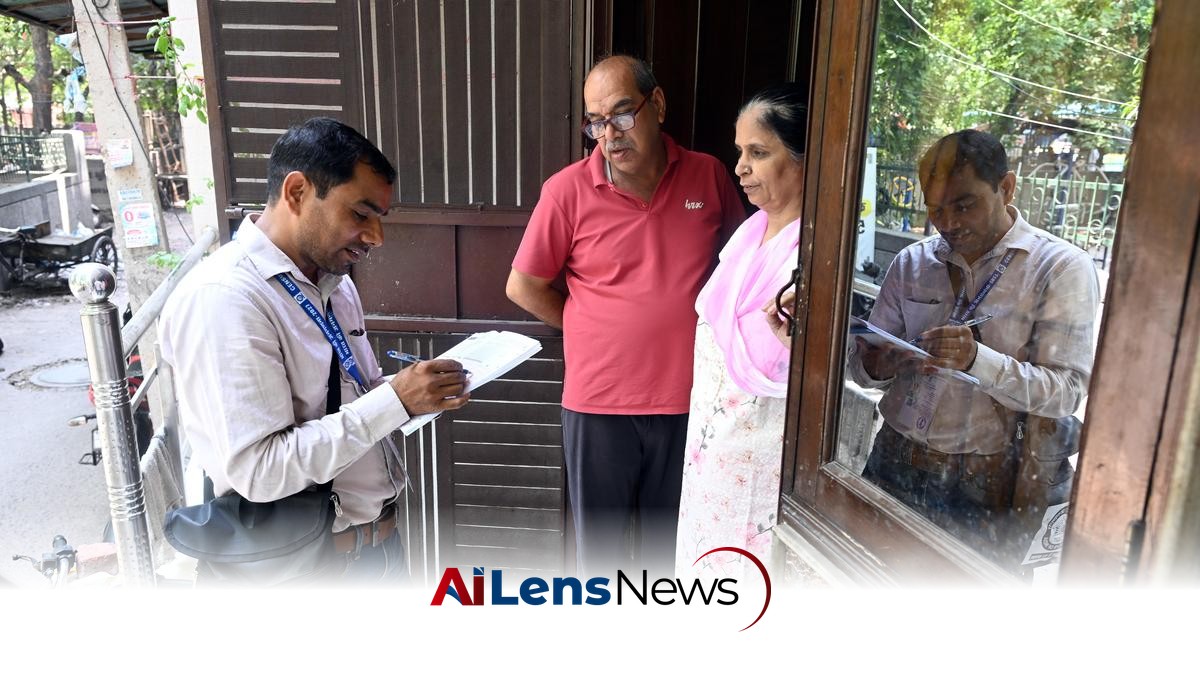


Explore the methodology, challenges, and future of India's first caste enumeration in the upcoming 2027 Census.
New Delhi, India Jul 7, 2026 ALN: The story so far: The rehearsal or the “pre-test” of the second phase of the Census, which started in 16 States and Union Territories on July 6, 2026, has an “open column” for respondents to record their castes, several officials involved in the exercise confirmed. The pre-test is ongoing until July 20, 2026, and the outcome will determine how Independent India enumerates caste for the first time as part of the Census. Other than the Scheduled Castes (SC) and Scheduled Tribes (ST), caste-wise population has not been enumerated in Independent India; the last time such data was collected was in 1931.
After repeatedly opposing caste enumeration, the Bharatiya Janata Party (BJP)-led Democratic Alliance (NDA) finally announced on April 30, 2025, that caste would be counted during the Population Census 2027. Before this, the Opposition parties, particularly Congress leader Rahul Gandhi, had consistently demanded that the caste of all people be counted in India.
The concept of caste in India is deeply rooted in the country’s social fabric, influencing various aspects of life including politics, education, and employment. The caste system, which categorizes individuals based on their birth, has been a source of both social stratification and identity for centuries. The complexities of caste dynamics have often been a focal point in discussions about social justice and affirmative action in India.
Historically, the last comprehensive enumeration of caste data occurred during the 1931 Census, which was conducted under British rule. After independence in 1947, the newly formed Indian government chose to focus on broader socio-economic categories, primarily recognizing Scheduled Castes and Scheduled Tribes. This decision was influenced by the desire to promote unity and to avoid exacerbating divisions within society. However, the absence of detailed caste data has led to ongoing debates about representation, resource allocation, and social justice.
The recent decision to include caste in the upcoming Census has sparked renewed interest and controversy. Proponents argue that detailed caste data is essential for understanding the demographic composition of the country and for formulating policies that address the needs of various groups. They contend that without accurate data, marginalized communities may continue to be overlooked in policy-making processes.
Opponents, however, raise concerns about the potential for caste-based divisions to deepen. Critics argue that emphasizing caste in the Census could lead to increased social tensions and exacerbate existing inequalities. They fear that it may reinforce stereotypes and lead to discrimination against certain groups, counteracting the progress made toward a more equitable society.
The methodology of the caste enumeration process is also a matter of considerable discussion. The open column approach allows respondents to self-identify their caste, which aims to ensure that the data collected reflects the true diversity of India's population. However, this method also raises questions about accuracy and accountability. There are concerns that individuals may misrepresent their caste for various reasons, including social desirability or economic advantage.
Furthermore, the logistical challenges of conducting a caste census are significant. Enumerators will need to be adequately trained to handle sensitive questions related to caste, and there is a risk of bias in responses based on the enumerator's identity or perceived biases. The success of the pre-test will be crucial in identifying and addressing these challenges before the full Census is conducted in 2027.
The implications of the caste census extend beyond mere data collection. The results could have far-reaching consequences for political representation and resource distribution. Political parties may use the data to tailor their platforms and policies to appeal to specific caste groups, potentially reshaping the electoral landscape in India. Additionally, the data could inform affirmative action policies, determining the allocation of reservations in educational institutions and government jobs.
As the pre-test continues, various stakeholders, including civil society organizations, political parties, and academic institutions, are closely monitoring the developments. The outcomes of this exercise may set a precedent for how caste is perceived and integrated into policy-making in the future.
In summary, the decision to include caste in the Census marks a significant shift in the approach to demographic data collection in India. While it holds the promise of greater representation and understanding of diverse communities, it also poses challenges that need careful consideration. The road ahead will require balancing the need for accurate data with the imperative of fostering social cohesion and equality.
The caste system in India has a long and complex history, deeply intertwined with the social, cultural, and economic fabric of the nation. It has traditionally divided society into hierarchical groups, often leading to discrimination and exclusion of those belonging to lower castes. The recognition of caste in the Census is seen as a step towards addressing historical injustices and ensuring that government policies are more inclusive and equitable.
The debate surrounding the caste census also reflects broader societal issues, such as the struggle for social justice and the need for affirmative action. Many argue that without accurate data, it is challenging to identify and address the needs of marginalized communities effectively. The lack of caste data has often resulted in a misallocation of resources and support, leaving many disadvantaged groups without the necessary assistance.
Moreover, the inclusion of caste in the Census could pave the way for more targeted social welfare programs. By understanding the demographic distribution of various caste groups, policymakers can design interventions that specifically address the unique challenges faced by different communities. This could ultimately lead to improved outcomes in areas such as education, employment, and healthcare.
However, the potential for misuse of caste data is a significant concern. Critics warn that political parties may exploit caste identities for electoral gain, leading to further polarization and division within society. The fear is that the emphasis on caste could overshadow other important factors, such as class and economic status, which also play critical roles in determining an individual's opportunities and challenges.
In light of these complexities, it is essential for the government to approach the caste census with a commitment to transparency and accountability. Ensuring that the data collected is used responsibly and ethically will be crucial in mitigating potential negative consequences. Engaging with civil society and community organizations during this process can help build trust and ensure that the voices of all stakeholders are heard.
As the pre-test progresses and the full Census approaches, it will be vital for the government to address the concerns raised by various groups. This includes providing clarity on how the data will be used, safeguarding against discrimination, and ensuring that the enumeration process is conducted fairly and impartially. The success of this initiative will depend on the collective efforts of all stakeholders to navigate the challenges and complexities associated with caste enumeration.
Ultimately, the caste census represents an opportunity for India to confront its historical inequalities and work towards a more just society. By acknowledging the diverse identities within its population, the country can take meaningful steps towards inclusivity and empowerment for all its citizens. The road ahead will undoubtedly be challenging, but with careful planning and execution, the caste census could be a transformative endeavor for the nation.
To learn more about the latest developments in Politics, stay updated with our exclusive reports and analyses on AiLensNews.

