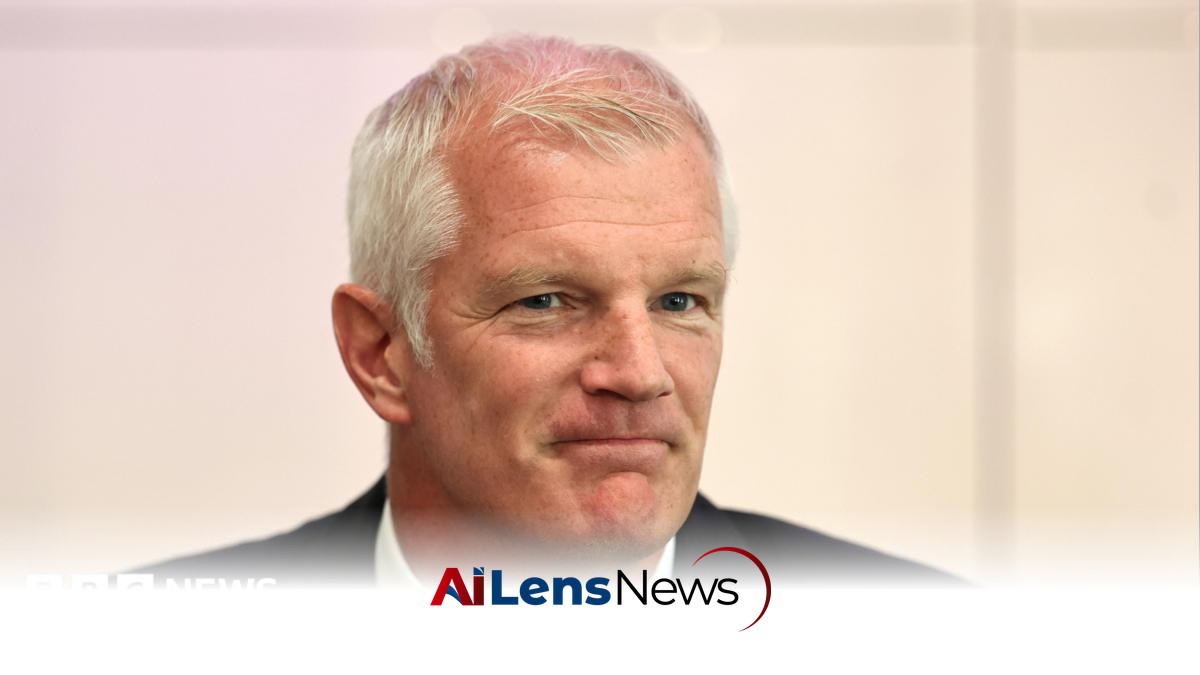


Al Carns has decided not to run for Labour leadership, urging support for Andy Burnham as the party prepares for a new leader following Keir Starmer's resignation.
New Delhi, India Jul 9, 2026 ALN: Former Defence Minister Al Carns has announced that he will not stand for the Labour leadership, urging his party to unite behind Andy Burnham.
Carns stated in an interview that a leadership contest would be "not the best use of Labour's time" and emphasized the need for the party to "get on board" with Burnham. His decision comes at a pivotal moment for the Labour Party, which is navigating the aftermath of Sir Keir Starmer's resignation as prime minister. Starmer's departure has opened the door for new leadership, and Carns's choice to endorse Burnham signals a desire for stability and unity within the party.
With Carns's decision, Burnham remains the only Labour MP who has publicly declared his intention to run for the leadership following Sir Keir Starmer's resignation last month. This lack of competition could streamline the leadership election process, allowing Burnham to focus on setting a clear agenda for the party and preparing for the potential transition to prime minister.
Earlier this week, Carns had expressed hesitance about supporting Burnham until he had more details regarding Burnham's plans for government. However, after a conversation with Burnham on Tuesday, Carns concluded that the Makerfield MP would "make the right decisions and move the country forward." This endorsement is significant, as Carns himself is a respected figure within the party, having served in a high-profile cabinet position and being involved in various policy discussions during his tenure.
Burnham is widely anticipated to become the next Labour leader and prime minister later this month. His leadership style, which has been characterized by a focus on community engagement and public health, particularly during the COVID-19 pandemic, has earned him a strong following among party members and the electorate alike.
The process to elect a new Labour leader will commence on Thursday, marking the opening of the nomination window for MPs to propose candidates. This process is crucial as it sets the stage for how the party will reorganize itself in the wake of Starmer's resignation and how it will position itself ahead of the next general election.
To be eligible, leadership candidates must secure nominations from 20% of the party's MPs—totaling 81. Additionally, they need endorsements from at least three of the 31 socialist societies and trade unions affiliated with the party, or 5% of the constituency Labour parties (CLPs). This requirement ensures that candidates have a broad base of support within the party, reflecting the diverse views and interests of Labour's membership.
Considering there are 403 Labour MPs, if Burnham receives 323 nominations, it will be mathematically impossible for any other candidate to enter the contest. This scenario underscores the strength of Burnham's position within the party and the likelihood of a smooth transition of leadership.
In such a scenario, Burnham could be confirmed as Labour leader by July 17, with the possibility of taking office as prime minister three days later, on July 20, to facilitate the transition of power. This timeline is significant as it allows for a relatively quick resolution to the leadership question, which can be crucial for maintaining party momentum and public confidence.
Burnham expressed his intention to seek the Labour leadership after winning a by-election in Makerfield and returning to Westminster last month. His victory in this by-election not only reinstated him in Parliament but also showcased his appeal to voters, reinforcing his credentials as a potential leader of the party.
Sir Keir Starmer resigned as prime minister on the same day Burnham was sworn in as an MP, stating in his resignation speech that he had reflected on whether he was the best person to lead the party into the next general election. This introspection reflects a broader trend within political leadership, where accountability and self-assessment are increasingly valued by both party members and the electorate.
Wes Streeting, the former health secretary, had been contemplating a bid to succeed Sir Keir as Labour leader but chose to support Burnham shortly after the resignation. Streeting's decision to back Burnham rather than enter the race himself highlights the growing consensus among Labour figures regarding Burnham's leadership capabilities and the need for a unified front as the party prepares for the challenges ahead.
Carns had also been considering his chances of becoming the next Labour leader but ultimately decided against it. He had resigned as defence minister amid a dispute regarding military spending levels, which may have influenced his decision to step back from the leadership race. His resignation indicated the internal conflicts within the party regarding defense policy and resource allocation, issues that are likely to be pivotal in the upcoming leadership discussions.
When asked by Sky presenter Cathy Newman if he would put himself forward for the leadership, Carns remarked that "internal bloodletting" was not in the party's best interests. This statement reflects a recognition of the need for cohesion within Labour, especially in light of recent electoral challenges and the necessity to present a united front to the public.
"So, my view would be we need to get on board," Carns stated. "Andy's done a good job with Manchester, he's done a great job during Covid, he's seen the Manchester Arena attack and dealt with that very effectively, and the economic trajectory of Manchester is in a positive way." His praise for Burnham's leadership in Manchester underscores the importance of local governance as a model for national leadership, suggesting that Burnham's experiences and successes could translate effectively on a larger scale.
"If we can replicate that success at the local, regional, and national levels, I believe that's the right approach." This sentiment encapsulates the broader aspirations of the Labour Party as it seeks to rebuild and redefine its identity in the wake of recent political upheaval. As the party looks toward the future, Burnham's leadership may be seen as a pivotal opportunity to rejuvenate Labour's image and reconnect with voters across the country.
To learn more about the latest developments in Politics, stay updated with our exclusive reports and analyses on AiLensNews.

