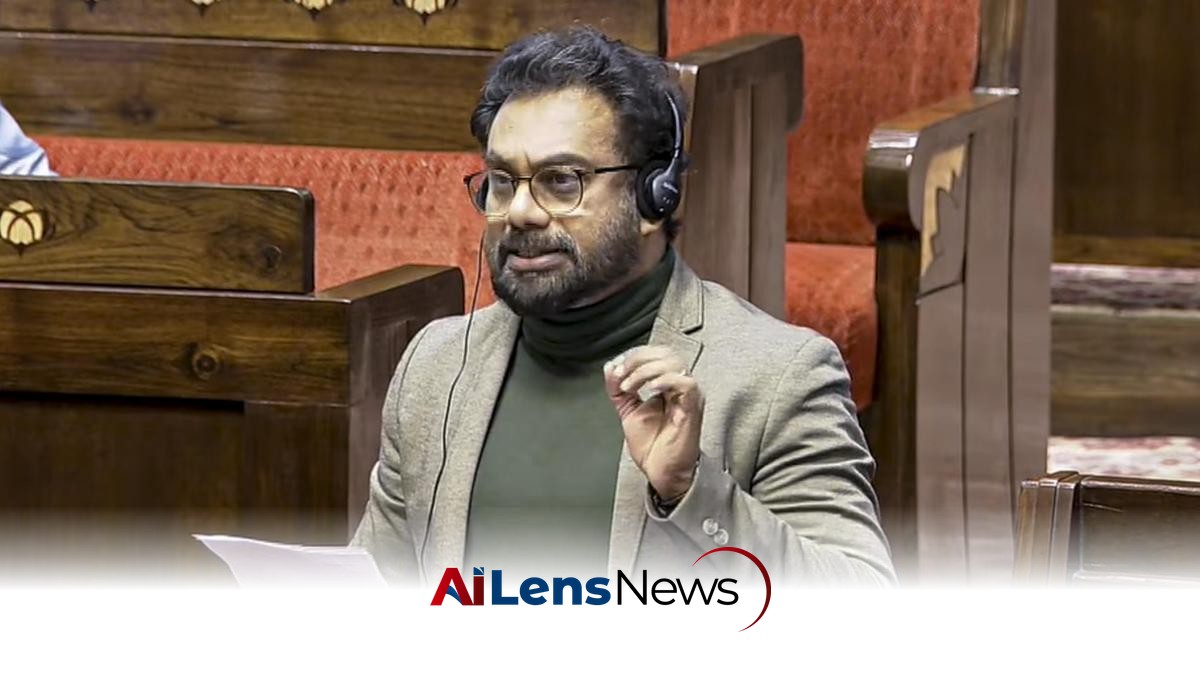


CPI(M) leader John Brittas urges the government to include the Ram Janmabhoomi Trust under the RTI Act to enhance transparency and accountability.
New Delhi, India Jul 5, 2026 ALN: The Ram Janmabhoomi Teerth Kshetra Trust, which has been at the center of significant political and social discourse in India, is now facing scrutiny regarding its transparency and accountability under the Right to Information (RTI) Act. John Brittas, a leader of the Communist Party of India (Marxist) (CPI(M)) and a member of the Rajya Sabha, has raised critical questions about the trust's status, particularly its classification as an autonomous body.
In his communication to Home Minister Amit Shah, Brittas argues that the trust cannot simply be exempt from the purview of the RTI Act based on its designation as autonomous. He emphasizes that the trust was established through a government-approved scheme, which involved the acquisition of land that was facilitated by parliamentary legislation. Furthermore, the governance of the trust includes serving Indian Administrative Service (IAS) officers as representatives of the government, which adds another layer of complexity to its operational framework.
In his letter, Brittas highlighted a ruling from the Central Information Commission (CIC) dated June 6, 2025, which stated that the Ram Janmabhoomi Teerth Kshetra Trust does not qualify as a “public authority” under Section 2(h) of the RTI Act. This decision was influenced significantly by the stance taken by the Ministry of Home Affairs, and Brittas is urging for a reconsideration of this interpretation. He articulates that the implications of this ruling extend far beyond a single RTI application, touching on fundamental questions about accountability and governance for entities that are established through government actions.
The origins of the Ram Janmabhoomi Teerth Kshetra Trust are rooted in the aftermath of the Supreme Court’s landmark judgment on November 9, 2019, which resolved the long-standing Ayodhya title dispute. Following this judgment, the Indian government framed a scheme under the Acquisition of Certain Area at Ayodhya Act, 1993, which not only constituted the trust but also vested it with land acquired through a formal gazette notification. This historical context is crucial, as it underscores the trust's connection to government authority and its implications for public accountability.
Brittas points out that the initial composition of the trust was heavily influenced by the Central Government, with 12 out of its 15 members being nominated by government officials. This raises further questions regarding the trust's autonomy and its operational independence. He critiques the CIC's interpretation that the trust could not be classified as established by a government notification because the notification was a response to Supreme Court directives. Brittas argues that the language of Section 2(h)(d) of the RTI Act does not differentiate between notifications issued independently by the government and those issued in compliance with judicial orders.
Furthermore, Brittas expresses concern over the CIC's conclusion that the trust is neither owned, controlled, nor substantially financed by the government. He contends that such considerations should not negate the provisions of Section 2(h)(d), which encompasses bodies established through government notifications. The governance structure of the trust includes direct representation from government officials, such as an Additional Secretary in the Ministry of Home Affairs, which further complicates claims of its purely private nature.
One of the critical issues raised by Brittas is the expectation of transparency in the trust's operations, especially given that it administers land acquired under parliamentary law and receives donations from devotees both domestically and interly. The trust’s financial dealings, governance practices, and the utilization of these donations should, according to Brittas, be subject to public scrutiny. This expectation of transparency is not only a matter of good governance but also a reflection of the trust's responsibility towards its supporters and the wider public.
In drawing parallels with other religious institutions, Brittas references the Shri Mata Vaishno Devi Shrine Board, which operates with a level of public accountability while maintaining its religious autonomy. He argues that it is possible for religious trusts to uphold the principles of transparency and accountability without compromising their spiritual missions. This argument is particularly relevant in the context of the Ram Janmabhoomi Teerth Kshetra Trust, which is expected to manage significant financial resources and land holdings responsibly.
In light of these concerns, Brittas has called on the Home Ministry to conduct a thorough review of its position regarding the applicability of the RTI Act to the trust. He advocates for a revised stance that could be presented before the appropriate judicial authority for a definitive legal interpretation. This call for accountability resonates with broader societal expectations for transparency in governance, particularly in institutions that operate with public funds and trust.
The debate surrounding the Ram Janmabhoomi Teerth Kshetra Trust and its classification under the RTI Act is emblematic of larger issues concerning the intersection of religion, governance, and accountability in India. As the country navigates its complex socio-political landscape, the outcomes of such discussions will likely have lasting implications for how religious trusts operate and are held accountable in the future.
Ultimately, the discourse initiated by Brittas raises essential questions about the future of transparency in religious institutions in India. As public faith in such entities is paramount, ensuring that they adhere to high standards of accountability and governance is crucial for maintaining trust and integrity within the community. The implications of this case extend beyond the immediate question of RTI applicability, as they touch upon the fundamental principles of democracy, governance, and the role of public institutions in a diverse society.
To learn more about the latest developments in Politics, stay updated with our exclusive reports and analyses on AiLensNews.

