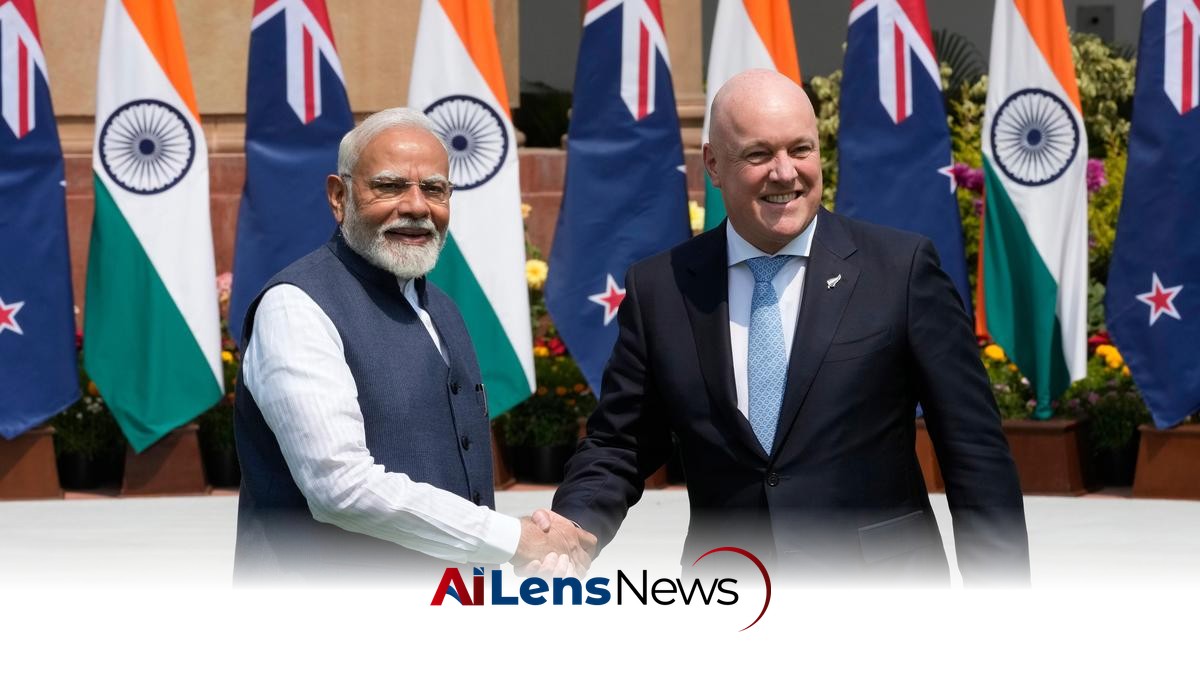


PM Luxon announces that 57% of New Zealand's exports to India will be tariff-free ahead of PM Modi's historic visit.
New Zealand, New Zealand Jul 9, 2026 ALN: A day before Prime Minister Narendra Modi’s scheduled visit to New Zealand, Prime Minister Christopher Luxon announced that 57% of Wellington’s exports to New Delhi would be tariff-free from day one. This significant announcement is part of a broader effort to enhance trade relations between the two countries, reflecting the increasing importance of economic ties in the context of global trade dynamics.
In a post on social media, Mr. Luxon welcomed the proposed India-New Zealand trade pact, stating,
“New Zealand businesses are set to boom with the India trade deal,”he wrote on X.
Mr. Modi is set to arrive in Auckland on July 10, departing a day later, marking the last leg of his three-nation tour. His visit is particularly noteworthy as it represents the first trip to New Zealand by an Indian Prime Minister in 40 years, highlighting a significant moment in diplomatic relations between the two nations.
The historical context of this visit cannot be overstated. The last visit by an Indian Prime Minister to New Zealand was in 1986, and since then, the relationship between the two countries has evolved significantly. The upcoming meeting is expected to solidify the foundations laid over the past few decades and further enhance bilateral cooperation.
In April this year, the two nations signed a free trade agreement that will eliminate 95% of tariffs on goods from New Zealand. This agreement is expected to facilitate a substantial increase in trade volumes, as it removes barriers that previously hampered the flow of goods between the two countries. The bilateral merchandise trade between New Zealand and India stood at $1.3 billion in 2024-25, while total trade in goods and services reached about $2.4 billion in 2024. Services trade alone accounted for approximately $1.24 billion, primarily driven by travel, IT, and business services.
This trade agreement is not just a matter of economic statistics; it represents a strategic alignment between New Zealand and India in the face of changing global economic conditions. As both countries navigate the complexities of inter trade, such agreements are crucial for fostering resilience and growth in their respective economies.
Mr. Modi’s upcoming visit reflects the growing momentum in the New Zealand-India relationship, as stated by Wellington. The discussions between the leaders are expected to encompass various topics, including trade and investment, maritime security, education, technology, tourism, sport, and global issues. Each of these areas presents opportunities for collaboration that could yield substantial benefits for both nations.
For instance, in the realm of education, New Zealand has become a popular destination for Indian students seeking higher education. The presence of a large Indian diaspora in New Zealand also enhances cultural ties and promotes people-to-people connections. Strengthening educational partnerships could lead to increased student exchanges and collaborative research initiatives.
In terms of technology, both nations have much to gain from sharing expertise and resources. India's rapidly growing tech industry could benefit from New Zealand's advancements in areas such as agritech and clean technology. Collaborative projects in these fields could not only enhance economic growth but also contribute to addressing global challenges such as climate change.
Tourism is another key area for potential growth. With New Zealand's stunning landscapes and rich cultural heritage, there is significant scope for attracting Indian tourists. Conversely, New Zealanders are increasingly interested in exploring India’s diverse cultural offerings. A focus on tourism could lead to increased flights, better connectivity, and enhanced mutual understanding between the two nations.
Ahead of his departure from Delhi, Mr. Modi remarked that his visit to Indonesia, Australia, and New Zealand would further strengthen India’s Act East Policy and MAHASAGAR Vision, as well as enhance “our outlook towards a free and open Indo-Pacific.” The Act East Policy, which seeks to strengthen India’s relations with its eastern neighbors, aligns with New Zealand's own interests in fostering stability and prosperity in the Indo-Pacific region.
MAHASAGAR, or Mutual and Holistic Advancement for Security Across the Regions, represents India’s vision of security and growth for all regions. This initiative underscores India's commitment to engage with its neighbors in a way that promotes mutual benefits and shared prosperity. By aligning with New Zealand’s interests, India aims to create a cooperative framework that addresses regional security challenges and fosters economic growth.
The implications of this trade agreement and Mr. Modi's visit extend beyond just economic considerations. They signify a deepening of diplomatic ties and a shared commitment to addressing global challenges collaboratively. As both nations navigate the complexities of a post-pandemic world, the ability to work together on issues such as climate change, security, and economic recovery will be crucial.
Moreover, as global trade dynamics shift, particularly in light of rising protectionism in various parts of the world, the establishment of strong bilateral ties becomes increasingly important. New Zealand and India can serve as examples of how countries can work together to create mutually beneficial agreements that promote trade and investment while also addressing broader global issues.
In conclusion, the upcoming visit of Prime Minister Modi to New Zealand marks a pivotal moment in the bilateral relationship between the two countries. The announcement of tariff-free exports is a significant step towards enhancing trade ties, while the discussions between the leaders promise to cover a wide range of topics that could further strengthen their partnership. As both nations look to the future, their ability to collaborate effectively will be essential in navigating the challenges and opportunities that lie ahead in an ever-evolving global landscape.
To learn more about the latest developments in World News & International Affairs, stay updated with our exclusive reports and analyses on AiLensNews.

