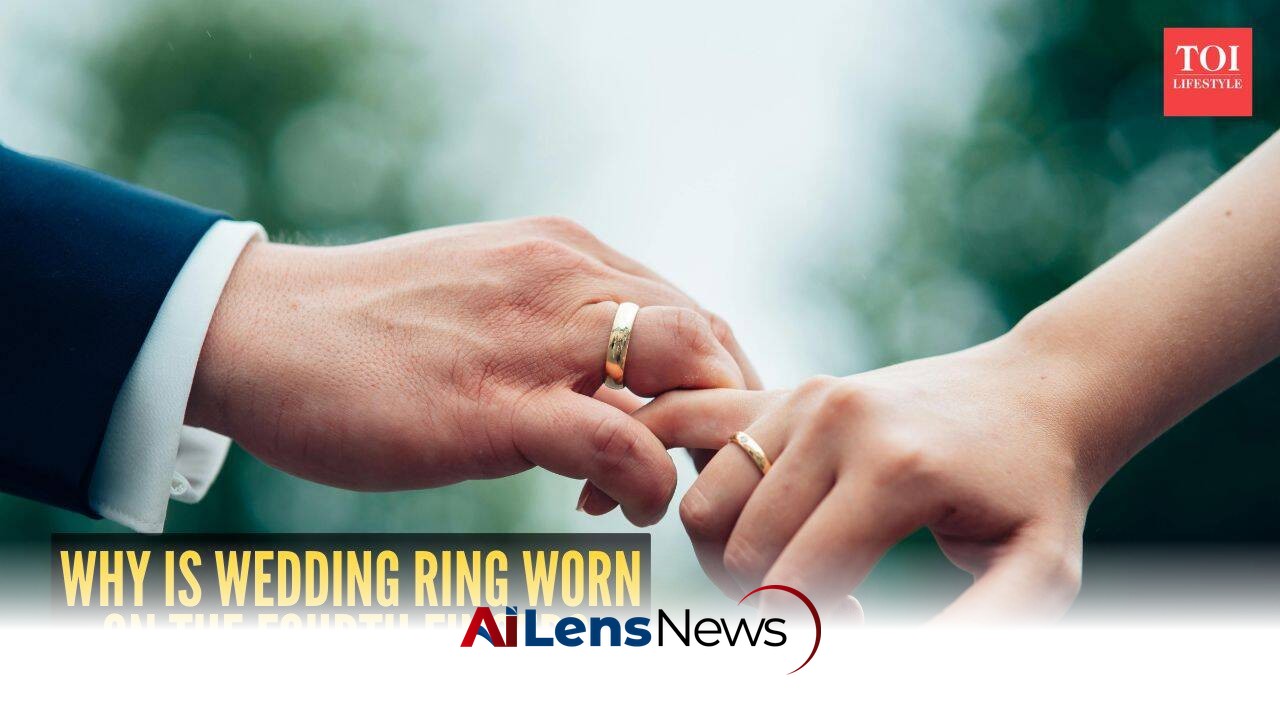


The tradition of wearing wedding rings on the fourth finger is rooted in ancient beliefs and cultural significance, symbolizing eternal love and commitment.
New Delhi, India Jul 10, 2026 ALN: The choice of the fourth finger for the placement of wedding rings has a rich history that intertwines ancient beliefs, practical considerations, and cultural significance. This tradition, which is prevalent in many parts of the world, is often attributed to the belief in a vein that runs directly from the fourth finger to the heart, a notion referred to as the "vena amoris." This idea has provided a romantic foundation for the custom, suggesting that the ring serves as a direct connection to one's emotional core. The idea of the "vena amoris" has roots in ancient civilizations, particularly in Roman culture, where it was believed that this vein was a direct pathway for love and emotional attachment, making it the most appropriate finger for a symbol of love and commitment.
In addition to the romantic symbolism, practical reasons also played a significant role in the selection of the fourth finger for wedding rings. The fourth finger, often referred to as the ring finger, tends to be less utilized than the other fingers, such as the index or middle fingers, which are more commonly used for tasks and gestures. This lesser use makes the fourth finger an ideal location for a ring, as it is less likely to interfere with daily activities while still being prominently displayed. The visibility of the ring serves a dual purpose; it acts not only as a personal reminder of the bond between partners but also as a public declaration of commitment and love. The act of wearing a wedding ring can evoke feelings of security and belonging, reinforcing the emotional ties between spouses.
The significance of wedding rings extends beyond individual relationships; it encompasses a wide array of cultural and religious practices. Across various societies, the exchange of rings has been viewed as a sacred ritual. In many cultures, this act symbolizes the union of two individuals, marking the transition from singlehood to a committed partnership. The circular shape of the ring itself carries profound meaning, representing eternity and the unbreakable bond of marriage. Unlike other shapes, a circle has no beginning or end, which reinforces the idea of everlasting love and commitment. This symbolism is particularly poignant in wedding ceremonies, where couples often exchange rings as a tangible representation of their vows to one another.
Different cultures have their own unique interpretations and practices surrounding wedding rings. For instance, in some cultures, the wedding ring is worn on the right hand rather than the left. In countries such as Germany and Russia, it is common for couples to wear their wedding bands on the right hand, with the left hand reserved for engagement rings. This variation highlights the diverse ways in which love and commitment are expressed across the globe. Additionally, in some cultures, the wedding ring is not just a symbol of love but also a status symbol that reflects the wealth and social standing of the individuals involved.
Furthermore, the materials used in wedding rings also carry significant meaning. Traditionally, gold has been the metal of choice for wedding bands due to its durability and luster, symbolizing the strength and lasting nature of marriage. Gold's malleability allows for intricate designs and settings that can be personalized to reflect the couple’s unique story. In recent years, however, couples have begun to explore alternative materials such as platinum, titanium, and even wood, reflecting personal tastes and values. The choice of material can also indicate a couple's approach to sustainability, with some opting for ethically sourced or recycled materials in their wedding bands. This shift in material preferences can also be seen as a response to changing societal values, where individual expression and environmental consciousness are increasingly prioritized.
The tradition of wearing wedding rings on the fourth finger has evolved over time, adapting to modern sensibilities while retaining its core symbolism. Today, many couples choose to personalize their wedding bands, incorporating engravings, gemstones, or unique designs that reflect their individual stories and personalities. This customization allows couples to infuse their rings with personal significance, making them even more meaningful as symbols of their love and commitment. The act of engraving a special date, a meaningful phrase, or even the couple’s initials can transform a simple band into a cherished heirloom, carrying the couple's legacy through generations.
In contemporary society, the act of exchanging wedding rings continues to hold immense significance. Whether in grand ceremonies or intimate gatherings, the ritual of placing a ring on the fourth finger remains a powerful declaration of love. The practice serves as a reminder of the promises made and the journey shared between partners. It encapsulates the hopes and dreams of couples as they embark on their lives together, reinforcing the idea that marriage is not merely a legal contract but a profound emotional bond. The wedding ring, therefore, becomes a physical manifestation of the couple's commitment, often worn daily as a reminder of their vows.
In conclusion, the practice of wearing wedding rings on the fourth finger is steeped in history and meaning. From the ancient belief in the "vena amoris" to the practical considerations of daily , and the rich cultural significance across societies, this tradition endures as a timeless symbol of love and commitment. As couples continue to exchange rings, they participate in a ritual that transcends generations, connecting them to the past while looking forward to a shared future. The fourth finger, therefore, remains a poignant reminder of the deep emotional connections that bind individuals in marriage, embodying the essence of love, loyalty, and partnership. The enduring nature of this tradition speaks to the universal desire for connection and the celebration of love, making wedding rings a cherished element of marital commitment across cultures and eras.
To learn more about the latest developments in Relationships, stay updated with our exclusive reports and analyses on AiLensNews.

