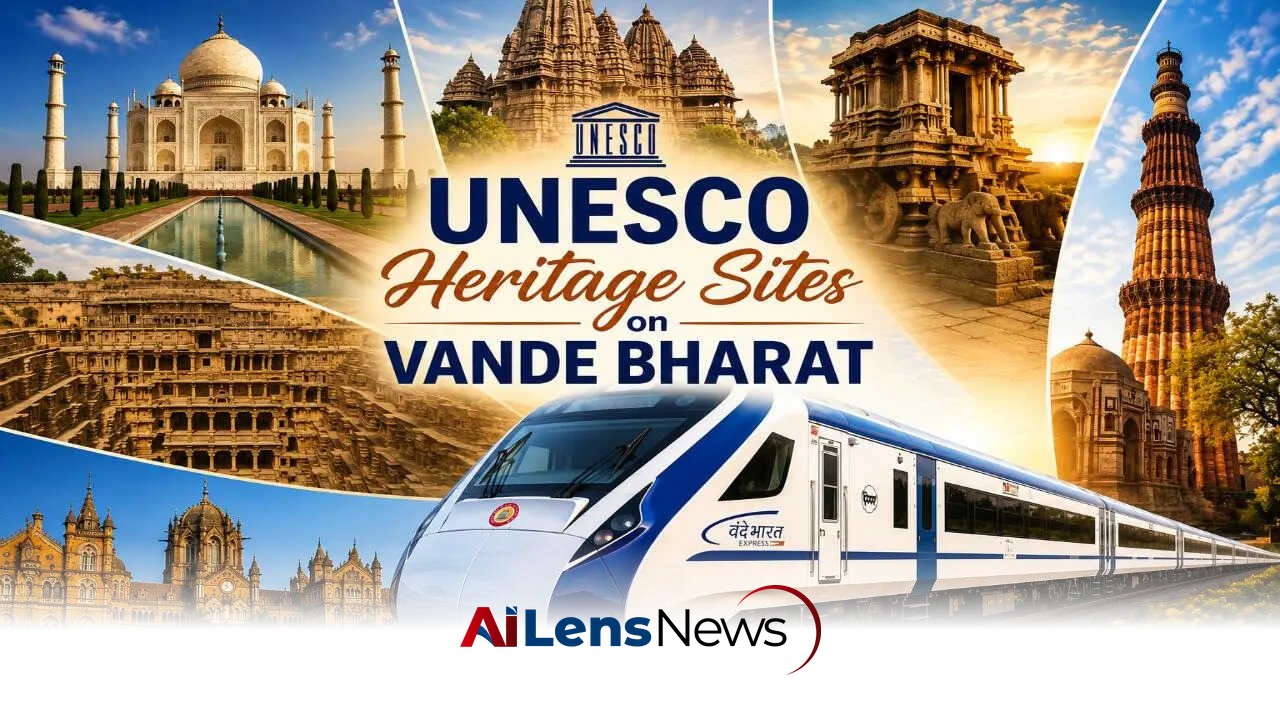


Explore how Vande Bharat Express routes are enhancing heritage travel to UNESCO World Heritage Sites across .
New Delhi, India Jul 8, 2026 ALN: The expanding Vande Bharat Express network is revolutionizing heritage travel in , making it faster and more accessible than ever before. With its modern amenities and efficient service, the Vande Bharat trains are connecting travelers to some of the country's most renowned UNESCO World Heritage Sites, enhancing the travel experience for both domestic and international tourists. This initiative is part of a larger movement to promote sustainable tourism while preserving the rich cultural heritage that has to offer.
is home to 40 UNESCO World Heritage Sites, each representing a unique aspect of the country’s rich cultural heritage and history. These sites, which include centuries-old temple complexes and stunning Mughal monuments, reflect the diverse traditions, architectural brilliance, and historical significance that define . The introduction of Vande Bharat routes allows tourists to experience these remarkable locations with ease, providing a seamless link between urban centers and these treasured sites. The significance of these sites extends beyond their aesthetic appeal; they are vital to understanding 's historical narrative and cultural evolution.
Traveling by Vande Bharat offers several advantages for heritage enthusiasts seeking to explore 's historical landmarks:
The expansion of the Vande Bharat Express network has significant implications for heritage tourism in . By providing efficient transportation options, the government is actively promoting the exploration of cultural heritage, which can lead to increased tourism revenue. Heritage tourism not only boosts the local economy but also raises awareness about the importance of preserving historical sites. The cultural exchange that occurs when tourists visit these sites can foster a greater understanding of 's diverse heritage.
Moreover, the ease of access to these UNESCO sites encourages a deeper appreciation for 's diverse cultural landscape. As more travelers visit these sites, there is a growing opportunity for local communities to engage in sustainable tourism practices, ensuring that the benefits of tourism are shared widely. Local artisans, guides, and businesses can thrive as they cater to the influx of tourists, creating a positive feedback loop that enhances the community's economic resilience.
However, this increased footfall can also pose challenges. The preservation of these sites is paramount, and it is essential to implement measures that protect them from the adverse effects of mass tourism. This includes managing visitor numbers, maintaining the integrity of the sites, and ensuring that local communities are involved in tourism development. The balance between promoting tourism and preserving heritage requires careful planning and collaboration among stakeholders, including government agencies, local communities, and conservationists.
The Vande Bharat Express is not just a mode of transportation; it's a gateway to 's rich heritage. As more routes are introduced, travelers have the opportunity to explore the country's historical treasures in a convenient and enjoyable manner. The initiative aligns with broader goals of promoting cultural tourism, enhancing the travel experience, and fostering a greater understanding of 's historical significance among both domestic and international visitors.
In conclusion, the Vande Bharat Express serves as a vital link between the past and the present, inviting travelers to discover the stories embedded in 's UNESCO World Heritage Sites. As the network continues to expand, it promises to open new avenues for heritage exploration, ensuring that the rich tapestry of n culture remains accessible to all. By embracing this modern means of travel, tourists can engage with 's history and culture in a way that is both meaningful and enriching.
To learn more about the latest developments in Travel & Adventure, stay updated with our exclusive reports and analyses on AiLensNews.

