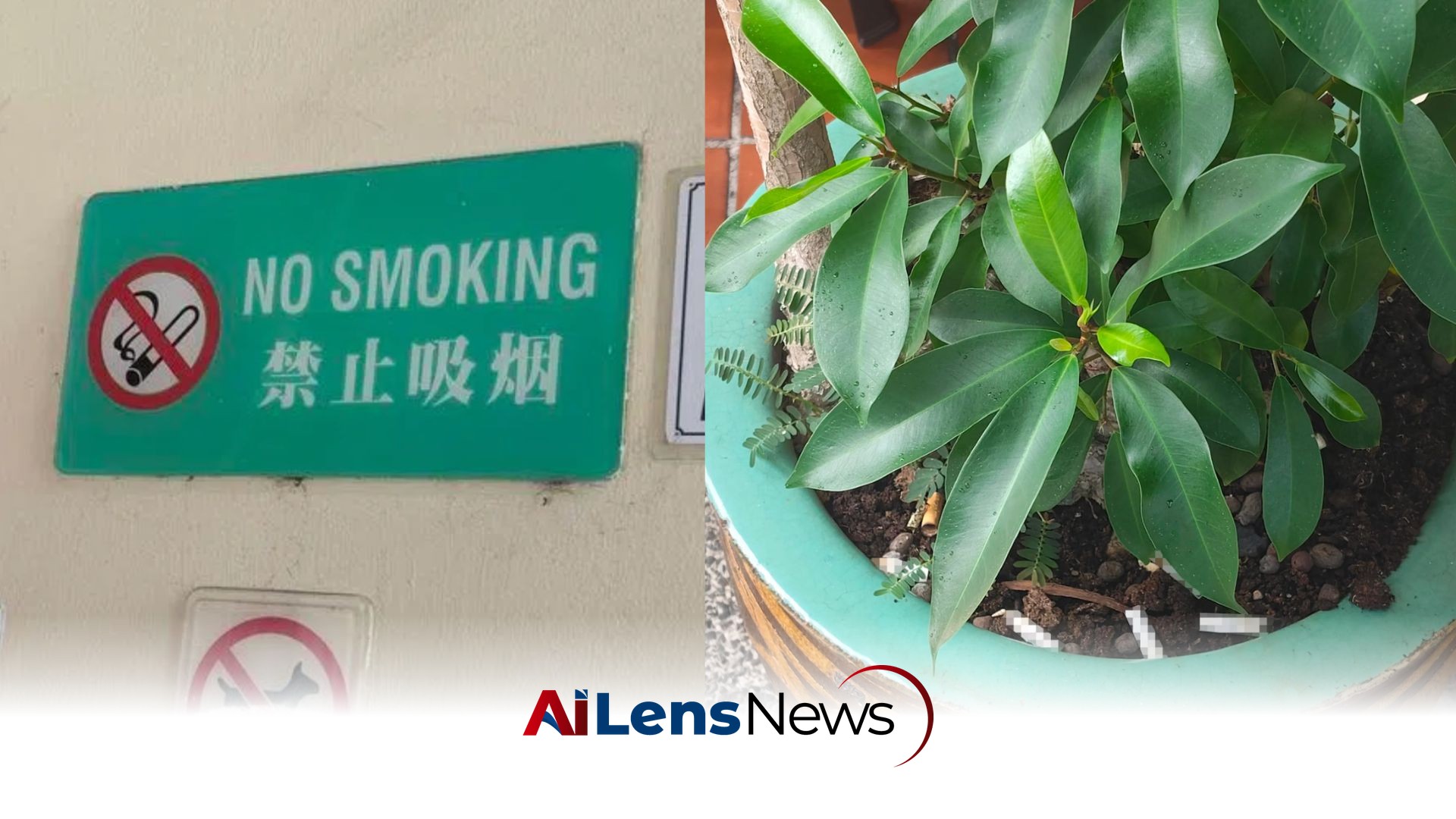


Despite displaying 14 no-smoking signs, a coffee shop in Singapore struggles with littering from smokers, leaving cigarette butts in its potted plants.
Singapore, Singapore Jul 11, 2026 ALN: Despite putting up 14 no-smoking signs around its premises, a coffee shop in Beach Road continues to struggle with smokers who ignore the warnings and leave cigarette butts in its potted plants.
According to Shin Min Daily News, the coffee shop at 37 Beach Road has been dealing with the problem for some time. Besides making the place look untidy, the cigarette butts also do not decompose naturally and should not be discarded in flower pots. The presence of these discarded butts not only detracts from the aesthetic appeal of the coffee shop but also poses environmental concerns. Cigarette butts are made of cellulose acetate, a type of plastic that can take years to decompose, thus contributing to the growing issue of plastic pollution.
When a reporter visited the coffee shop, no-smoking signs could be seen on the walls, pillars, and tables. Even so, numerous cigarette butts were found scattered among the potted plants outside the shop. This observation underscores a significant challenge faced by many establishments in urban areas where outdoor seating is common. The juxtaposition of a vibrant coffee culture and the realities of tobacco use creates a complex scenario for business owners who wish to cater to a diverse clientele while maintaining a clean environment.
The issue of littering cigarette butts is not isolated to this coffee shop; it reflects a broader trend seen in many urban settings where smoking is prevalent. Despite stringent regulations, the behavior of some smokers continues to undermine efforts to maintain cleanliness in public spaces. This situation raises critical questions about social responsibility and the effectiveness of current regulations aimed at controlling smoking in public areas.
Speaking to Shin Min, the coffee shop owner expressed frustration over the situation, stating that there was little they could do, as the smokers were outside the premises and they did not feel they had the authority to stop them. This sentiment is echoed by many business owners who feel powerless in enforcing regulations that are often disregarded by the public. The issue raises questions about the effectiveness of signage and whether additional measures, such as increased law enforcement or designated smoking areas, might be necessary to address the problem.
One of the challenges in enforcing no-smoking policies is the physical layout of the premises. An employee added that the walkway outside the coffee shop is a blind spot, making it difficult for staff to notice when someone is smoking there. This highlights another layer of complexity in the enforcement of no-smoking policies, as physical layout and design can inadvertently contribute to the problem. The challenge of monitoring areas that are not directly under the control of the business can lead to frustration among staff who wish to uphold the establishment's standards.
Furthermore, the coffee shop's experience is emblematic of a larger societal issue regarding smoking and public health. As smoking rates decline in many urban areas due to increased awareness of health risks and stricter regulations, the remaining smokers often congregate in outdoor spaces. This dynamic creates friction between smokers and non-smokers, necessitating a balanced approach that respects the rights of smokers while protecting the interests of the wider community.
One customer, who spoke on the condition of anonymity, mentioned that if he spotted someone smoking outside the shop, he would first inform the staff so they could speak to the person. If the problem persisted, he would take photos as evidence and report the matter to the authorities. This proactive approach reflects a growing awareness among patrons regarding the importance of maintaining public spaces and the role individuals can play in fostering a cleaner environment. However, it also raises concerns about the potential for conflict between customers and smokers, as well as the burden placed on staff to manage these interactions.
Smoking-related incidents have made the news before. Earlier this month, a recycling bin at an HDB block in Punggol caught fire, with a resident alleging that smokers had carelessly thrown lit cigarette butts into the bin. Such incidents not only pose safety hazards but also highlight the broader implications of irresponsible smoking behavior. The risk of fire, particularly in densely populated areas, underscores the need for effective public education campaigns that address the dangers associated with improper disposal of cigarette butts.
This ongoing issue highlights the challenges of enforcing no-smoking regulations in public spaces, particularly when smokers disregard posted signs. Despite Singapore's strong stance against smoking in public areas, including the implementation of the Smoking (Prohibition in Certain Places) Act, there remains a persistent problem with compliance. The law aims to protect non-smokers from the harmful effects of secondhand smoke while promoting a cleaner environment. However, the effectiveness of these regulations can be undermined when individuals choose to ignore them.
In response to these challenges, the coffee shop's management continues to seek solutions to maintain a clean and welcoming environment for all patrons. Potential strategies could include increased visibility of staff in outdoor areas, the installation of additional waste receptacles specifically for cigarette butts, or even collaboration with local authorities to enhance enforcement efforts. Engaging the community in discussions about the importance of responsible smoking practices could foster a culture of respect for shared spaces.
Moreover, the coffee shop's predicament reflects a broader societal challenge regarding smoking and public health. As smoking rates decline in many urban areas due to increased awareness of health risks and stricter regulations, the remaining smokers often congregate in outdoor spaces, creating friction with non-smokers. This dynamic necessitates a balanced approach that respects the rights of smokers while protecting the interests of the wider community.
In conclusion, the situation at the coffee shop on Beach Road serves as a microcosm of the ongoing struggle to manage smoking in public spaces. As cities continue to evolve and prioritize public health, the need for innovative solutions and community engagement becomes increasingly vital. Addressing the littering of cigarette butts, particularly in aesthetically sensitive areas such as coffee shops, is crucial not only for maintaining cleanliness but also for fostering a culture of respect for public spaces. The coffee shop's experience may resonate with many other establishments facing similar challenges, highlighting the need for collective action and responsibility in the pursuit of a cleaner and healthier environment for all.
To learn more about the latest developments in Home & Living, stay updated with our exclusive reports and analyses on AiLensNews.

