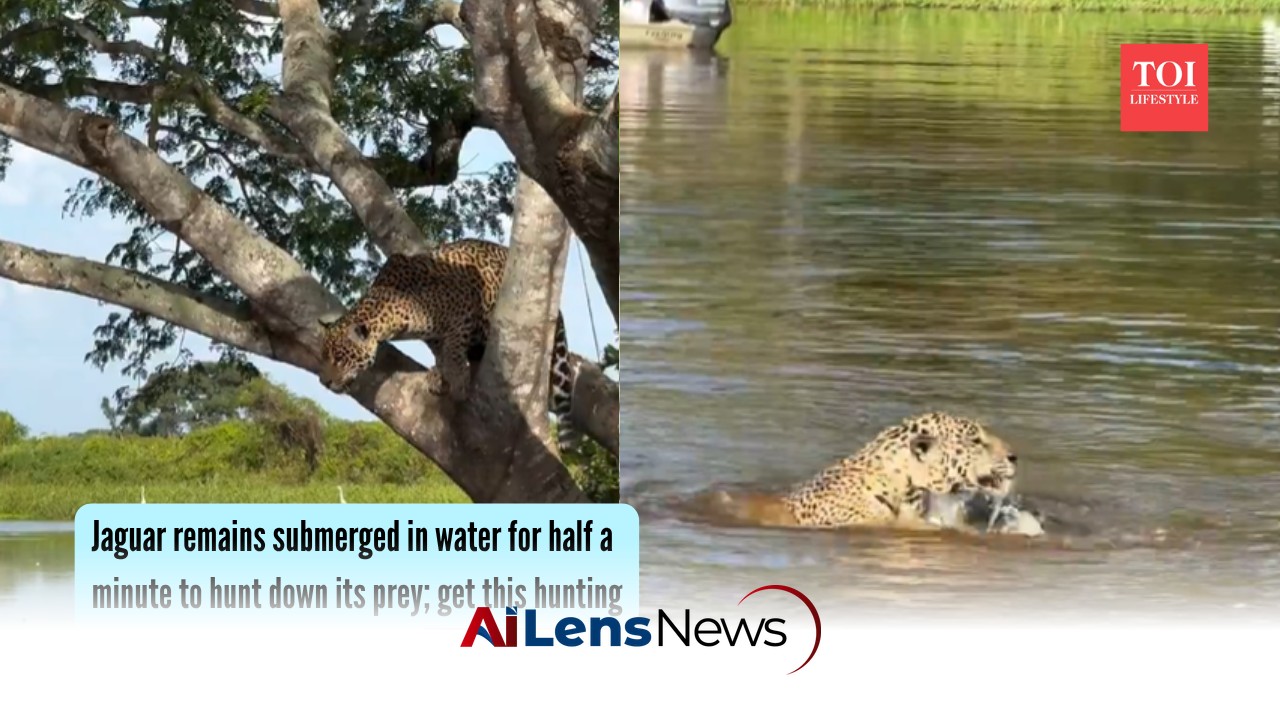


A viral video showcases a jaguar's remarkable underwater hunting technique, learned from its mother, highlighting the species' impressive skills.
New Delhi, India Jul 9, 2026 ALN: A viral video has captured the extraordinary hunting technique of a jaguar as it hunts a caiman underwater. This remarkable method involves the jaguar submerging itself for nearly thirty-four seconds, showcasing its ability to adapt to its environment for survival. The jaguar's hunting prowess is not just an isolated incident but a reflection of its evolutionary adaptations that have developed over thousands of years. These adaptations highlight the jaguar's role within its ecosystem and underscore the importance of understanding such behaviors in the context of wild conservation.
Jaguars (Panthera onca) are the largest cats in the Americas and the third-largest cats in the world, following tigers and lions. They inhabit diverse environments, ranging from tropical rainforests to savannas and wetlands. Their unique hunting strategies are a product of both their physical characteristics and their learned behaviors. Jaguars are known for their immense biting force, which allows them to pierce the skulls of reptiles directly. This unique hunting strategy is a combination of their evolved skull structure and learned behavior, making them one of the most effective predators in their habitat.
The jaguar's jaw structure is particularly adapted for its predatory . Unlike other big cats that kill their prey by suffocation or by biting the throat, jaguars have powerful jaws that can crush bones. This extraordinary biting force allows them to target armored reptiles, such as caimans and turtles, which are often found in their natural habitats. The ability to hunt such formidable prey is a testament to their evolutionary success and ecological niche. This adaptation not only increases their chances of survival but also positions them as a keystone species within their ecosystem.
Young jaguars, or cubs, learn this vital survival skill from their mothers through careful observation. This maternal teaching is crucial, as it equips the cubs with the necessary skills to thrive in the wild. The mother jaguar plays a pivotal role in the development of her cubs, not only by providing food but also by demonstrating hunting techniques and strategies. This learning process is essential for the cubs, as they must develop the skills needed to hunt independently once they are weaned. The transmission of knowledge from mother to offspring is a common theme in the animal kingdom, emphasizing the importance of parental guidance in survival.
The underwater hunting technique not only demonstrates the jaguar's physical prowess but also highlights the importance of maternal guidance in the animal kingdom. By watching their mothers, cubs gain insights into effective hunting strategies, ensuring the continuation of these skills across generations. This form of learning is known as observational learning, which is prevalent among many species, including primates, birds, and other mammals. The ability to learn from others is a critical survival skill that enhances the adaptability of a species.
As wild enthusiasts and researchers study these behaviors, they gain a deeper understanding of the complex interactions between jaguars and their environment. This knowledge is essential for conservation efforts aimed at protecting these magnificent creatures and their habitats. The jaguar's role as an apex predator is vital for maintaining the health of its ecosystem. By controlling the populations of herbivores and other prey species, jaguars help to ensure a balanced ecosystem, which is crucial for biodiversity.
However, jaguars face numerous threats that jeopardize their survival. Habitat loss due to deforestation, agricultural expansion, and urban development has significantly reduced their natural habitats. Additionally, poaching and illegal wild trade pose serious risks to their populations. As a result, conservationists are working tirelessly to implement protective measures and create wild corridors that allow jaguars to roam freely between fragmented habitats. Understanding their hunting techniques and behaviors is integral to developing effective conservation strategies that can help protect these big cats and their ecosystems.
In conclusion, the jaguar's ability to hunt underwater is a testament to its adaptability and strength. Through the lessons learned from their mothers, these big cats continue to thrive in the wild, showcasing the intricate balance of nature. The interplay between physical adaptations and learned behaviors is a fascinating aspect of jaguar biology that not only highlights their role as apex predators but also emphasizes the importance of maternal influence in the animal kingdom. As we continue to observe and study these remarkable creatures, we gain invaluable insights into the complexities of wild and the urgent need for conservation efforts to ensure their survival in an ever-changing world.
To fully appreciate the significance of the jaguar's hunting technique, it is essential to understand the ecological context in which these animals operate. Jaguars are often referred to as "keystone species" because their predation helps maintain the structure of the ecosystem. By preying on herbivores, they prevent overgrazing, which can lead to habitat degradation. This balance is crucial not only for the survival of numerous other species but also for the overall health of the ecosystem.
The jaguar's hunting behavior also reflects a broader narrative about the challenges faced by apex predators globally. Many large carnivores are declining due to habitat fragmentation, human-wild conflict, and climate change. In the case of the jaguar, the encroachment of agricultural practices into their territories has led to increased encounters with humans, often resulting in negative outcomes for both parties. Conservation strategies must, therefore, not only focus on protecting the species but also on fostering coexistence between jaguars and human communities.
Efforts to conserve the jaguar population have included establishing protected areas and wild reserves that provide safe habitats for these cats. Additionally, community-based conservation initiatives have been developed to engage local populations in protecting their natural resources. By raising awareness about the ecological importance of jaguars and involving communities in conservation efforts, there is potential to create a more sustainable future for both jaguars and humans.
In light of the jaguar's unique hunting techniques and their implications for conservation, it is crucial for researchers and conservationists to continue studying these behaviors. Long-term studies can provide insights into how jaguars adapt to changes in their environment and how those adaptations can inform conservation strategies. By understanding the nuances of jaguar behavior, conservationists can develop targeted interventions that address the specific threats faced by these magnificent animals.
Ultimately, the story of the jaguar is not just about a solitary predator in the wild; it is a narrative woven into the fabric of the ecosystems they inhabit. Their hunting techniques, learned behaviors, and role as apex predators are all interconnected aspects that highlight the complexity of nature. As we strive to protect these incredible creatures, we must also recognize the broader ecological implications of their presence and the need for comprehensive conservation strategies that address the myriad challenges they face.
To learn more about the latest developments in Health & Wellness, stay updated with our exclusive reports and analyses on AiLensNews.

