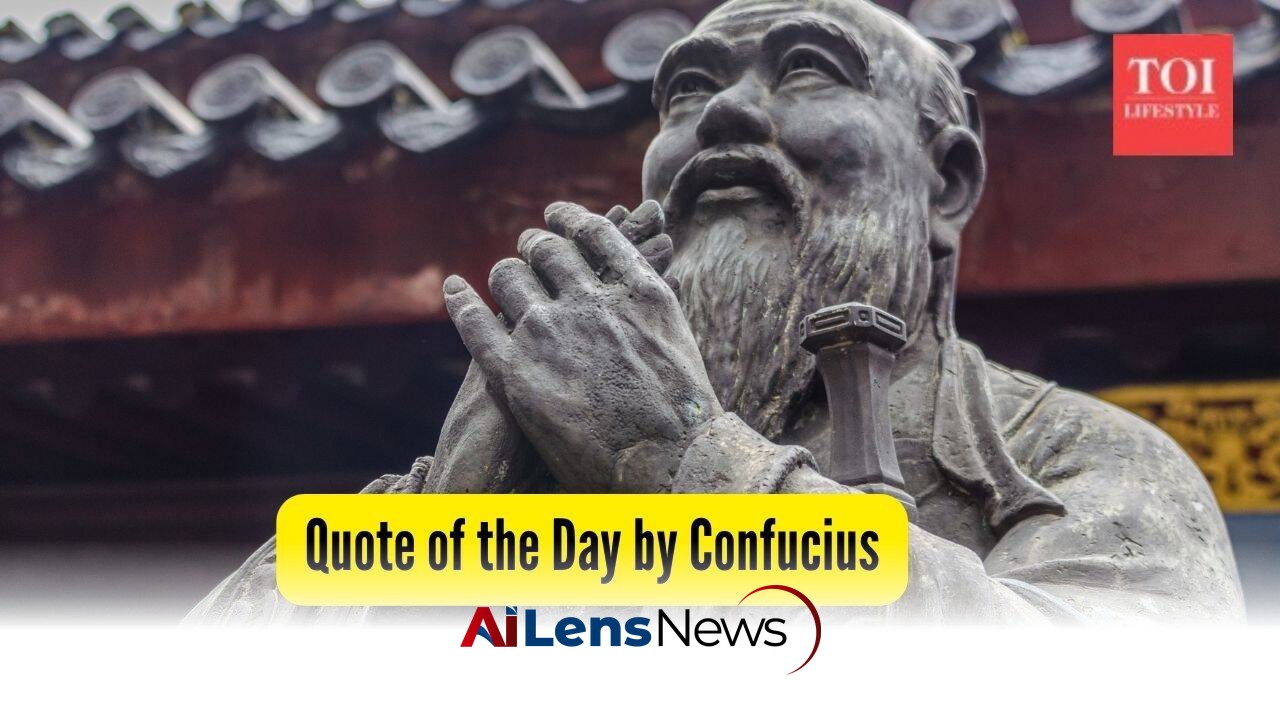


Confucius's teachings continue to inspire personal growth and societal harmony, emphasizing character and accessible education.
New Delhi, India Jul 26, 2026 ALN: Confucius, a Chinese philosopher who lived from 551 to 479 BCE, has left an indelible mark on the world through his teachings, which have profoundly shaped Asian cultures and continue to inspire people today. His philosophy emphasizes the importance of individual character and ethical governance, which are essential for creating a better society. The relevance of Confucian thought extends beyond its historical context, as it offers valuable insights into contemporary issues such as education, leadership, and social harmony.
One of the core beliefs of Confucius was that education should be accessible to all. This revolutionary idea transformed learning methods and made education a fundamental right rather than a privilege. In ancient China, education was largely reserved for the elite, but Confucius advocated for a system where individuals from all walks of could pursue knowledge. He believed that education was not merely about acquiring facts but about cultivating virtue and moral integrity. This emphasis on education has influenced generations, encouraging individuals to seek knowledge and self-improvement, and has laid the groundwork for modern educational systems that prioritize inclusivity and equal opportunity.
Confucius's ideas have not only impacted individual lives but have also influenced governments and social customs across East Asia for centuries. His teachings advocate for moral integrity and responsibility, which are vital for effective leadership and governance. The concept of the "Junzi," or "gentleman," is central to Confucian thought; it refers to an individual who embodies moral virtue and ethical conduct. In this framework, leaders are expected to be role models, demonstrating integrity and righteousness in their actions. This principle has been particularly significant in shaping the governance structures of countries such as China, Korea, and Japan, where Confucian ideals have historically informed political philosophy and public administration.
Moreover, the wisdom of this ancient thinker offers timeless lessons that resonate with modern challenges. In a world often divided by conflict and misunderstanding, Confucius's emphasis on harmony and respect for others serves as a guiding principle for personal growth and societal cohesion. His teachings encourage individuals to cultivate empathy and understanding, fostering a culture of dialogue and cooperation. This is especially pertinent in today's globalized society, where diverse cultures and perspectives frequently intersect, leading to both opportunities for collaboration and potential sources of conflict.
One of the key tenets of Confucianism is the idea of "Ren," often translated as "benevolence" or "humaneness." This concept underscores the importance of compassion and kindness in interpersonal relationships. In contemporary society, where individualism often prevails, the reminder to prioritize the welfare of others can be transformative. By practicing Ren, individuals contribute to a more compassionate society, promoting social responsibility and community engagement. The call for benevolence is especially relevant in today's world, where social media and technology can often lead to isolation and a lack of genuine connections among individuals.
Another significant aspect of Confucian thought is the importance of ritual, or "Li." These rituals encompass not only formal ceremonies but also everyday practices that reflect respect and order in social interactions. In modern contexts, the principles of Li can be seen in the way people conduct themselves in various social settings, from professional environments to family gatherings. Upholding these rituals fosters a sense of community and belonging, which is essential for social stability and cohesion. In a fast-paced world where traditional values are some overlooked, the emphasis on Li serves as a reminder of the importance of maintaining social harmony through respectful interactions.
Confucius also emphasized the value of long learning, advocating for continuous self-improvement and personal development. This idea resonates deeply in today’s fast-paced world, where adaptability and growth are crucial for success. By encouraging individuals to remain open to new ideas and experiences, Confucianism promotes a mindset that values resilience and innovation. In the face of rapid technological advancements and societal changes, the ability to learn and adapt is more important than ever. As industries evolve and new challenges arise, the principles of long learning encourage individuals to pursue knowledge actively and embrace change as an opportunity for growth.
Furthermore, Confucianism's focus on ethical leadership has implications for contemporary political systems. In an era marked by political polarization and ethical dilemmas, the call for leaders to embody moral integrity and prioritize the common good is particularly relevant. Confucian principles can serve as a framework for evaluating leadership qualities, encouraging voters and citizens to demand accountability and ethical behavior from their leaders. This alignment of personal ethics with public service can lead to more effective governance and a more engaged citizenry. As societies grapple with issues like corruption and lack of transparency, the Confucian ideal of the Junzi serves as a model for the kind of leaders who can inspire trust and promote the welfare of the community.
In conclusion, the teachings of Confucius remain relevant today, providing valuable insights into character development and the importance of education. His philosophy encourages us to strive for excellence in our personal lives and to contribute positively to society. As the world grapples with complex social and ethical challenges, the enduring wisdom of Confucius offers a guiding light, reminding us of the importance of virtue, respect, and harmonious coexistence. By embracing these principles, we can work towards building a more just and compassionate world, rooted in the values that Confucius championed over two millennia ago. The application of Confucian thought in modern contexts not only enriches individual lives but also contributes to the overall betterment of society, fostering a culture that values ethical behavior, education, and community engagement.
To learn more about the latest developments in Mind & Soul, stay updated with our exclusive reports and analyses on AiLensNews.

