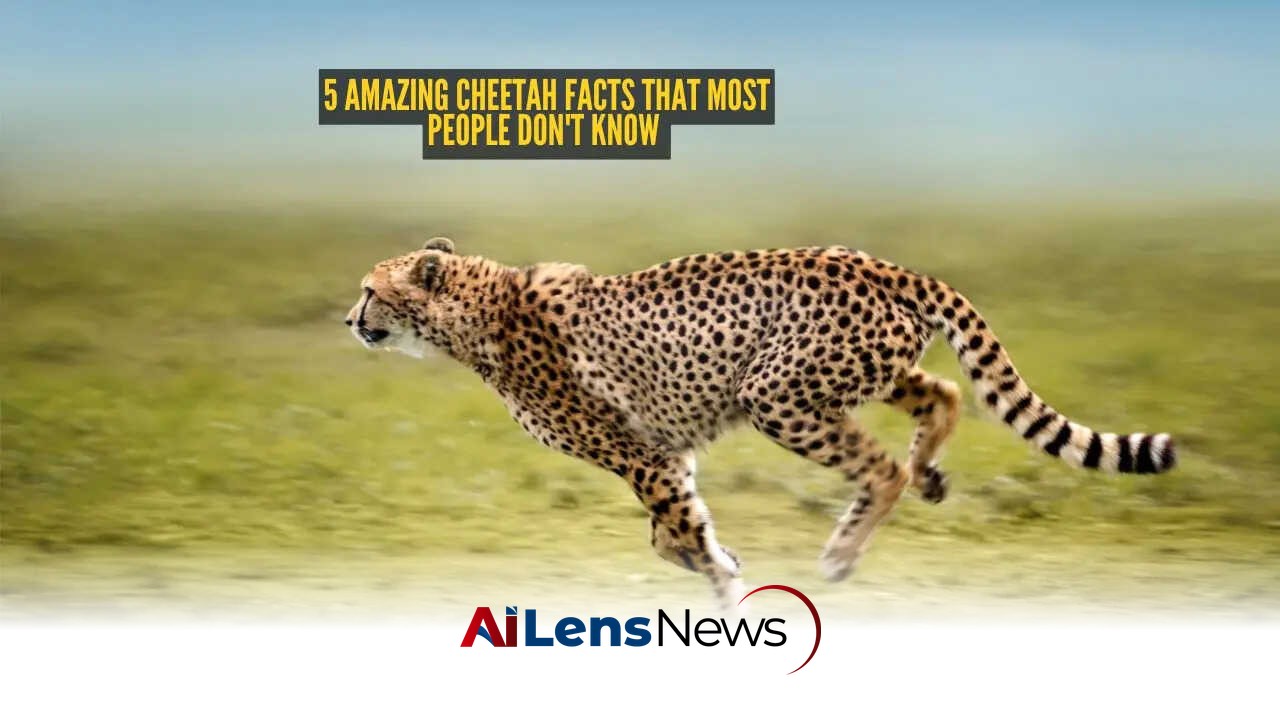


Discover surprising traits of the cheetah beyond its speed, revealing the unique characteristics that make this animal truly remarkable.
New Delhi, India Jul 7, 2026 ALN: The cheetah, scientifically known as Acinonyx jubatus, is often celebrated for its remarkable speed, capable of reaching up to 70 miles per hour in short bursts while chasing prey. However, reducing this magnificent creature solely to its racing prowess overlooks the multifaceted nature of its biology and behavior. Here, we explore five amazing facts about cheetahs that highlight their unique adaptations and the challenges they face in the wild.
One of the most surprising aspects of the cheetah is its distinctive physical characteristics that contribute to its incredible speed. Unlike other big cats, cheetahs possess a lightweight body structure, with long legs and a flexible spine that allows for an extended stride length. This anatomical design enables them to cover ground rapidly. Additionally, their large nasal passages and lungs facilitate increased oxygen intake during high-speed chases. This adaptation is essential for their hunting strategy, which relies heavily on short, explosive bursts of speed to catch prey. However, this specialization comes at a cost; cheetahs are not built for endurance. After a sprint lasting around 20 to 30 seconds, they require a significant recovery period to regain their breath and energy. This physiological limitation means that cheetahs must be strategic in their hunting, often choosing the best moments to sprint in order to maximize their chances of success.
Another fascinating fact about cheetahs is their unique social structure. Unlike lions, which are known for their pride-based social systems, cheetahs often lead solitary lives, particularly females. Female cheetahs tend to be more solitary, rearing their cubs alone. This solitary behavior is thought to be a survival strategy, as it reduces competition for resources and minimizes the risk of attracting predators to their young. On the other hand, male cheetahs may form small groups known as coalitions, typically consisting of brothers. This social behavior can enhance their hunting success and allow them to protect their territory from other males. The dynamics of these coalitions can be complex, as they navigate competition and cooperation in their quest for survival. Males in coalitions often work together to defend their territory against intruding males and to increase their chances of mating with females.
In addition to their social structures, cheetahs exhibit remarkable adaptations in their hunting techniques. They rely on their keen eyesight to spot prey from a distance, often hunting during the day when visibility is optimal. This diurnal behavior sets them apart from many other big cats, which tend to be nocturnal. Cheetahs employ a strategy known as 'stalk and sprint,' where they use their agility and speed to close the distance between themselves and their prey, often targeting smaller ungulates such as gazelles and impalas. The cheetah's hunting is not only about speed; it also requires stealth and precision to ensure a successful kill. This combination of factors makes cheetahs highly specialized hunters, capable of taking down prey that is often faster and more agile than themselves.
Moreover, cheetahs have a unique communication system that includes vocalizations and body language. They are known for their distinctive chirping sound, which is often used to communicate with their cubs or during social interactions with other cheetahs. This chirping can serve various purposes, such as signaling location or alerting others to danger. Additionally, they employ a range of other sounds, such as growls, hisses, and purrs, to convey different messages. This vocal repertoire plays a crucial role in their social interactions and can help them maintain cohesion within their groups. The ability to communicate effectively is vital for their survival, especially in the context of hunting and raising young.
Despite their incredible adaptations and unique behaviors, cheetahs face numerous threats in the wild. Habitat loss due to human encroachment, poaching, and conflicts with livestock are significant challenges that have led to a decline in their populations. As human populations expand into traditional cheetah habitats, the availability of prey diminishes, and the risk of human-wild conflict increases. Cheetahs are often seen as threats to livestock, leading to retaliatory killings by farmers. As a result, cheetahs are currently classified as vulnerable by the International Union for Conservation of Nature (IUCN). Conservation efforts are underway in various regions to protect their habitats and promote coexistence with local communities. These initiatives often involve educating communities about the ecological importance of cheetahs and implementing measures to mitigate human-wild conflict, such as compensation programs for livestock losses and the use of non-lethal deterrents.
Understanding the complexities of cheetah behavior and ecology is essential for their conservation. Research has shown that preserving their natural habitats and ensuring genetic diversity within populations are critical for their long-term survival. Conservationists are also exploring innovative solutions, such as wild corridors that connect fragmented habitats, allowing cheetahs to roam freely and access resources necessary for their survival. These corridors can help mitigate the impacts of habitat fragmentation, which is a significant threat to many wild species, including cheetahs. By connecting isolated populations, these corridors can enhance genetic diversity and increase the chances of successful breeding.
In conclusion, the cheetah is a remarkable species that embodies a unique combination of speed, agility, and social complexity. While its reputation as the fastest land animal is well-deserved, there is so much more to learn about this extraordinary creature. By appreciating the various aspects of cheetah biology and behavior, we can better understand the importance of protecting them and their habitats. As we strive to ensure a future for cheetahs in the wild, it is crucial to recognize the interconnectedness of all species and the role that each plays in the delicate balance of our ecosystems. The preservation of cheetahs is not just about saving a single species; it is about maintaining the health of the ecosystems they inhabit and the myriad of forms that depend on those ecosystems. Through continued research, education, and conservation efforts, we can work together to secure a future for cheetahs and the diverse wild they represent.
To learn more about the latest developments in Home & Living, stay updated with our exclusive reports and analyses on AiLensNews.

