

Salar al Khafaji's Monumental aims to revolutionize construction with autonomous bricklaying robots, backed by significant funding to tackle labor shortages.
Washington DC, United States Jul 15, 2026 ALN: Salar al Khafaji, an entrepreneur with a notable history in the technology sector, sold his previous venture, Silk, to Palantir in 2016. Shortly after departing from Silk, he recognized a pressing need to innovate once again. This time, he set his sights on the construction industry, a sector that many in the tech community regard as fraught with challenges and often likened to a graveyard for startups. Al Khafaji recalls the skepticism he faced when he announced his plans: "Most people told me it’s a really, really bad idea." Despite the doubts, he forged ahead, convinced that advancements in robotics could address some of the industry's most significant pain points.
Al Khafaji's efforts culminated in the establishment of Monumental, a construction robotics company based in Amsterdam. Recently, Monumental secured a $32 million Series B funding round led by Khosla Ventures, following a $25 million funding round in February 2024 co-led by Plural and Hummingbird. This latest infusion of capital is aimed at facilitating Monumental's entry into the U.S. market this year, expanding its fleet of robots across Europe, and enhancing the variety of tasks its machines can perform.
However, the skepticism surrounding the construction technology landscape is not unfounded. Over the past seven years, the sector has consumed a significant amount of venture capital, yet investment activity has plummeted by 33% year-on-year. High-profile failures, such as Katerra—a SoftBank-backed startup that attempted to revolutionize the entire construction supply chain—serve as cautionary tales. Katerra raised over $1 billion before declaring bankruptcy in 2021, highlighting the risks associated with ambitious technological overhauls in an industry resistant to change. Similarly, Australia’s FBR developed a truck-mounted bricklaying robot capable of laying up to 360 blocks per hour, but the machine's steep price tag of nearly $6 million per unit has deterred many contractors from making such a substantial upfront investment in unproven technology. These cautionary examples underscore a recurring theme in construction tech: innovative technology coupled with flawed business models often leads to disillusionment and abandonment.
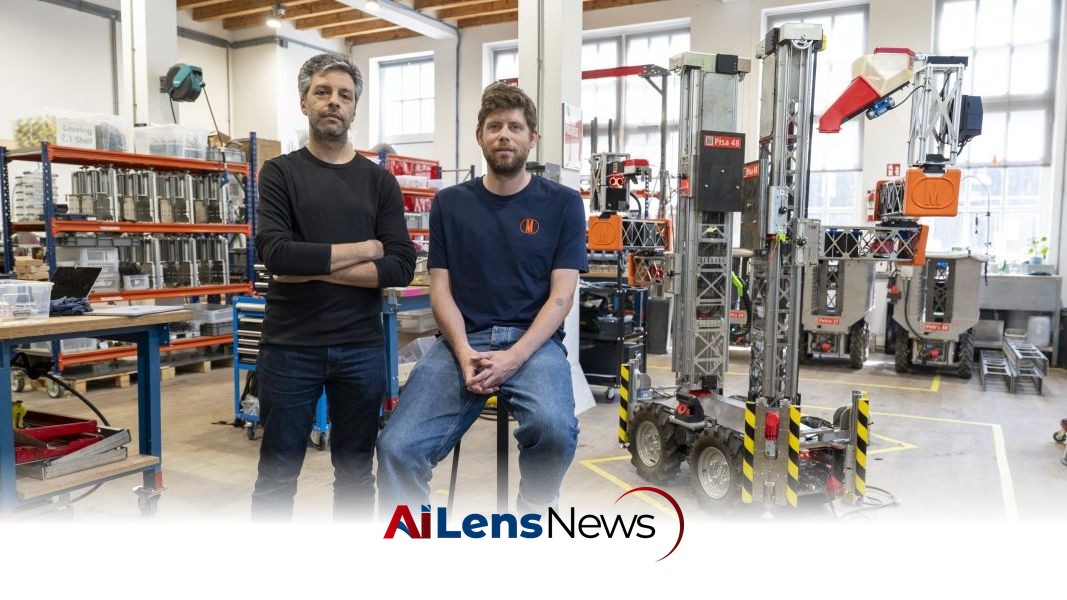
Monumental differentiates itself by deploying fleets of compact, electric, self-driving bricklaying robots that autonomously lay walls on construction sites. The company's operational model resembles that of a specialized subcontractor—similar to how general contractors hire experts for plumbing or electrical work—except that Monumental's workforce consists entirely of robots. Contractors receive quotes based on familiar metrics, such as per brick or per square meter, while Monumental manages all operational aspects. Al Khafaji succinctly describes their offering: "We’re selling them a wall." This approach not only simplifies the contracting process but also allows for seamless integration into existing construction workflows.
One of Monumental's strategic advantages lies in its ability to utilize the same bricks and mortar that contractors already specify. This design choice means that the company does not introduce new materials that would require regulatory approval, effectively circumventing one of the significant barriers that have hindered the success of previous construction tech startups. Currently, Monumental has deployed over 150 robots on active job sites across Europe, demonstrating both the viability of its technology and its potential for scaling.
Monumental's emergence comes at a time when the construction industry is grappling with a severe labor shortage. Globally, construction accounts for approximately 13% of the world's GDP, yet productivity gains have remained stagnant for nearly five decades. In the United States alone, the industry is projected to require 349,000 net new workers by 2026 to meet growing demands, with a housing shortfall estimated at 3 to 4 million units. Al Khafaji is acutely aware of the scale of the challenge, stating, "You could have 10,000 robots a day and we would literally have just touched a few percentage points of the shortage." This perspective frames Monumental’s mission as one of filling gaps in the workforce rather than displacing existing workers, a narrative that may serve as a political buffer as the company navigates a market characterized by strong union presence and tightening immigration policies that have already begun to shrink the informal labor pool that many construction firms rely on.
Monumental is not alone in its pursuit of innovation within the construction sector. In November of the previous year, Gravis Robotics, based in Zurich, raised $23 million to enhance existing heavy machinery—such as excavators and loaders—with cameras and artificial intelligence capabilities, enabling them to operate autonomously or be remotely guided via tablet. This trend reflects a broader movement within the construction industry to leverage technology for improved efficiency and productivity.
Additionally, established equipment manufacturers such as Caterpillar, Komatsu, and Volvo are actively exploring the autonomous construction equipment market, which is projected to be valued at $10 billion by 2025, with an annual growth rate of 7.9%. While Gravis Robotics focuses on retrofitting existing machines, Monumental opts to deploy its fleet from the ground up, emphasizing a distinct market approach.
Monumental has identified key U.S. states—namely Texas, Florida, Virginia, and Arizona—as initial targets for its expansion, where construction activity is robust and labor shortages are particularly pronounced. Al Khafaji has set an ambitious benchmark for the next 18 months, aiming for a permanently deployed fleet in the high double to low triple digits across at least two states. Looking further ahead, the company's roadmap envisions a gradual evolution from bricklaying to the construction of full facades, with Al Khafaji envisioning a future where Monumental robots are a common sight on construction sites. He mused, "Someday, you’ll drive around and find them on an average construction site." This vision reflects not only his aspirations for Monumental but also the potential for robotics to transform the construction landscape, addressing labor shortages and enhancing productivity in an industry long overdue for innovation.
To learn more about the latest developments in Startup Innovations, stay updated with our exclusive reports and analyses on AiLensNews.

