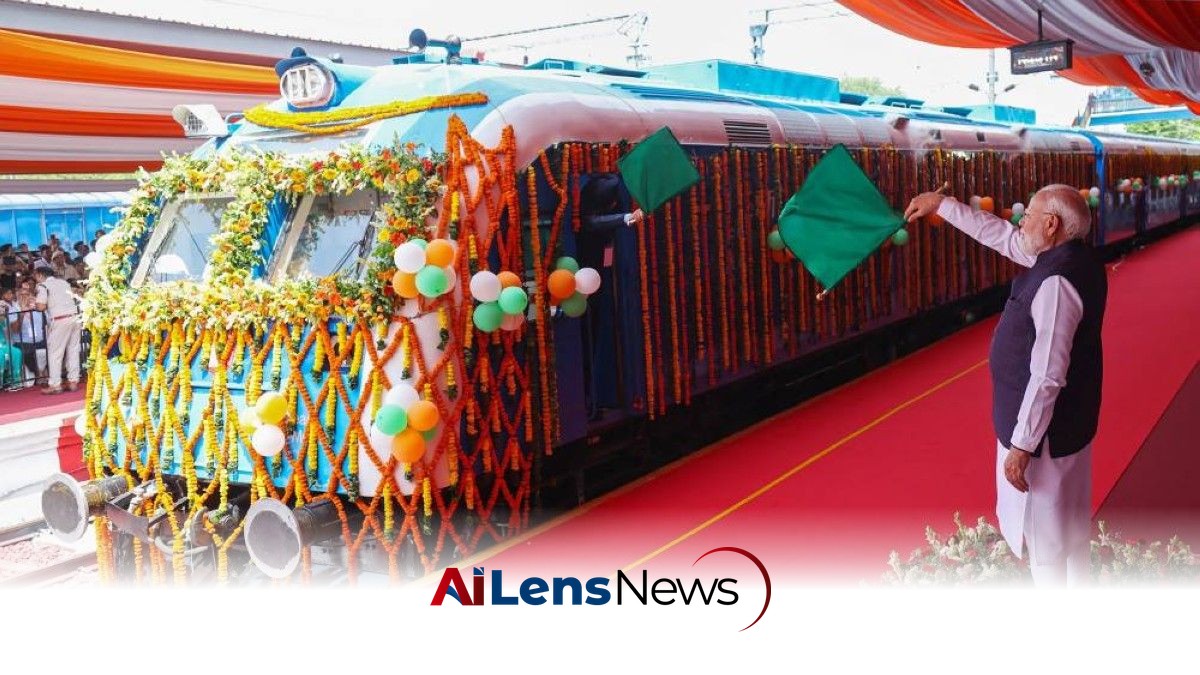


India has launched its inaugural hydrogen-powered train, marking a significant step towards decarbonizing rail transport and reducing fossil fuel reliance.
Kuwait City, Kuwait Jul 18, 2026 ALN: JIND, India: India launched its first hydrogen-powered train Friday, joining a small group of nations testing the technology as part of efforts to decarbonize rail transport and cut dependence on fossil fuels. The project is part of a broader push to modernize one of the world's largest rail networks while reducing carbon emissions. This initiative reflects India's commitment to addressing climate change and transitioning towards sustainable energy sources, particularly in the transportation sector.
The 10-coach train runs along an 89-km route between Jind and Sonipat in India's northern state of Haryana, powered by a 1,200-kilowatt hydrogen fuel cell propulsion system. Officials described the system as the world's most powerful for a train. Hydrogen trains use fuel cells to generate electricity by combining hydrogen and oxygen, emitting only water and steam, making them a clean alternative to traditional diesel-powered trains. This technology not only offers environmental benefits but also represents a significant step forward in the evolution of rail transport.
The introduction of hydrogen-powered trains is a significant step in India's commitment to achieving net-zero carbon emissions by 2070, as outlined in the country’s climate action plan. The Indian government has recognized the urgent need to address climate change and is investing in sustainable technologies across various sectors, including transportation. The rail sector is particularly crucial, as it represents a substantial portion of the country’s overall greenhouse gas emissions. In recent years, India's railways have been responsible for a significant amount of carbon emissions, prompting the need for cleaner alternatives.
Prime Minister Narendra Modi, who flagged off the inaugural journey, expressed optimism about the project, stating, "This is a very significant day in the direction of self-reliant India and sustainable development." The railway ministry stated that the train was "developed entirely in India," although senior officials acknowledged that some key components, including the fuel cells, were imported. This highlights a common challenge in the transition to green technologies: while countries may lead in innovation, they often rely on global supply chains for critical components. The reliance on imports for essential parts of the hydrogen train underscores the need for India to develop its own manufacturing capabilities in green technology sectors.
The ministry also inaugurated what it described as the country's largest railway hydrogen storage and refueling facility in Jind, with a capacity of some 3,000 kilograms, to support hydrogen-powered train operations. This facility is essential for the operational viability of hydrogen trains, as it enables the storage and distribution of hydrogen fuel necessary for their journeys. The pilot project cost around $12 million, according to a senior railway official who acknowledged it was significantly more expensive than a comparable conventional service. However, he said costs were expected to fall as the technology matures and economies of scale are realized. This investment reflects the government's commitment to supporting innovative transport solutions, despite the higher initial costs associated with new technologies.
India's move to hydrogen trains comes at a time when many countries around the world are exploring alternative energy sources to power their public transport systems. Countries such as Germany, Japan, China, and the United States are testing or operating hydrogen-powered trains, showcasing a growing trend towards cleaner, more sustainable rail transport solutions. In Germany, for instance, hydrogen trains have been successfully operating in commercial service since 2018, and the technology has gained traction as a viable alternative to diesel engines in areas where electrification of the rail network is not feasible. This global trend highlights the importance of international collaboration and knowledge sharing in advancing hydrogen technology.
India's railways have undergone a major transformation since the first passenger steam train puffed out in 1853 from Mumbai. The rail system, which is one of the largest in the world, has been the backbone of the country’s transport infrastructure, facilitating the movement of millions of passengers and goods across vast distances. In recent years, New Delhi has pumped billions of dollars in investment aimed at upgrading infrastructure, improving safety, and expanding capacity. The vast network carried 7.41 billion passengers and 1.67 billion tons of freight last year, official data shows. This immense scale of operations makes the transition to cleaner technologies even more critical in reducing the environmental impact of rail transport.
In addition to the hydrogen train initiative, India has also introduced its domestically designed Vande Bharat trains, which can reach speeds of up to 180 km per hour. These trains represent a significant advancement in terms of speed and passenger comfort and are part of India's strategy to modernize its rail services. At the same time, the country is building its first high-speed rail line using Japanese Shinkansen technology. Officials expect the bullet train, designed to operate at up to 320 kph, to begin service on its first section in 2027, further enhancing the efficiency and speed of rail travel in India. This modernization effort is not only about speed but also about improving the overall travel experience for passengers, which is essential for increasing rail usage in a country with a growing middle class.
The implications of introducing hydrogen-powered trains extend beyond just environmental benefits. The development of this technology could lead to job creation in the green technology sector, fostering innovation and research within India. Moreover, it could position India as a leader in the field of hydrogen technology, paving the way for future exports and collaborations with other nations in sustainable transport solutions. As countries around the world invest in green technologies, India’s advancements in hydrogen fuel could open new markets and opportunities for economic growth.
However, challenges remain. The infrastructure for hydrogen production, storage, and distribution is still in its infancy in India. The government will need to invest in developing a robust supply chain for hydrogen fuel, including renewable methods of hydrogen production, such as electrolysis powered by solar or wind energy. This transition to renewable energy sources is crucial for ensuring that hydrogen production does not contribute to greenhouse gas emissions. Additionally, public acceptance and understanding of hydrogen technology will be crucial for its successful adoption. Educational campaigns may be necessary to inform the public about the safety and benefits of hydrogen as a transport fuel, as misconceptions about hydrogen could hinder its acceptance.
In conclusion, the launch of India's first hydrogen-powered train marks a significant milestone in the country’s journey towards sustainable transport. As India continues to modernize its rail network and invest in clean energy technologies, the success of this pilot project could set the stage for broader adoption of hydrogen trains across the nation, contributing to a greener future and aligning with global efforts to combat climate change. The transition to hydrogen-powered trains not only represents a technological advancement but also embodies a commitment to sustainable development, which is essential for future generations. As the world moves towards a low-carbon economy, India's proactive steps in this direction could serve as a model for other nations seeking to reduce their carbon footprint in the transportation sector.
To learn more about the latest developments in Product Innovations, stay updated with our exclusive reports and analyses on AiLensNews.

