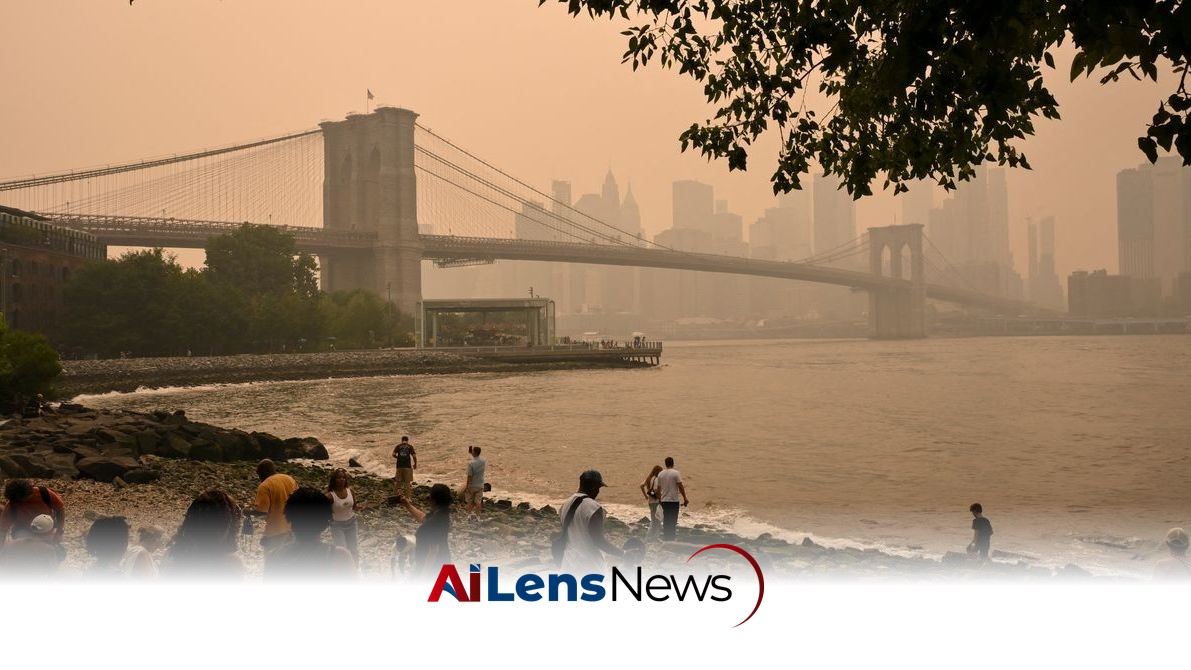


As wildfire smoke from Canada engulfs cities like Chicago and New York, air quality plummets, prompting health warnings and safety measures.
New Delhi, India Jul 18, 2026 ALN: Hot dogs, beach days, and iced tea on the porch are some of the rites of summer. But in an era of global warming, a new rite has emerged: choking down smoke from wildfires burning hundreds of miles or more away.
The Midwest, Northeast, and parts of Canada have been blitzed with thick smoke that turned skies an eerie shade of orange and triggered widespread air quality alerts. The source? Fires burning in Minnesota as well as western Ontario.
Canada is where the bulk of the fires are burning, with 119 out-of-control blazes across the country as of Friday afternoon. The fires are burning so intensely that smoke is rising into the atmosphere and getting whisked on the jet stream eastward. That’s how Chicago and Detroit ended up with the worst air quality in the world on Friday. New York and Washington, DC, cracked the top 10 list, too.
The unhealthy air has cities telling residents to stay indoors and residents searching for ways to reduce their exposure to harmful wildfire smoke. While fresh air is expected to arrive in at least some locations this weekend, the fires show no signs of abating, and it could mean more smoke is in store later this summer.
Burning fossil fuels has increased the odds of destructive wildfires—and with them, more frequent smoke events. The orange-sky days hitting the East Coast this week harken back to 2023, when Canada’s worst wildfire season on record sent smoke streaming into the region. Similar scenes have played out in Europe this summer as fires rip through Spain, and we’ve seen orange skies in places as far apart as Australia and California at various times the past few years.
Research published last year shows matters are only likely to get worse unless the world winds down its use of coal, oil, and gas. The Nature study found that wildfire smoke is projected to cause 71,420 excess deaths annually by mid-century in the US alone, a 73 percent increase compared to the 2010s. Between now and then, the researchers estimate, up to 1.9 million people in the US will die due to smoke-related health issues.
Below is a look at what this week’s smoke invasion looks like. It’s almost certainly a precursor to worse outbreaks if temperatures keep rising.
Toronto, the largest city in Canada, has been experiencing significant disruptions due to smoke from nearby wildfires. The city, known for its diverse population and vibrant culture, has seen a rise in respiratory issues among its residents as air quality plummets. The smoke has not only affected visibility but has also led to the cancellation of outdoor events and activities, with health officials urging caution.
The Toronto Public Health department has issued advisories, recommending that vulnerable populations, including children and the elderly, limit their outdoor activities. The city has also set up air quality monitoring stations to keep residents informed about the changing conditions.
In New York City, the smoke has led to a surreal atmosphere, with iconic landmarks shrouded in a haze. The city's skyline, usually a vibrant display of colors, has been muted under the smoky veil. Residents have reported a range of health impacts, from sore throats to exacerbated asthma symptoms.
City officials have responded by activating the Emergency Operations Center and issuing health advisories. Schools have been instructed to keep windows closed, and outdoor sports practices have been postponed to protect students from the harmful effects of smoke inhalation.
Just across the Hudson River from New York City, Jersey City has also been affected by the smoke. Local authorities have implemented measures to safeguard public health, including distributing masks and promoting the use of air purifiers in homes. The city’s emergency services have been on high alert, ready to respond to any health emergencies related to the smoke.
Detroit, known for its rich history in the automotive industry, has found itself grappling with the impacts of the smoke as well. The city has seen a surge in air quality complaints, prompting the Michigan Department of Environment, Great Lakes, and Energy to issue warnings. Residents are encouraged to stay indoors, particularly those with pre-existing health conditions.
Local health clinics have reported an increase in visits related to respiratory issues, highlighting the immediate health risks posed by the wildfire smoke. Community organizations are working to provide resources and support for those affected.
In the nation’s capital, Washington, DC, the smoke has cast a shadow over summer activities. Outdoor events, including concerts and festivals, have been scaled back or canceled altogether. The National Park Service has been monitoring air quality closely, and visitors to the National Mall have been advised to take precautions.
Health officials in DC have emphasized the importance of staying informed about air quality levels, urging residents to utilize air quality apps and local news updates to assess the safety of outdoor activities.
Minneapolis, one of the cities at the forefront of the wildfire crisis, has been directly impacted by the ongoing fires in Minnesota. The city has experienced a significant drop in air quality, with health officials advising residents to limit outdoor activities. Schools have implemented indoor recess policies to protect children from exposure.
The local government has mobilized resources to provide assistance to those affected by the smoke, including setting up temporary air quality shelters for residents in need.
St. Paul, the state capital, mirrors the situation in Minneapolis with similar air quality concerns. Officials are urging residents to stay indoors and keep windows closed. The city has also been proactive in disseminating information about the health risks associated with wildfire smoke.
In Philadelphia, the smoke has raised alarms as air quality levels have deteriorated. The city’s health department has issued alerts, warning residents about the dangers of prolonged exposure to poor air quality. Outdoor recreational activities have been curtailed, with parks advising visitors to take precautions.
Chicago has faced some of the worst air quality in the world due to the smoke. Local health officials have been working around the clock to monitor conditions and provide updates to the public. The city has set up hotlines for residents to report health issues related to the smoke, and community outreach efforts are underway to educate the public about prevention and safety measures.
As the summer continues, the ongoing threat of wildfires and the resulting smoke events underscore the urgent need for comprehensive climate action. The connection between climate change and the increasing frequency of wildfires is becoming increasingly clear, with implications that extend beyond immediate health concerns. The long-term effects of wildfire smoke on public health, the environment, and the economy are significant and warrant serious attention.
In conclusion, the current wildfire smoke crisis serves as a stark reminder of the challenges posed by climate change. As cities across North America grapple with the consequences, it becomes evident that a coordinated response is necessary to mitigate the impacts and safeguard public health. The urgency of addressing climate change has never been more apparent, as communities strive to protect their residents from the harmful effects of wildfire smoke and the broader implications of a warming planet.
To learn more about the latest developments in Research & Breakthroughs, stay updated with our exclusive reports and analyses on AiLensNews.

