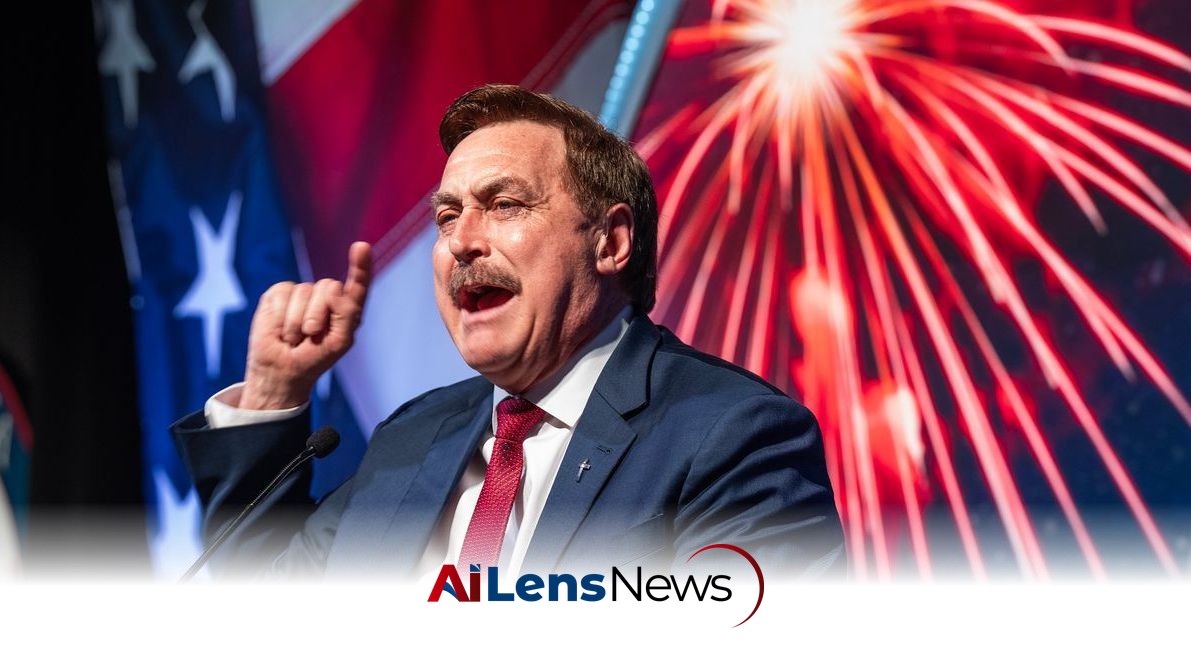


Following Trump's endorsement of Mike Lindell for Minnesota governor, local GOP leaders express concerns over his qualifications and electability.
New Delhi, India Jul 24, 2026 ALN: Mike Lindell's Political Ambitions
Mike Lindell, a figure who transitioned from being a former drug addict to gaining fame as a pillow salesman, has recently emerged as a controversial candidate in Minnesota's political landscape. Despite lacking any formal experience in political office, he has devoted the last six years to promoting various conspiracy theories surrounding the 2020 presidential election, claiming that the election was stolen by what he describes as the "devil." This narrative has not only shaped his public persona but has also influenced his political aspirations.
Lindell is now vying for the position of Minnesota governor, a campaign that has already garnered significant attention due to the endorsement from former President Donald Trump. Trump has publicly praised Lindell's commitment to Minnesota, stating on Truth Social, "Mike will be SPECTACULAR!!! He truly loves Minnesota, as do I, and wants to bring it back from oblivion and embarrassment." This endorsement was further solidified during a recent fundraiser where Trump reiterated his support, declaring, "Mike Lindell would be a GREAT Governor. He loves Minnesota with all of his heart."
However, the endorsement has not been met with universal enthusiasm, particularly from the Minnesota Republican Party. Polls indicate that Lindell is currently the favorite to secure the Republican nomination in the upcoming primary scheduled for August 11. Yet, the state party's leadership expressed surprise and concern over Trump's endorsement. Alex Plechash, the Minnesota Republican Party chairman, publicly voiced his discontent, highlighting Lindell's questionable qualifications for the role of governor.
In a statement released shortly after Trump's endorsement, Plechash criticized Lindell's past actions, stating, "When the going got tough under Tim Walz, Mike Lindell left Minnesota for Texas. Now he wants Minnesota Republicans to overlook his serious financial baggage, public records showing tens of thousands of dollars in delinquent property taxes, significant electability concerns, and unanswered questions surrounding his running mate. Minnesota cannot afford to nominate a ticket that gives Democrats an easy target." Lindell has reportedly addressed some of these financial issues, claiming he has paid off the delinquent property taxes, but questions about his electability linger.
The implications of Lindell's candidacy extend beyond his individual qualifications. Analysts and local Republican strategists are increasingly concerned that while Lindell may dominate the primary, his chances of defeating the likely Democratic nominee, Amy Klobuchar, in the general election appear slim. This predicament illustrates a broader challenge facing local Republican parties across the United States, particularly in states where Trump's influence remains strong. The endorsement creates a precarious situation for party leaders who must balance their own candidate preferences with the need to maintain support from Trump's base, which remains a crucial demographic for Republican success in elections.
Political analyst Blois Olson noted the delicate nature of this situation, stating, "I'd like to think this was as simple as the party saying they don't want Lindell, but they can't say that in a way that pisses off the president. That's the reality because they don't just piss off the president, they piss off the most fervent Trump supporters, the MAGA Minnesotans, who they need in November. It's threading a needle, which makes it a big challenge." This commentary underscores the complexities of navigating party dynamics in an era where loyalty to Trump can overshadow traditional party values and candidate evaluations.
Lindell's Rise and Controversies
Mike Lindell's rise to prominence can be traced back to the aftermath of the 2020 election, during which he became one of the most vocal advocates for conspiracy theories alleging widespread election fraud. His commitment to this cause has manifested in various forms, including financial contributions to activist groups, hosting conferences, and producing a film that purports to expose the supposed fraud. By 2022, Lindell claimed to have invested approximately $40 million of his own money in efforts to promote these claims, highlighting his dedication to the narrative he has championed.
However, Lindell's political journey has not been without its legal challenges. He has faced significant litigation from voting machine companies, including Dominion Voting Systems and Smartmatic, both of which filed defamation lawsuits against him over his claims regarding their voting machines. While the Dominion lawsuit concluded with a settlement, the Smartmatic case remains ongoing, contributing to Lindell's mounting legal expenses, which have reportedly reached millions of dollars.
Despite these challenges, Lindell maintains that the Minnesota GOP has actively worked against his campaign. He alleges that party officials have obstructed his efforts by withholding critical resources, such as a list of delegates, and preventing him from participating in debates and forums. Lindell expressed his confusion over the party's stance, speculating on the motivations behind their actions. "I can only speculate. Because of the fraud in Minnesota, they think that maybe after 24 years they could possibly win, but that's not what the polls are saying. They're just afraid because I'm friends with Donald Trump? I don't know why they're attacking me; it's just kind of crazy, but that's their choice. The Minnesota GOP should be ashamed of themselves," he stated.
In May, the GOP delegates selected Kendall Qualls, a former health care executive, as their nominee, with Lindell finishing third behind Minnesota House Speaker Lisa Demuth. The Minnesota GOP later clarified that Lindell's campaign had chosen not to abide by the party's endorsement, which limited his access to essential resources. This decision, they stated, was in line with the party's policy regarding candidates who do not respect the endorsement process.
Olson remarked on the potential ramifications of a Lindell nomination, suggesting that it could demoralize Republican voters. He noted that many within the party are concerned about Lindell's viability in the general election, fearing that his candidacy could lead to broader losses down the ballot throughout Minnesota. "Republicans are going to be demoralized if Lindell’s the nominee because they know his chances of winning in November are low," Olson explained. This sentiment reflects a growing anxiety among party members regarding the potential impact of Lindell's controversial reputation on the overall electoral landscape.
In response to ongoing scrutiny, Lindell has made efforts to address some of the criticisms leveled against him. He acknowledged recent media reports regarding his tax issues and confirmed that he has now registered to vote in Minnesota. Additionally, he claimed to have resolved the nearly $48,000 in property taxes owed on his residence in Tonka Bay. Lindell’s attempts to clarify his standing may be part of a broader strategy to counteract the negative perceptions surrounding his candidacy.
As the Minnesota GOP grapples with its internal divisions and the implications of Trump's endorsement of Lindell, the party's prospects for success in statewide races remain uncertain. The current political climate in Minnesota, characterized by allegations of fraud and dissatisfaction with the current administration under Governor Tim Walz, presents an opportunity for Republicans. However, Lindell's controversial candidacy could complicate those prospects, making the path to victory in the upcoming election a challenging endeavor for the party.
To learn more about the latest developments in Research & Breakthroughs, stay updated with our exclusive reports and analyses on AiLensNews.

