

Mini RGB TVs are transforming the television landscape with enhanced color and brightness. This article reviews the latest models and their features.
New Delhi, India Jul 14, 2026 ALN: Televisions are evolving yet again. This time, the new kid on the block is mini RGB, which emits red, green, and blue lights through an LCD panel instead of just white or blue lights. According to Hisense, one of the first brands to debut an RGB LED TV, the technology is an attempt to produce “pure colors directly at the source.” This innovation comes at a time when consumers are increasingly discerning about picture quality and color accuracy, making the development of mini RGB technology particularly timely.
The intended result is LED TVs with better colors, improved contrast, and much higher brightness—all designed as a proper alternative to OLED. Whether it's a giant leap forward, though, depends greatly on the kind of movies and shows you watch and your willingness to tweak a few settings. I tested five new models to get a taste of what's to come and to determine which (if any) you should buy.
For more TV recommendations based on our expert testing, peruse our related guides, including the Best TVs, Best Large TVs, Best OLED TVs, and Best Cheap TVs. Also check out How to Buy the Right TV for you in 2026.
The first RGB TVs came out in 2025, but it's really in 2026 that the technology is getting wider distribution across sizes and prices. As I stated above, an RGB TV has conventional LED backlighting but uses a red, green, and blue backlight module rather than the standard white or blue LEDs. But it's not quite that simple. Samsung and LG call it “micro RGB,” while TCL and Hisense say “mini RGB.” The tech works roughly the same, even if micro RGB uses smaller LEDs. Sony uses the term “True RGB” and claims there’s no difference between mini RGB and micro RGB.
This differentiation in naming conventions highlights a competitive landscape among manufacturers, each vying for market share in the premium television segment. The RGB technology aims to enhance the viewing experience by providing a broader color gamut and more accurate color reproduction. This is particularly appealing in an era where streaming services are producing high-quality content that demands superior display capabilities.
My goal in testing, though, was to cut through the marketing spin and just put each model through a few benchmarks, watch the same movies, and stay glued to the World Cup no matter which model I was testing. The surprising discovery is that mini RGB (which is the term I’ll use for all of them) is noticeably vivid, has excellent contrast, and looks bright and clear even during the daytime. Mini RGB televisions are also excellent for off-angle watching, a feature that is increasingly important in homes where multiple viewers may be seated at different angles to the screen.
That said, I don’t think you have to put that OLED up on Facebook Marketplace just yet. Mini RGB is an evolution in tech, but it also means manufacturers can keep using LCD panels. OLED was a sea change because individual pixels can emit color or be turned off entirely. In my side-by-side tests, mini RGB is a smart upgrade but isn’t the ultimate display tech. While the costs are comparable for now, I expect mini RGB televisions to come down in price soon, making them more accessible to a broader audience.
The name mini RGB would imply that it is all about color—specifically red, green, and blue. Yet, the way the technology works by shining those colors through an LCD panel means there is a lot more control over contrast and brightness as well. This is a significant advantage when it comes to viewing diverse content, from bright animated films to darker, moodier dramas.
In my tests, I found settings for brightness, clarity, contrast, and picture mode had a much more obvious impact than on a normal LED or QLED. I equate this to a sports car. You can drive a BMW M5 on a side street at low speeds, but until you enable track mode, adjust the suspension, and perform other tweaks, you won’t really know what the car can do. Mini RGB is similar in that it’s highly customizable. This flexibility allows users to tailor their viewing experience to their specific preferences, which can be particularly beneficial in diverse household settings where different family members may have different viewing habits.
Anything brand-new to the market will likely cost more than we might expect. While the Hisense UR9 RGB Mini-LED was the cheapest by far at only $1,999 for the 65-inch model, every other mini RGB and micro RGB costs closer to $4,000. That’s about $1,300 more than an OLED at the same size. The flagship OLED models from LG and Samsung tend to cost around $2,700 for a 65-inch. LED and QLED models are even cheaper, running as low as $500.
This pricing structure raises important questions about consumer choice and market dynamics. As mini RGB technology becomes more mainstream, it will be interesting to see how pricing evolves. If mini RGB TVs can offer superior performance at a competitive price point, they may disrupt the current market and challenge the dominance of OLED technology.
As with any modern television, mounting one on a wall is fairly easy since there’s so much information online about how to do it. I’ve found YouTube videos that explain exactly what to do, even covering how to install an electrical box. Mainly, you have to use a stud finder and make sure you’re mounting the brackets into a stud and not just sheetrock, but even that process only takes a few minutes. This ease of installation is a significant advantage for consumers who may not have professional installation services readily available.
The one exception is if you go with a larger-size mini RGB model like the TCL RM9L RGB-Mini LED. If the television weighs over 100 pounds, it changes the ball game in terms of using multiple studs and adding extra mounting brackets. This consideration is crucial for consumers who may be unaware of the additional mounting requirements for heavier models, which could lead to installation challenges.
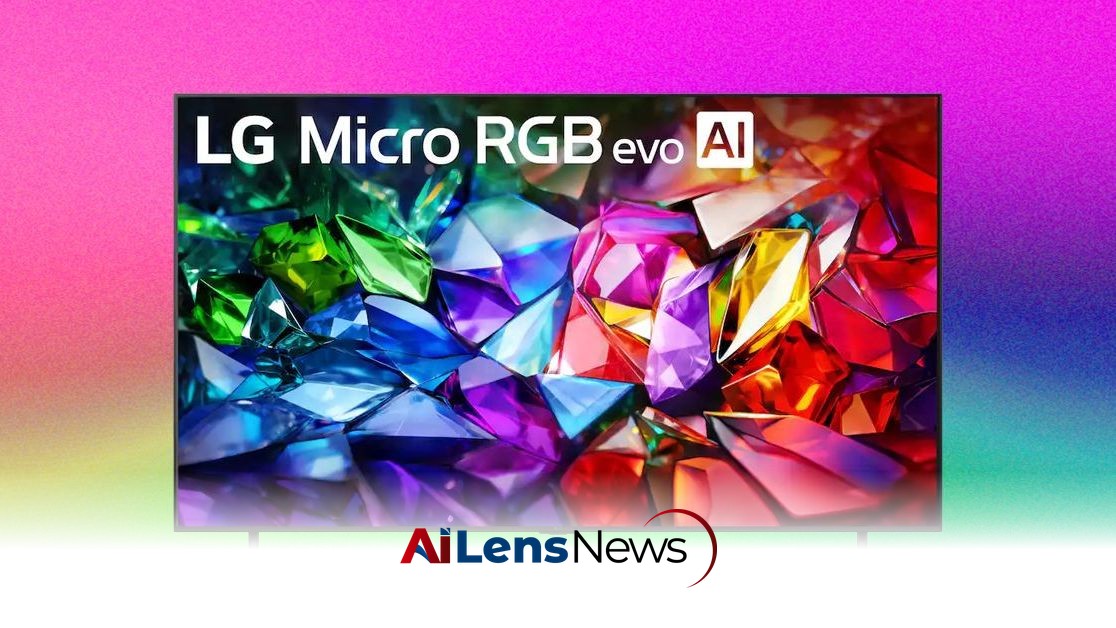
LG makes high-end televisions that tend to be a bit pricey, but they're often worth the extra expense. The LG Micro RGB Evo is no different. Priced at $4,500 (that’s with a $500 discount right now) for the 75-inch model I tested, this is one brilliantly colorful and impressive television. The investment in a high-quality display is justified for serious cinephiles and gamers alike, as the technology promises to enhance the overall viewing experience.
Setup and install were simple. It's just a matter of inserting the legs and screwing them in tight. My only complaint here was the legs were a bit pointy. For connectivity, the LG Micro RGB Evo has four HDMI 2.1 ports, an Ethernet port, one digital optical, a coaxial connection, and two USB 2.0 ports. WebOS is a capable streaming platform, if a bit confusing and bloated with too many apps. This highlights a common issue with modern smart TVs, where the abundance of features can sometimes overwhelm users rather than enhance their experience.
Movies and shows looked stunning and vivid on this television, once I got used to tweaking the picture modes. By default, some of the stock settings (e.g., Filmmaker mode) made movies like Awake on Netflix look too dark. Tron: Ares on Disney+ was vivid with deep blacks and reds. The ability to adjust settings to optimize picture quality is a crucial feature that could appeal to both casual viewers and home theater enthusiasts.
While the LG Micro RGB Evo worked perfectly fine for console gaming, it had some trouble with a gaming laptop. The variable refresh rate setting, which LG calls Motion Booster, did not work correctly when I used an Alienware 16X Aurora laptop. However, at the native 165-Hz refresh rate, this model is a game changer—Crimson Desert looked absolutely stunning. This performance inconsistency raises questions about compatibility with various devices, which is an important consideration for consumers looking to integrate their TV into a broader home entertainment system.
One major discovery with the LG Micro RGB Evo is that it’s even more customizable than some of the other mini RGB and micro RGB televisions that are new to the market. In my full review, I found I could tweak white balance settings, saturation, and screen clarity almost endlessly. This level of customization empowers users to create a viewing experience that best suits their preferences, potentially setting a new standard in the television market.
As the mini RGB technology continues to develop, it will be interesting to monitor its evolution in the television landscape. The competition among manufacturers will likely drive further advancements in display technology, making it an exciting time for consumers looking to enhance their home entertainment systems. The implications of this technology extend beyond just individual viewing experiences; they may also influence content creation, as filmmakers and producers adapt to the capabilities of new display technologies.
To learn more about the latest developments in Product Innovations, stay updated with our exclusive reports and analyses on AiLensNews.

