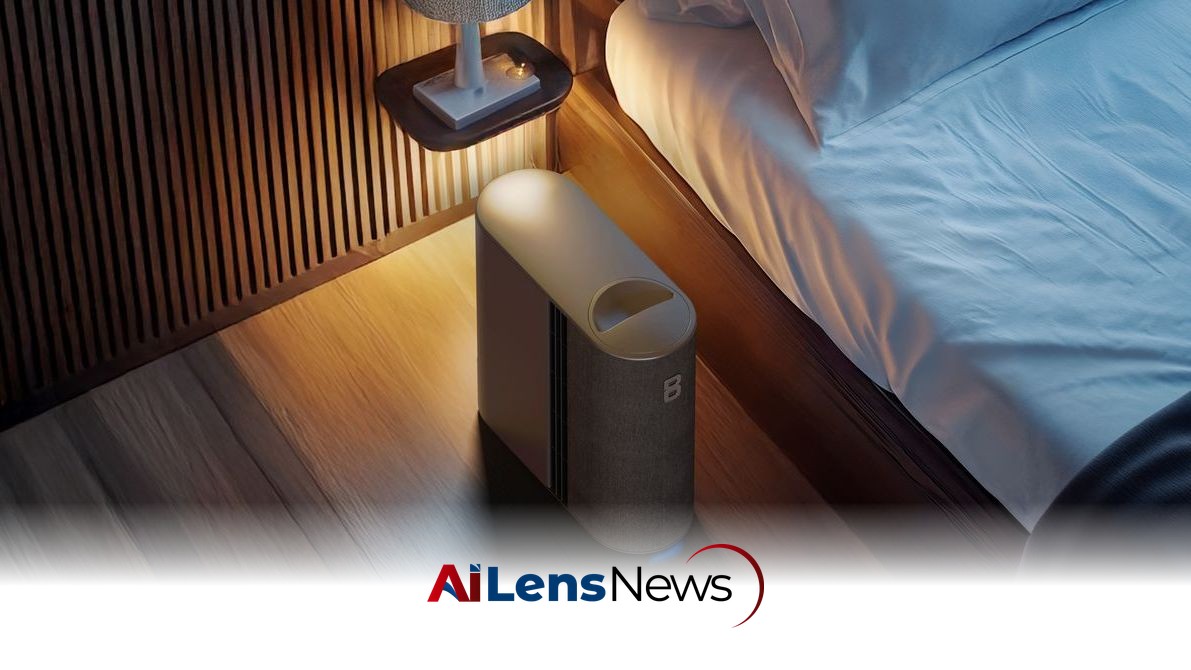


Eight Sleep’s Pod 5 offers advanced sleep tracking and temperature control, but raises concerns about privacy and ongoing costs.
New Delhi, India Jul 5, 2026 ALN: In the bedrooms of Silicon Valley founders and Miami transplants, hydro-powered mattress covers hum quietly through the night, tracking biometrics, adjusting temperatures, and optimizing every hour of slumber. Eight Sleep’s covers are the vanguard of tech-bro sleepmaxxing, a subculture where rest is rebranded as performance. The biohacking ethos reached its dystopian peak last year amid reports that DOGE engineers were sleeping on Eight Sleep Pods (which the company voluntarily donated) inside the Office of Personnel Management in the name of productivity.
Eight Sleep didn’t necessarily beg to become the poster child for this hyper-optimized lifestyle, but it hasn’t resisted the crown either. The company has positioned itself at the intersection of luxury wellness, self-optimization, and the normalization of bringing surveillance technology into your most intimate spaces. After three months of sleeping on the Pod 5, I’ve realized the hardest part of reviewing Eight Sleep isn’t deciding whether the technology works but whether the version of sleep it’s selling is one worth buying into.
Here at , we’ve been reviewing Eight Sleep since the Pod 3, and the product keeps getting better. The temperature regulation has become more refined, Autopilot—Eight Sleep’s AI automation—is smarter, and the overall experience feels more polished with each generation. At the same time, the long-standing criticisms remain. The already-pricey subscription is even more costly under its three-tiered model, and a history of security issues is still worth thinking about.
Essentially, the Pod 5 is a smart mattress cover that combines temperature regulation, sleep tracking, and AI-driven automation to create a smart bed that continuously adapts in real time. For this review, Eight Sleep sent me the Core bundle, which includes the Cover, which stretches over your existing mattress, and the Hub, which sits by your bed and powers the whole setup. Beneath the Cover’s polyester surface is a network of water channels and embedded sensors. The Hub circulates water through the cover to heat or cool each side of the bed independently. The pump is near silent; I almost never hear it running.
It feels like a cushioned mattress topper, adding a plush yet firm layer to my mattress. I was pleasantly surprised that I couldn't feel the water channels embedded inside it; it feels completely smooth when you’re lying down. I was initially worried that my cats’ claws might puncture the cover, but Eight Sleep assured me that it shouldn’t be an issue as long as their claws are kept trimmed. As an extra precaution, I also keep the Pod covered with fitted sheets and a comforter so my cats never sit directly on its surface.
Setup took about 40 minutes. I scanned a QR code on one of two boxes, downloaded the app, stretched the Cover over my mattress, connected the tubes to the Hub, and filled the water reservoir three times to prime the system. After that, the Hub notifies you when it needs a refill; mine didn’t need one again until after two months of nightly use.
Dual-zone temperature control remains the Pod’s defining feature. Each side of the bed can be set anywhere from 55 to 110 degrees Fahrenheit, so couples can sleep at entirely different temperatures. If one person sleeps hot and the other cold, the Pod accommodates them both. Over time, it learns your sleep patterns and automatically adjusts the conditions throughout the night.
As someone who deals with night sweats, getting into a bed that’s already been chilled to my preferred temperature is an instant upgrade to my sleep quality. On hot summer nights, the comfort is hard to overstate. Come morning, Eight Sleep’s vibration and thermal alarms are designed to ease you awake. I disabled the vibration alarm since I’m not particularly receptive to physical stimulation, but I’ve grown to love the gentler ritual of waking up simply because my bed is getting warmer.
The week that sold me on this happened when I was sick. When the chills hit, I could crank the temperature and turn the bed into a heated cocoon. When the night sweats kicked in an hour later, I could dial it back without kicking off my comforter. Plenty of wearables will tell you in exhaustive detail that you slept terribly, but few will try to do anything about it while you’re still asleep.
Everything runs through the Eight Sleep app, which follows a clean, three-tab structure similar to the Oura and Google Health apps. The home tab surfaces your nightly sleep score, key metrics, and a brief recap of how you slept. The middle tab handles temperature controls, alarm settings, and preset modes for specific situations (Hot Flash, Nap, and Pregnancy modes). The third tab is the most data-heavy, with sleep-stage graphs, heart rate and respiratory patterns, and long-term trends.
I appreciate how Eight Sleep sends a brief morning recap via text message, so you don’t even have to open the app to see the key points. Unlike a wearable, there’s nothing to remember to charge or wear, which is an undeniable perk. Even on nights when I forget to wear my Oura Ring 4 to bed, the Pod is still collecting data in the background.
I compared Pod 5’s data against my Oura, and for the most part, they both showed similar overall trends and measurements when it came to respiratory rate and heart rate variability (HRV). Both trackers detected when I was sick and flagged poor sleep days. I have noticed some inconsistencies, though. Sleep scores from Eight Sleep were consistently higher than Oura’s. That said, sleep scores are proprietary constructs; what matters is tracking your own trends over time, and for that, Eight Sleep’s data is consistent. Autopilot—Eight Sleep’s AI engine that auto-adjusts the Cover's settings—does get more accurate with use, and by month two, the temperature adjustments were more frequent and incremental than at setup.
The Pod 5 also has a Health Check feature (available on the Elite subscription tier, more on that below) that continuously analyzes cardiovascular and respiratory signals during sleep. When I was sick, it detected respiratory disturbances that aligned with what I was experiencing.
As if the Pod 5 Core Bundle weren't expensive enough ($2,848 for a full to $3,248 for Cal king), the Eight Sleep experience is built around a three-tier subscription model. Eight Sleep also requires a 12-month commitment to its standard Autopilot plan, which costs $17 per month ($199 billed annually) and includes a two-year warranty. Without it, the Pod technically still works with its physical temperature buttons, but you lose access to automatic adjustments, sleep reports, and the vibration and thermal alarms.
The Enhanced membership ($25 per month, $299 annually) extends the warranty to five years, which matters with such an investment. Even though I haven’t experienced hardware issues yet, the system relies on pumps, tubing, and sensors running every night. That introduces more failure points than traditional mattresses, and consumers have reported warranty replacements for various issues over the years. Once coverage ends, replacing the hardware could be expensive. The new Elite tier ($33 per month, $399 annually) also includes a five-year warranty and Health Check.
Beyond the ongoing costs, there are also privacy considerations; cloud dependency issues, which I explain below; and questions about how much access a company should have to your bedroom. Last year, security researchers discovered vulnerabilities in Eight Sleep’s firmware, including back doors that could permit remote access and enable unauthorized users to run arbitrary code and transmit user data to Amazon Web Services (AWS). This also means that Eight Sleep engineers can know when you’re asleep, whether two people are sharing the bed, and when the bed is empty. “Imagine your ex works for Eight Sleep,” Dylan Ayrey and Jake King, cofounders at cybersecurity company Truffle Security, wrote in a 2025 blog post.
Eight Sleep has since updated its security policies, clarifying that customer support can only access a user’s Pod remotely with explicit consent and while the user is physically present with the device.
Finally, because the Pod depends on cloud connectivity, disruptions can affect functionality. During an AWS outage in late 2025, some users momentarily lost temperature regulation and adjustable-base features. Eight Sleep has since introduced Backup Mode to reduce the impact of connectivity failures, but it doesn’t guarantee that similar problems won’t happen again.
The Pod 5 is the best temperature-regulating sleep tracker I’ve tested. But between the mandatory subscription, privacy compromises, and cloud reliance, the gap between what it costs and what it demands you accept remains wider than ideal. If you’re already an Eight Sleep member, the trade-in program makes sense. If you’re a newcomer, you may want to consider your options carefully.
To learn more about the latest developments in Product Innovations, stay updated with our exclusive reports and analyses on AiLensNews.

