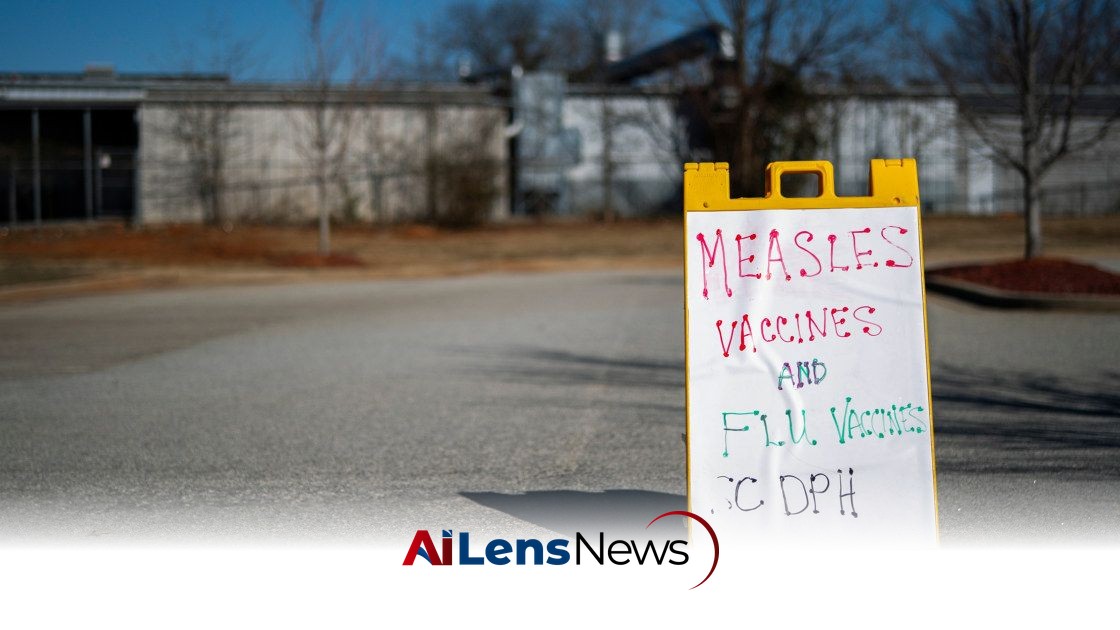


The CDC has reported 2,318 measles cases in the U.S. in 2026, surpassing last year's total and marking a significant public health concern.
Washington DC, United States Jul 24, 2026 ALN: The Centers for Disease Control and Prevention (CDC) reported on Friday that the United States has logged 2,318 measles cases in the first seven months of this year, surpassing last year’s total of 2,289. This surge marks the largest number of measles cases the U.S. has experienced in 35 years and coincides with a worrying trend of declining childhood vaccination rates across the nation. The CDC indicates that a staggering 93% of those infected are unvaccinated, underscoring the critical role that vaccination plays in preventing outbreaks of this highly contagious disease.
Dr. Richard Besser, a pediatrician and president of the Robert Wood Johnson Foundation, commented on the implications of these rising numbers, stating, "We have joined the rank of countries where vaccination is not reaching the levels needed to protect all of our children against some of the most contagious diseases." He noted that when vaccination levels drop, measles is typically the first vaccine-preventable disease to experience a resurgence, given its highly contagious nature. Dr. Besser further explained, "Measles is the canary in the coal mine. What it’s saying is that our communities are vulnerable, not just from measles, but from whooping cough, meningitis, chickenpox, and other diseases that are readily controllable with vaccines. We’re on a crash course."
In recent weeks, new measles outbreaks have been reported in several states, including Arizona, Delaware, and Wyoming. The Pennsylvania Health Department has documented 132 cases, with 27 of those diagnosed in just the past week. Meanwhile, Virginia, which experienced a significant outbreak that began in May, appears to be showing signs of stabilization. The state has recorded 177 cases but has not reported any new cases since July 4.
The Piedmont Health District in central Virginia has accounted for the majority of that state's cases. Dr. Maria Almond, the district health director, shared that her staff has been actively engaging with the community, going door to door to encourage vaccinations as a means to halt the outbreak. "We go into homes, we listen to their needs, we educate, and we continue to monitor those families and revisit them because they are reluctant to engage in medical care until they are ready and feel safe," Almond stated. "Very often, we are able to link families with care resources."
The CDC has dispatched staff to assist with outbreaks in various states, including Virginia. However, the federal health response to the ongoing measles outbreaks has been criticized as minimal. The CDC has been without a permanent director for the majority of President Donald Trump’s second term, and Health and Human Services Secretary Robert F. Kennedy Jr., known for his skepticism regarding vaccines, has distanced himself from discussions surrounding the outbreaks.
Dr. Adam Ratner, a pediatrician and member of the American Academy of Pediatrics Committee on Infectious Diseases, remarked on the situation, stating, "Last year and this year would not be as bad if we had strong, well-funded local public health departments and a CDC that was well-staffed and ready to respond to outbreaks." Despite the fact that 92.5% of children receive measles vaccines, according to 2025 CDC data, approximately 95% of a population needs to be vaccinated against measles to achieve herd immunity. Dr. Ratner concluded, "We’re starting to pay the price for the decreased vaccination rates that we’re seeing in some communities."
Utah is currently experiencing a measles outbreak that began in June 2025 within a small, close-knit community bordering Arizona. This outbreak has since expanded to every part of the state, including the more populous Salt Lake City area, with more than 700 people infected to date, according to the state Health Department. Of those cases, 514 have been diagnosed this year alone.
The current surge in measles cases has been largely driven by an outbreak in the northwest corner of South Carolina, particularly in an area known as the Upstate. This outbreak began last fall but escalated significantly after the Christmas season. Dr. Stuart Simko, a pediatrician at Prisma Health in Greer, South Carolina, described the alarming nature of the outbreak, stating, "From the get-go, you’re just thrown into the fire. Measles spreads a lot more rapidly and more efficiently than Covid ever could, and that was the scariest part."
Dr. Simko noted that he had never encountered a case of measles before this outbreak, which ultimately infected 997 people. He explained the symptoms, saying, "It looks like the flu on steroids. They’re covered in a rash, their fever is at 104, 105. They just don’t have any energy." While the majority of measles cases have occurred in children and teenagers, Dr. Almond from Piedmont Health emphasized that adults are also at risk of severe illness from the disease. "This community’s really felt it in their adults with severe nausea, vomiting, diarrhea, and dehydration," she stated. "It is terrible and severe."
In Pennsylvania, the situation is similarly concerning, with just 39% of reported cases occurring in individuals under the age of 18, as per the state Health Department's data. This trend raises questions about the broader implications of the current outbreaks, particularly regarding the potential loss of the U.S.'s status of having eliminated measles from circulation in 2000. The Pan American Health Organization is expected to make a decision regarding this status in November, a development that could have significant public health ramifications.
The resurgence of measles in the U.S. serves as a stark reminder of the importance of maintaining high vaccination rates to prevent outbreaks of vaccine-preventable diseases. The current situation highlights the need for continued public health education and outreach efforts to address vaccine hesitancy and to ensure that communities are adequately protected against these highly contagious diseases. As health officials work to control the current outbreaks, the focus remains on increasing vaccination rates to safeguard public health and prevent future outbreaks.
To learn more about the latest developments in Health News, stay updated with our exclusive reports and analyses on AiLensNews.

