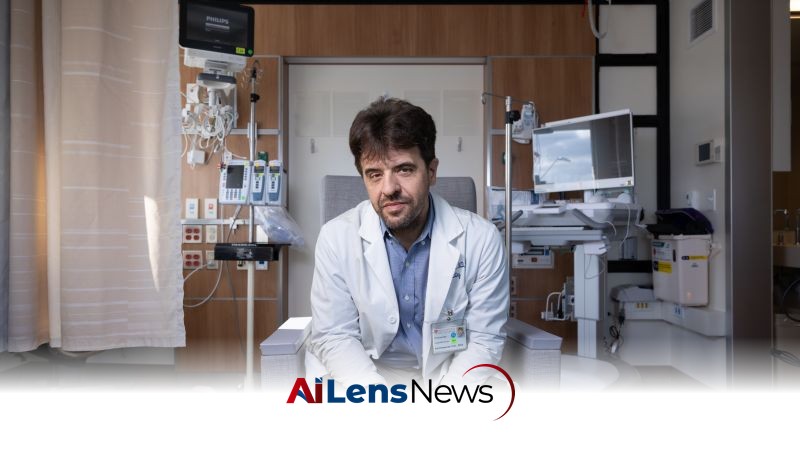


Dr. Karl Deisseroth at Stanford University is pioneering research to understand how brain cells generate emotions, aiming to improve treatments for severe mental health conditions.
Washington DC, United States Aug 18, 2026 ALN: “How do brain cells create an emotion or a feeling?”
That’s the question driving Dr. Karl Deisseroth, a renowned bioengineer, neuroscientist, and psychiatrist at Stanford University whose research has already reshaped much of our understanding about the human brain. His work is at the forefront of a burgeoning field that seeks to unravel the complexities of human emotions and their biological underpinnings, particularly in the context of mental health disorders.
The implications of this research are vast, as understanding the neural basis of emotions could provide critical insights into some of the most complex and severe mental health conditions, including schizoaffective disorder and borderline personality disorder. Schizoaffective disorder affects about 1 in every 200 people during their lifetime and is characterized by symptoms of schizophrenia, such as delusions and hallucinations, alongside mood disturbances like depression and mania. Meanwhile, borderline personality disorder, which affects around 14 million people in the United States, manifests through patterns of unstable and intense emotions, impulsive behaviors, self-harm, and a distorted self-image.
“This is the sort of experience that most people don’t ever see but need to know about and care about — and put the appropriate level of care and science and societal support behind,” Deisseroth emphasized. His commitment to this mission reflects a growing recognition of the need for deeper societal understanding and support for those grappling with these often-misunderstood conditions.
Finding what causes these conditions is the mission of Deisseroth and his team as they combine cutting-edge neuroscience with a state-of-the-art laboratory in an inpatient hospital setting known as the Human Neural Circuitry program. This innovative program is designed to facilitate a deeper understanding of neuropsychiatric disorders and to explore novel treatment options. The ultimate goal is to decode “the inner world of human beings as it is experienced in health and disease,” a task that could revolutionize mental health treatment and improve the quality of life for millions.
“That scientific discovery aspect is very exciting and motivating,” he told CNN. “Although I treat patients and do clinical research, I’m really a basic scientist at heart. That’s what drew me to neuroscience and the study of the brain: How can cells give rise to an emotion? How can they create one version of reality that may be different from another brain’s version of reality?”
Deisseroth's inquiry is not merely academic; it has profound implications for clinical practice and patient care. Understanding the neural mechanisms behind emotions can lead to more targeted therapies, potentially transforming the landscape of mental health treatment. “We’re approaching this from a basic curiosity standpoint as well as treatment standpoint,” Deisseroth added, highlighting the dual focus of the research on both fundamental science and practical application.
The Human Neural Circuitry program began three years ago, representing a unique collaboration among biomedical scientists, data scientists, neurosurgeons, neurologists, and psychiatrists. This interdisciplinary approach is critical, as it combines expertise from various fields to tackle the complex nature of neuropsychiatric disorders. The research is conducted inside Stanford Hospital on the same floor as the hospital’s epilepsy monitoring unit, which allows for real-time data collection and analysis.
During testing, patients wear a shower-cap-like array of electrodes designed for noninvasive recording of brain activity. This method captures electrical activity from the brain without the need for surgical intervention. In other instances, patients undergo procedures where deep brain recording electrodes are placed and then removed by neurosurgeons. Both methods facilitate the collection of real-time electrical activity, which is transmitted via fiber optics and copper wires for analysis.
These processes generate “very large data streams, spanning the brain and with sub-millisecond resolution,” according to Deisseroth. The ability to collect such detailed data is crucial for understanding the rapid and complex dynamics of brain activity associated with emotions and mental health disorders.
Furthermore, the data streams can communicate with servers across the Stanford campus with a “round-trip time of less than half a millisecond,” enabling closed-loop work for sensing and responding to brain activity in real-time. This capability allows researchers to observe and analyze brain responses as they occur, providing invaluable insights into how emotions are generated and regulated.
The implications of this research extend beyond academic curiosity. As Deisseroth and his team work to decode the neural circuits that underlie emotions, they are also paving the way for new therapeutic approaches. For instance, their findings could lead to the development of more effective interventions for individuals suffering from severe mental health disorders, potentially reducing the burden of these conditions on individuals, families, and society as a whole.
In summary, Dr. Karl Deisseroth's pioneering research at Stanford University represents a significant step forward in our understanding of the neural basis of emotions and their relationship to mental health disorders. By integrating cutting-edge technology with interdisciplinary collaboration, Deisseroth and his team are not only advancing scientific knowledge but also working toward practical solutions that could improve the lives of millions affected by mental health conditions. As the field of neuroscience continues to evolve, the insights gained from this research may ultimately lead to a more compassionate and informed approach to mental health care.
To learn more about the latest developments in Mental Health, stay updated with our exclusive reports and analyses on AiLensNews.

