

More
Checking your session
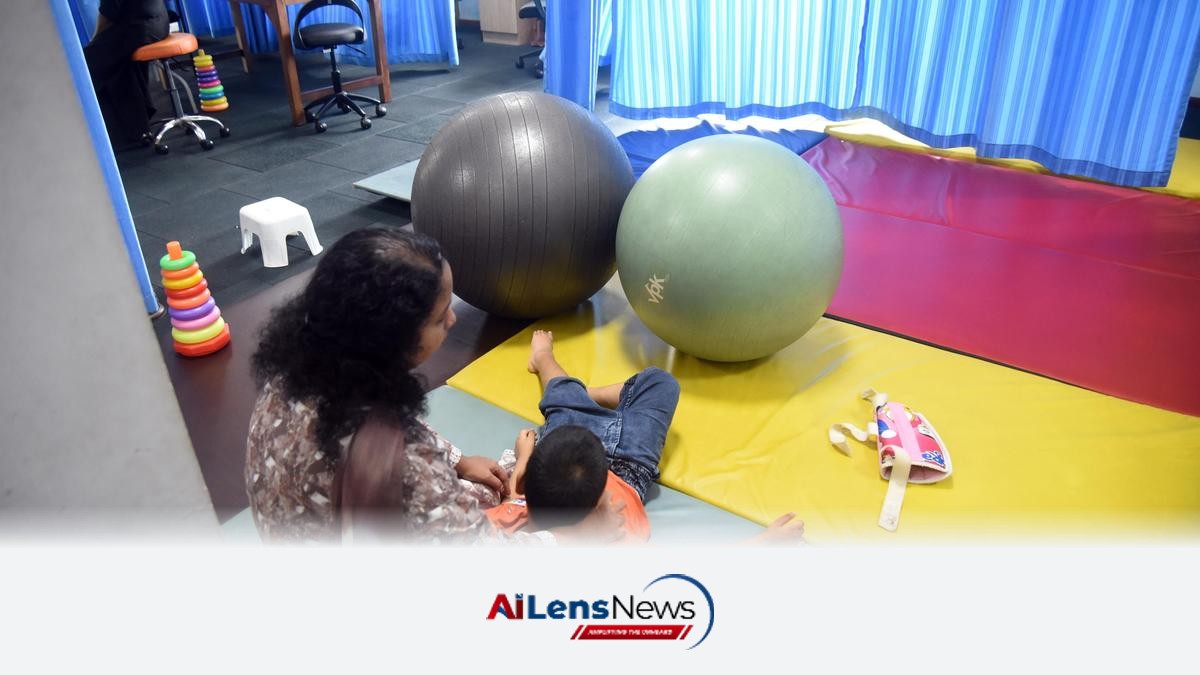



Despite the Rights of Persons with Disabilities Act, parents of differently abled children face ongoing challenges. This article explores their struggles and the need for better support.
Thiruvananthapuram, India Aug 29, 2026 ALN: A dilemma rattled Rani Mahesh*, a native of Koyilandy in 's Kozhikode, when her husband was admitted to a private medical college hospital for treatment a few years ago. She wanted to be with him, but her only child, who has cerebral palsy, could not be left alone at home.
“Worried about who would look after her, I couldn’t stop crying on the bus while going back home from the hospital that day. As suggested by a friend, I decided to take my child to a privately run care home for differently abled children in my hometown. But I was not familiar with the place then,” she says.
Help came in the form of P.K. Jameela* from Malappuram, who volunteered to take care of the child there.
“She understood my anxiety because her child too was differently abled. She attended to my daughter’s needs along with her own child for over 40 days,” says Rani. She is among many parents in whose lives are inseparably linked with that of their children. However, their concerns rarely get the attention they deserve, according to them. K. N. Roshan Bijlee, director of the Composite Regional Centre for Skill Development, Rehabilitation and Empowerment of Persons With Disabilities (CRC), points out that every such parent goes through different stages of grief.
“There is denial of reality; anger or frustration either at oneself or others; an attempt to get out of the situation; a period of sadness or depression; and finally the acceptance of reality,” he explains. Roshan claims that there have also been episodes of men deserting their wives after blaming them for the child’s condition.
As the child grows up, the nature of the challenges also changes. “The child can somehow clear Class XII with the help of a scribe. But most parents will then be worried about their future as adults. In the past year alone, there have been over 20 cases of such parents either trying to kill their adult children or attempting to end their lives in . ‘What will happen to my child after my life?’ is their biggest concern,” he says.
Around 34% of the parents of girls are worried about the safety and well-being of their children in their absence. Menstrual hygiene management is another challenge, leading to increased physical and mental fatigue. Sleeplessness is common.
There are also instances of social stigma as attempts are made to keep differently abled children away from events such as weddings. Such attitudes affect the parents, Roshan says. D. K. Babu, a retired college teacher in Kozhikode, whose son is differently abled, agrees with this.
“It has been only a decade since Parliament passed the Rights of Persons with Disabilities Act to protect the dignity, rights, and inclusion of differently abled individuals. Society needs to accept the fact that most of them cannot survive without their parents’ help,” he notes.
Babu is part of an association of parents for the rehabilitation and assistance of differently abled individuals.
Social activists say that the parents, especially the mothers, are often forced to give up their higher studies, careers, and social lives altogether. A recent survey conducted by a private care home center among a select group of 200 parents shows that there are at least four PhD holders, one of them from an Indian Institute of Technology, and 30 postgraduate degree holders, who are unable to pursue a career for themselves. Most of them were avoiding social events too.
U. Nandakumar, former Professor of Physical Medicine and Rehabilitation, Sree Chitra Tirunal Institute for Medical Sciences and Technology, Thiruvananthapuram, meanwhile, says there still exists a conservative section in that blames the mothers for their children’s condition.
“The mothers are always forced to carry the caregiving burden. This could lead to fatigue and mental breakdown because there may not be many with whom they can share their worries. Also, many parents of differently abled children are reported to be falling prey to people who offer magical cures. They even sell their properties falsely believing that their child will get better. However, such treatment will only hurt the children,” he explains.
T. K. Muhammed Yunus, general secretary of a private care home in Kozhikode and convener of the local-level committee of the National Trust of India, feels the need to financially empower the parents, who also need mental health support.
“There are many government projects and schemes. We need to ensure that they are reaching the intended beneficiaries. We have enough institutions and laws, but they need to be made more effective. Launching new projects is not the solution; empowering the existing ones is. For example, there is a provision for pension for differently abled people. But how many are getting it and how many are left out—such things need to be streamlined,” he says.
Most often, projects are launched and schemes are announced, but there is no proper follow-up or evaluation, he feels. Yunus suggests a convergence between the Departments of Education, Health, and Social Justice to solve the concerns. “A start can be made by including their real-life problems in the school curriculum, which otherwise gives information only about success stories,” he says.
Recently, a collective of parents for the rehabilitation and assistance of differently abled individuals launched a community living space at Keezhariyur in Kozhikode to help their children stand on their own feet.
The parents pooled in money to buy land. They are planning to construct 25 houses of 800 sq. ft. area each on the campus. The work on five houses is over. Vocational training centers, therapy units, classrooms, dormitories, common kitchen, recreational parks, turf ground, and a health center too are in the pipeline. The idea is to have a space where people with intellectual disabilities can live even in the absence of their parents, according to those at the collective.
“The children can stay with their parents in their houses and also in the dormitories. This is to give them an experience of self-reliance,” K. Koyatty, the trust chairperson, says.
Roshan highlights the need for a lifetime of support for the parents at varying stages of the growth of their children.
“Unfortunately, many parents remain unaware of the different milestones of brain development, identification of issues, and proper intervention, especially for neurological disorders. At least some of them don’t know what medical methods are available to detect the various types of disability and the therapies available,” he explains.
A Social Justice department official, who preferred not to be quoted, claims that the existing policy itself is “parent-centric.”
Besides private institutions, there are a few government initiatives in northern , including the Regional Intervention Centre and Autism Centre attached to the Government Medical College Hospital, Kozhikode, and the District Early Intervention Centre at the Government General Hospital, Kozhikode. At the regional level, there are community-based disability management centres attached to primary health centres. However, he admits that other districts may not have many such facilities. The organizations of parents of children with intellectual and developmental disabilities are also actively working in the sector.
Roshan says that many outreach programmes are being held under the CRC to connect with the parents. “We have one section for those aged up to six and another for those aged above six, focusing on their specific needs,” he concludes.
To learn more about the latest developments in Mental Health, stay updated with our exclusive reports and analyses on AILensNews.

A growing number of schoolchildren are developing an obsession with cosmetics, l…

The Cochin Cancer Research Centre is set to recruit 36 doctors on a priority bas…

Shigellosis cases in m are escalating, revealing alarming trends in antibiotic r…

Following the detection of E. coli in drinking water samples, the Kochi Health D…
The High Court has raised concerns over the deplorable conditions at Kuthiravatt…