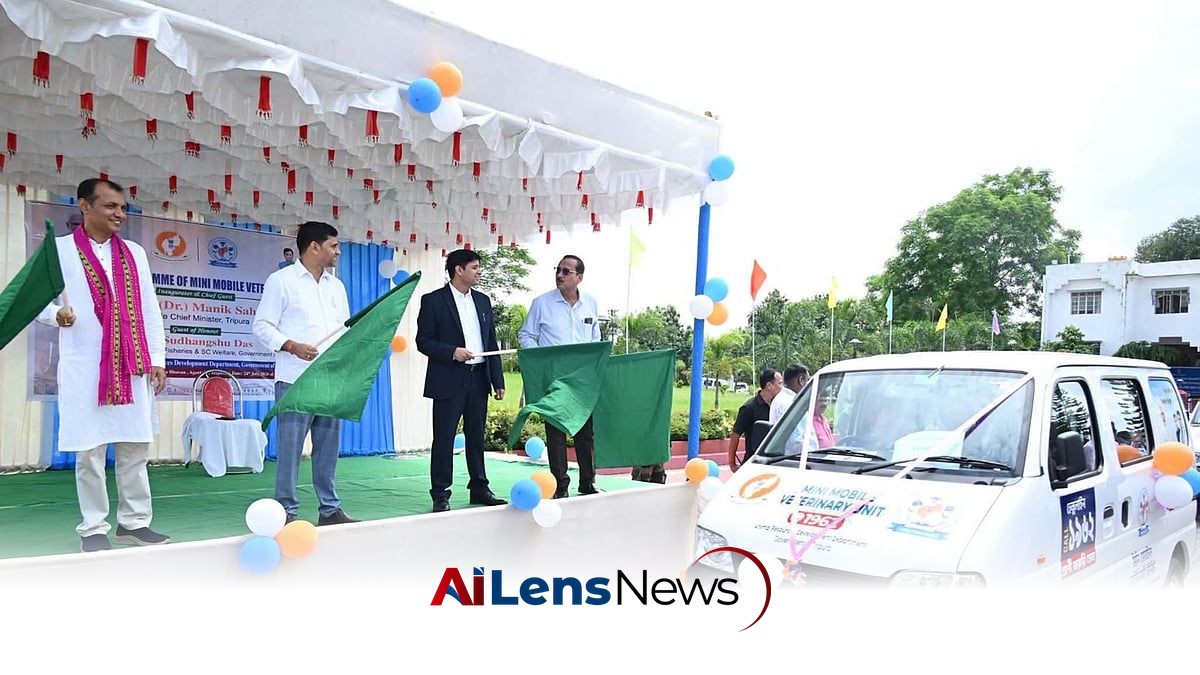


The Tripura Government has introduced 50 Mini Mobile Veterinary Units (MMVUs) to modernize veterinary services and improve access for livestock farmers in remote areas.
Agartala, India Jul 26, 2026 ALN: The Tripura Government on Saturday launched 50 Mini Mobile Veterinary Units (MMVUs) as part of its initiative to modernize veterinary services and enhance access to animal healthcare, particularly for livestock farmers situated in remote and often inaccessible areas of the state. This initiative is a significant step towards improving the overall health and productivity of livestock, which plays a crucial role in the livelihoods of many families in rural Tripura.
The MMVUs are designed to provide a range of veterinary services, including prompt treatment, vaccination, disease diagnosis, and other essential animal healthcare facilities. The formal launch event took place at Pragna Bhavan in Agartala, where Animal Resources Development Minister Sudhanshu Das presided over the ceremony. He flagged off the initiative and handed over the keys of the newly inducted vehicles to their respective drivers, marking a new chapter in the delivery of veterinary services in the state.
Attending the launch were several dignitaries, including the Acting Sabhadhipati of the West Tripura Zilla Parishad, Bishwajit Shil, and key officials from the Animal Resources Development Department, such as Director Dr. Neeraj Kumar Chanchal and Additional Director Dr. Bimal Krishna Das. Their presence underscored the importance of this initiative and the collaborative effort involved in its implementation.
In his address to the gathering, Minister Das highlighted that the deployment of the 50 Mini Mobile Veterinary Units had been announced in the 2024-25 State Budget, reflecting the government's commitment to improving animal healthcare. He explained that these vehicles would be allocated to block-level offices across the state, ensuring that veterinary services reach even the most remote and difficult-to-access areas where livestock farmers reside.
Currently, Tripura has 13 large Mobile Veterinary Units, but geographical constraints often hinder their ability to reach many interior locations effectively. The introduction of these mini units is expected to bridge this gap by providing doorstep treatment and veterinary services directly to livestock farmers, thus enhancing the availability and quality of animal healthcare.
Minister Das elaborated on the department's three key objectives: strengthening healthcare services for livestock and poultry, increasing the production of meat, milk, and eggs, and creating employment opportunities for unemployed youth through animal husbandry. These objectives are vital not only for improving the welfare of animals but also for boosting the local economy and ensuring food security in the region.
In line with these objectives, the department is placing special emphasis on both preventive and curative animal healthcare. Under its preventive healthcare program, free vaccination drives are being conducted throughout the year, including vaccinations against Foot-and-Mouth Disease (FMD), which is a significant concern for livestock health. These vaccination drives are crucial for preventing outbreaks that can have devastating effects on livestock populations and, consequently, on the livelihoods of farmers.
On the curative side, mobile veterinary teams are being bolstered to provide immediate treatment for seriously ill large animals. This service complements the existing offerings available at veterinary dispensaries, sub-centres, and hospitals, ensuring that farmers have access to timely and effective medical interventions for their animals.
The launch of the Mini Mobile Veterinary Units is particularly timely, given the increasing challenges faced by the agricultural sector in Tripura and across India. Farmers often struggle with access to veterinary care, which can lead to higher mortality rates among livestock and decreased productivity. By enhancing access to veterinary services, the Tripura government aims to mitigate these challenges and promote sustainable animal husbandry practices.
Moreover, the initiative aligns with broader government efforts to promote rural development and improve the overall quality of life for farmers. Livestock plays a vital role in the economy of Tripura, providing not only food and income but also serving as a source of employment for many families. By investing in animal healthcare, the government is making a strategic move to support rural livelihoods and enhance food security in the region.
As the Mini Mobile Veterinary Units begin their operations, it will be essential to monitor their impact on animal health and farmer satisfaction. Feedback from the livestock farmers will be crucial in assessing the effectiveness of this initiative and making any necessary adjustments to improve service delivery. Additionally, ongoing training and support for the veterinary staff operating these units will be vital to ensure they are well-equipped to handle a variety of animal health issues.
The introduction of MMVUs is expected to significantly reduce the time taken for veterinary services to reach farmers, which is particularly important during emergencies. For instance, if a farmer's livestock falls ill, prompt treatment can be the difference between recovery and loss. This initiative not only aims to provide immediate care but also fosters a sense of security among livestock owners, knowing that help is just a call away.
Furthermore, the initiative has implications for animal welfare. By ensuring that veterinary services are readily available, the government is taking a proactive approach to animal health, which can lead to better overall welfare standards. Healthy animals are more productive, which in turn can lead to increased income for farmers and, by extension, contribute to the economic stability of rural communities.
In addition to the immediate benefits, the launch of the MMVUs may also have long-term implications for the veterinary sector in Tripura. By modernizing veterinary services, the government is setting a precedent for future initiatives aimed at enhancing agricultural productivity and rural development. This could encourage further investments in agricultural infrastructure, research, and education, ultimately leading to a more resilient agricultural sector.
Moreover, the success of this initiative could serve as a model for other states facing similar challenges in accessing veterinary care in rural areas. If proven effective, the MMVU model could be replicated in other regions, thereby addressing a widespread issue in animal healthcare across India.
In conclusion, the launch of the 50 Mini Mobile Veterinary Units by the Tripura Government marks a significant advancement in the provision of veterinary services. By addressing the healthcare needs of livestock in remote areas, this initiative not only aims to improve animal health but also seeks to empower farmers, enhance agricultural productivity, and contribute to the overall economic development of the state. As the program unfolds, its success will depend on effective implementation, community engagement, and a sustained commitment to improving animal healthcare in Tripura. The eyes of the agricultural community will be on this initiative as it embarks on a journey to reshape the landscape of animal healthcare in the region.
To learn more about the latest developments in Health News, stay updated with our exclusive reports and analyses on AiLensNews.

