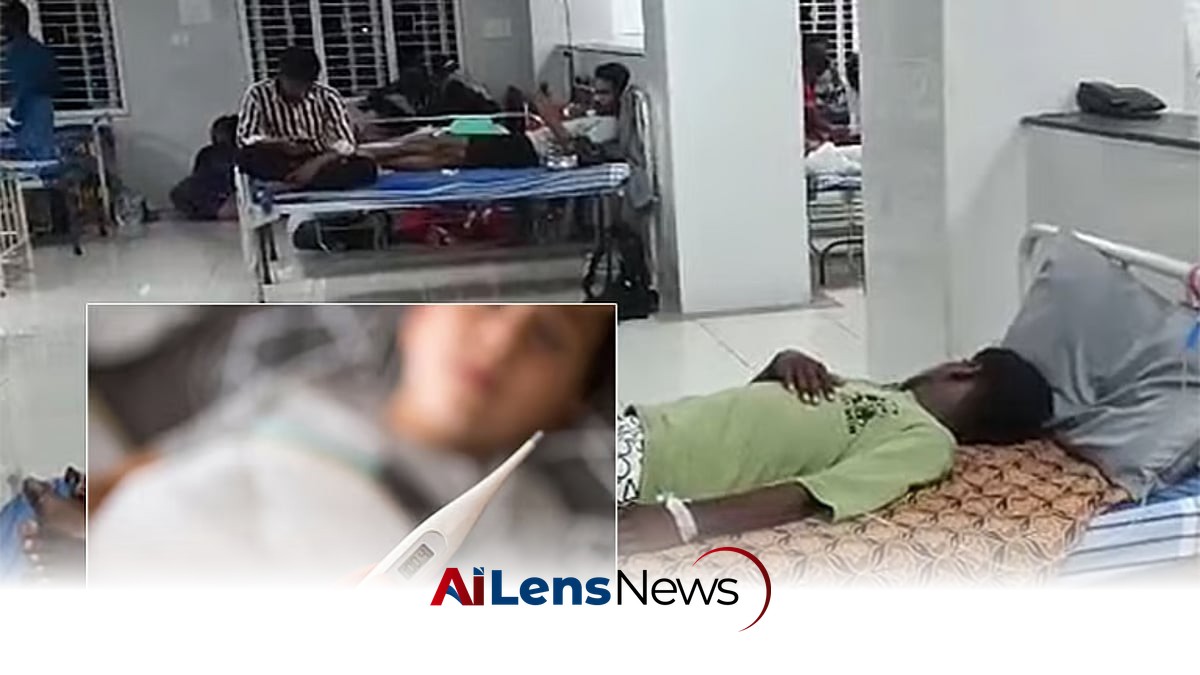


A sharp increase in dengue cases among children in Chengalpattu district has led to hospital admissions and public concern, prompting calls for government action.
Chennai, India Aug 16, 2026 ALN: Several children have been admitted to hospitals after suffering from dengue fever in Chengalpattu district, sparking panic among parents and the public, according to a report. The surge in cases has raised concerns not only about the health of the affected children but also about the broader implications for public health in the region.
Children affected by the fever have been admitted to various government hospitals including those in Guduvanchery and Chengalpattu. The hospitals are reportedly seeing an influx of patients, leading to increased pressure on healthcare facilities. Parents are understandably anxious, as dengue fever can lead to severe complications, particularly in young children.
Residents report that the fever is also spreading among adults, with additional symptoms such as headache, vomiting, and other ailments. This expansion of the disease’s reach has prompted the public to request immediate action from the Tamil Nadu government and the panchayat administration to curb the outbreak. Community leaders are calling for increased public awareness campaigns to educate residents about the symptoms of dengue and the importance of seeking medical attention promptly.
In response to the rising number of cases, the Tamil Nadu Health and Family Welfare Department has intensified surveillance across the State. Last month, the department deployed an inter-departmental strategy aimed at strengthening early detection, monitoring disease transmission, and eliminating mosquito breeding hotspots. This multi-faceted approach includes collaboration between health officials, local government bodies, and community organizations to ensure a comprehensive response to the outbreak.
Officials clarified that, despite the surge in cases, there was no immediate plan to roll out Qdenga, the first approved dengue vaccine in India. The decision not to deploy the vaccine at this time may be due to various factors, including the need for further assessment of its efficacy in the current outbreak context and logistical considerations regarding vaccine distribution and administration.
Last year, between January and November, the state recorded 20,866 dengue cases and 12 deaths. Health officials attributed the high case count not to an uncontrolled outbreak, but rather to the strength of Tamil Nadu’s disease surveillance and reporting system. This system effectively tracks infections from the primary health centre (PHC) level to secondary and tertiary care hospitals, allowing for a more accurate understanding of disease prevalence and enabling timely interventions.
Dengue is a viral infection transmitted through the bite of infected Aedes aegypti mosquitoes. The illness typically presents with high fever, severe headache, body and joint pain, nausea, vomiting, and skin rashes. In some cases, dengue can progress to severe dengue, which can lead to serious complications such as hemorrhagic fever or dengue shock syndrome, both of which can be life-threatening.
While there is no specific antiviral treatment for dengue, officials stress that early diagnosis, adequate hydration, timely medical care, and sustained mosquito control remain the most effective measures to prevent severe disease and fatalities. Public health campaigns often focus on educating communities about the importance of eliminating standing water where mosquitoes breed, using insect repellent, and wearing protective clothing.
The implications of the current outbreak extend beyond immediate health concerns. A rise in dengue cases can strain healthcare resources, diverting attention and funding away from other critical health services. Additionally, there is a potential economic impact, as increased illness can lead to loss of productivity and higher healthcare costs for families and the government.
As the situation evolves, health officials are closely monitoring the outbreak and are likely to adapt their strategies based on the changing dynamics of disease transmission. Community engagement will be crucial in these efforts, as public cooperation in mosquito control measures can significantly reduce the risk of further spread.
In conclusion, the surge in dengue cases among children in Chengalpattu is a pressing public health issue that requires immediate attention and action from both government authorities and the community. By working together, it is possible to mitigate the impact of this outbreak and protect the health of residents in the region.
To learn more about the latest developments in Health News, stay updated with our exclusive reports and analyses on AiLensNews.

