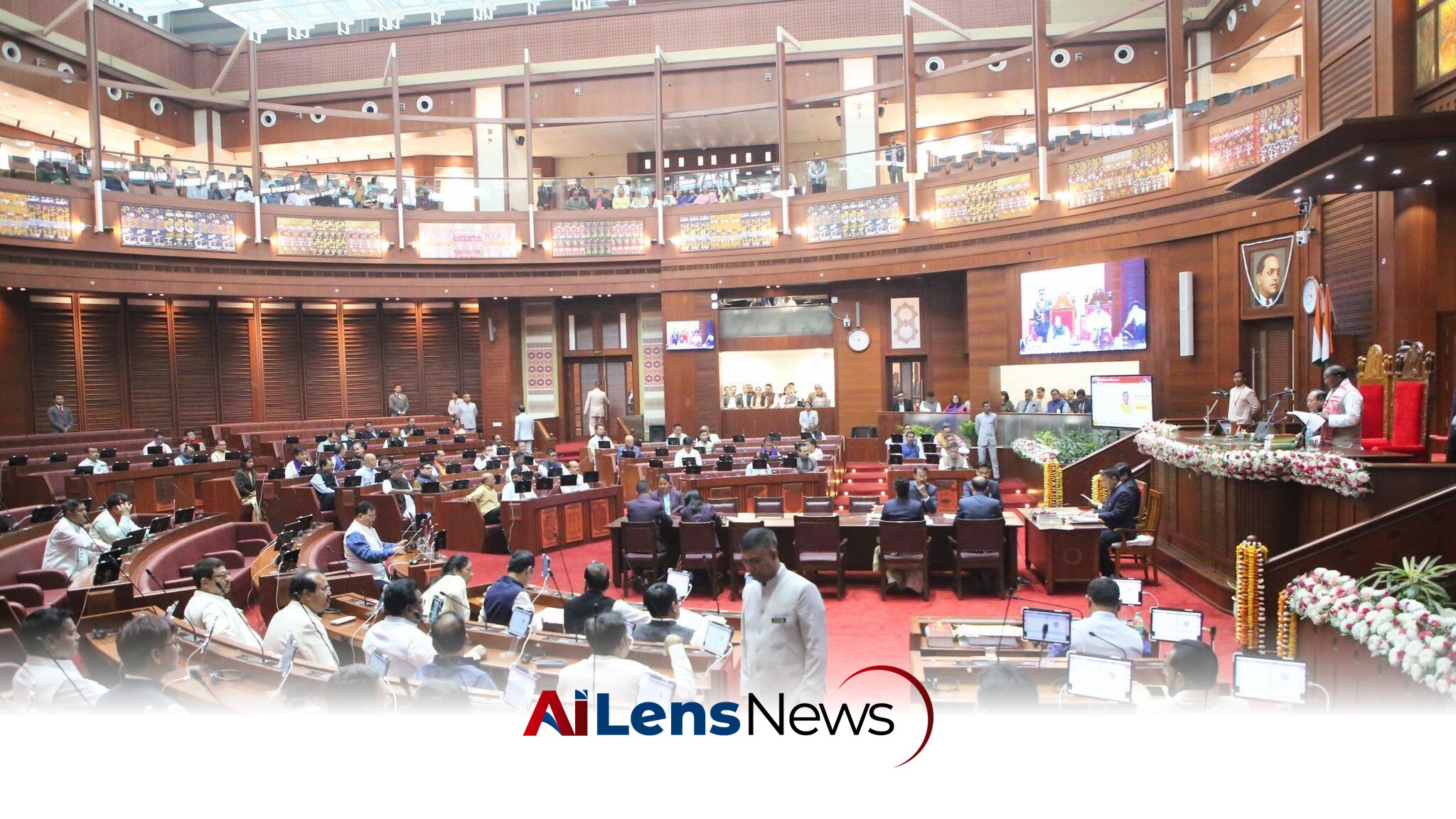


During the Assam Budget Session, the government revealed that Guwahati's groundwater is semi-critical, while sharing key health and welfare statistics.
Imphal, India Jul 15, 2026 ALN: The Assam government on Tuesday informed the Legislative Assembly that Guwahati's groundwater has been classified as 'semi-critical', while the rest of the State continues to fall under the 'safe' category, according to the Dynamic Ground Water Resources of Assam, 2025 report of the Central Ground Water Board. This classification is significant as it highlights the urgent need for sustainable water management practices in urban areas, particularly in Guwahati, which is experiencing rapid urbanization and population growth.
The update was among several key announcements made during Question Hour on the seventh day of the Budget Session, when the government also shared data on maternal health, welfare schemes, Budget utilisation, and environmental conservation. The classification of groundwater is a critical issue, especially in a region where water scarcity and contamination are growing concerns. The semi-critical status implies that the groundwater extraction in Guwahati is approaching a level that could lead to over-exploitation, necessitating immediate attention from both the government and the public.
Replying to a query by AGP MLA Diptimayee Choudhury, Public Health Engineering Minister Krishnendu Paul said Assam extracts 2.93 billion cubic metres (BCM) of groundwater annually. This figure underscores the extensive reliance on groundwater resources not only for drinking water but also for agricultural and industrial purposes. The Minister further informed the House that arsenic contamination has been detected in 4,586 habitations, while fluoride has been found in 306 habitations out of the State's 88,419 habitations. The presence of these contaminants poses serious health risks to the population, leading to potential long-term health issues such as cancer and skeletal fluorosis. The Minister added that measures have been undertaken to tackle contamination caused by both arsenic and fluoride, including the provision of safe drinking water and public awareness campaigns about the risks associated with these contaminants.
On the health front, Health and Family Welfare Minister Ashok Singhal informed the House that Assam's Maternal Mortality Ratio (MMR) stands at 84 per 100,000 live births, according to the Sample Registration Survey 2022-24. This statistic reflects the ongoing challenges in maternal health care in the State, which has been a focus area for the government due to its implications for women's health and overall family well-being. Responding to a query from Congress MLA Abdur Rahim Ahmed, Singhal said the State is implementing several schemes to reduce maternal mortality and morbidity, including the Janani Suraksha Yojana (JSY), Janani Shishu Suraksha Karyakram (JSSK), a wage compensation scheme for pregnant women in tea gardens, maternal death review and surveillance, the Surakshit Matritva Aashwasan (SUMAN) initiative, and comprehensive abortion care services. These initiatives are aimed at improving access to quality maternal health services and ensuring that pregnant women receive the necessary care throughout their pregnancy and childbirth.
On welfare initiatives, Finance Minister Jayanta Mallabaruah informed the Assembly that 39,51,968 beneficiaries had been brought under Orunodoi 3.0 till March this year. The Orunodoi scheme is a significant social welfare initiative aimed at providing financial assistance to low-income households in Assam. Replying to AIUDF MLA Mazibur Rahman, the Minister said the beneficiary list is revised on a continuous basis through additions and deletions based on new applications, complaints, and verification. This dynamic approach is essential to ensure that the benefits reach the most vulnerable populations. He noted that the scheme has expanded from 20 lakh beneficiaries under Orunodoi 1.0 to 27 lakh under Orunodoi 2.0, and now to over 39 lakh beneficiaries under Orunodoi 3.0. This growth indicates the government's commitment to improving the living standards of its citizens.
Mallabaruah also said the monthly financial assistance under the scheme has been enhanced from Rs 830 to Rs 1,000, and later to Rs 1,250. Any further increase, he said, would depend on the State government's financial position and the future expansion of the scheme. The financial assistance provided through the Orunodoi scheme is crucial for many families, especially in the context of rising living costs and economic challenges exacerbated by the COVID-19 pandemic.
On the financial front, the Finance Minister also informed the House that the Finance Department does not know why several government departments failed to fully utilise their approved Budget allocations between the 2021-22 and 2024-25 financial years. This lack of clarity raises concerns about the efficiency of government spending and the potential impact on public services. Responding to a starred question by Congress MLA Dr Asif Md Nazar, Mallabaruah said department-wise details comparing approved Budget allocations with actual expenditure have been placed before the House as an annexure. Transparency in budget utilization is vital for accountability and ensuring that resources are directed towards priority areas that require urgent attention.
He added that information on unspent funds for 2025-26 is not yet available since the accounts are awaiting finalisation by the Office of the Principal Accountant General (A&E), Assam. As expenditure is handled by individual departments, the Finance Department does not have information on the reasons behind unutilised allocations, he said. This situation calls for a more robust monitoring mechanism to track budget utilization across departments and ensure that funds are effectively used to meet the needs of the population.
Meanwhile, Soil Conservation Minister Ashwini Ray Sarkar informed the Assembly that the Soil Conservation Department has carried out sapling plantation across more than 5,800 hectares of land in Assam between 2016 and 2026. This initiative is part of a broader effort to combat deforestation, soil erosion, and climate change, which are pressing environmental issues in the region. The Minister also said 202 posts remain vacant in the department and will be filled after receiving approval from the State government. The filling of these vacancies is essential for the effective implementation of soil conservation programs and ensuring that the department can carry out its mandate effectively.
In conclusion, the updates provided by the Assam government during the Legislative Assembly session reflect a multifaceted approach to addressing critical issues such as groundwater management, maternal health, welfare initiatives, budget utilization, and environmental conservation. The classification of Guwahati's groundwater as 'semi-critical' serves as a wake-up call for policymakers and citizens alike to prioritize sustainable water practices. Furthermore, the various welfare schemes and health initiatives underscore the government's commitment to improving the quality of life for its citizens, particularly the most vulnerable populations. However, challenges remain, particularly in terms of budget utilization and departmental efficiency, which will require ongoing attention and action from the government to ensure that resources are effectively deployed to meet the needs of the people.
To learn more about the latest developments in Health News, stay updated with our exclusive reports and analyses on AiLensNews.

