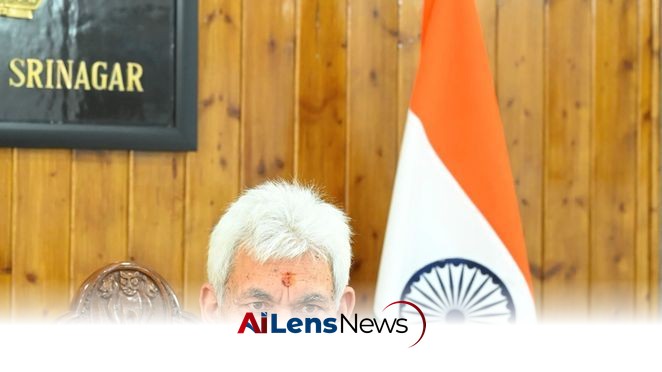


The Rehabilitation and Socio-Economic Reintegration Scheme aims to support drug abuse victims in Jammu and Kashmir through a structured rehabilitation process.
Leh, India Jul 15, 2026 ALN: Lieutenant Governor Manoj Sinha chaired a meeting to review the proposed Rehabilitation and Socio-Economic Reintegration Scheme for Drug Abuse Victims, 2026. This initiative aims to establish a comprehensive framework for the rehabilitation and social reintegration of individuals recovering from substance use disorders across the Union Territory. The growing concern over drug abuse, particularly in regions like Jammu and Kashmir, has prompted urgent action from the government to address this public health crisis.
The meeting included key officials such as Chief Secretary Atal Dulloo, Principal Secretary Home Chandraker Bharti, and Commissioner Secretary Social Welfare Sarmad Hafeez, who presented the salient features of the proposed scheme. The involvement of high-ranking officials underscores the seriousness with which the government is treating the issue of drug addiction, which has been exacerbated by various socio-economic factors in the region.
The Rehabilitation and Socio-Economic Reintegration Scheme outlines a structured three-year rehabilitation cycle comprising:
A dedicated Rehabilitation Monitoring Portal (RMP) is being developed to facilitate digital case management, monitor Individual Rehabilitation Plans, ensure inter-departmental convergence, and track rehabilitation outcomes while maintaining beneficiary confidentiality. The use of technology in monitoring rehabilitation efforts represents a modern approach to addressing drug abuse, allowing for more efficient management of cases and better data collection to inform future strategies.
The Lieutenant Governor praised the collaborative approach of the Task Force in formulating the scheme and directed that the pilot implementation should begin in two of the most affected districts—one from the Kashmir Division and one from the Jammu Division—to assess its effectiveness. This pilot program is intended to serve as a model that can be refined and expanded based on its initial outcomes, thereby providing a scalable solution to drug addiction in the region.
He emphasized that community participation, family support, skill development, and continuous monitoring must be the cornerstones of the rehabilitation process. The LG directed that dedicated officers be identified to work towards the rehabilitation of drug victims and that motivated women volunteers and groups be trained and involved in counseling and rehabilitation efforts. This focus on community involvement recognizes the role that social networks play in recovery and the importance of creating an environment that supports rehabilitation.
“Community participation is crucial for the successful reintegration of victims into the mainstream. We should encourage volunteers and interested government employees to actively participate in the rehabilitation process,” the LG stated.
He also stressed the need for training and capacity-building programs for staff to equip them with specialized skills to enhance the delivery of rehabilitation services. This emphasis on training reflects a commitment to ensuring that those involved in the rehabilitation process are well-prepared to handle the complexities of substance use disorders and can provide effective support to individuals in recovery.
The scheme has been prepared by a Task Force constituted under the Chairmanship of the Principal Secretary, Home Department, with the Social Welfare Department serving as the Nodal Department. The establishment of this Task Force indicates a strategic approach to tackling drug abuse, bringing together various stakeholders to create a cohesive and comprehensive response to the crisis.
In recent years, Jammu and Kashmir has faced significant challenges related to drug abuse, with rising numbers of individuals affected by substance use disorders. The socio-political landscape of the region, marked by prolonged conflict and instability, has contributed to a range of mental health issues, including addiction. The introduction of this rehabilitation scheme is a crucial step towards addressing these underlying issues and providing support to those in need.
Additionally, the scheme aligns with broader national and international efforts to combat drug abuse and promote mental health. Governments around the world are increasingly recognizing the importance of rehabilitation over punitive measures, as evidence suggests that supportive interventions yield better long-term outcomes for individuals struggling with addiction. By focusing on rehabilitation and socio-economic reintegration, the LG's initiative aims to not only address the immediate needs of drug abuse victims but also to foster a healthier, more resilient community.
The implications of this scheme extend beyond individual recovery; it has the potential to impact families, communities, and the overall socio-economic fabric of the region. Successful rehabilitation can lead to decreased crime rates, improved public health, and enhanced community cohesion. As the pilot program is rolled out, its outcomes will be closely monitored to inform future policies and programs aimed at combating drug abuse in Jammu and Kashmir.
In conclusion, the launch of the Rehabilitation and Socio-Economic Reintegration Scheme for Drug Abuse Victims represents a significant commitment by the government of Jammu and Kashmir to address the pressing issue of drug addiction. By combining medical treatment, social support, and community engagement, this initiative seeks to create a sustainable model for rehabilitation that can be replicated in other regions facing similar challenges. As the pilot program begins, it will be essential to gather data and feedback to refine the approach and ensure that it meets the needs of those it aims to serve.
To learn more about the latest developments in Health News, stay updated with our exclusive reports and analyses on AiLensNews.

