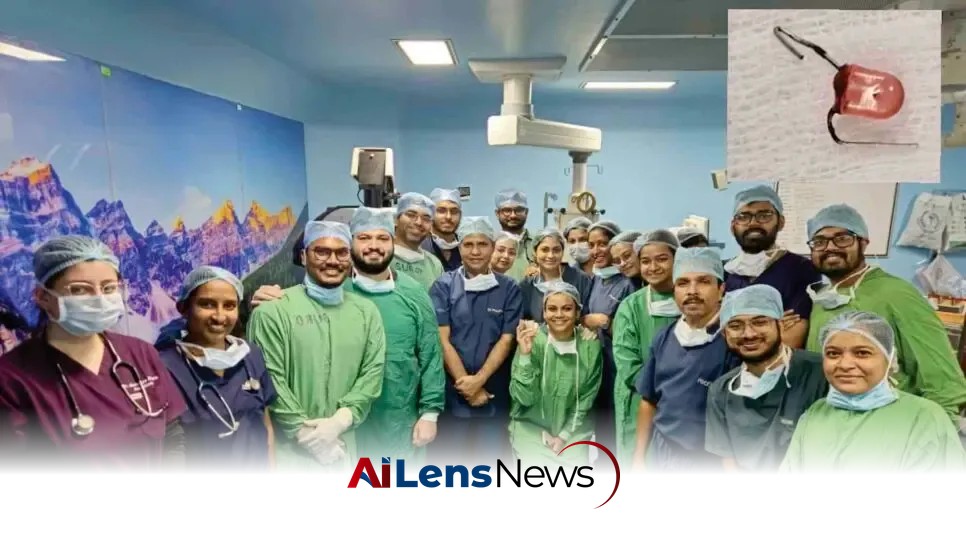


Doctors at KIMS Bhubaneswar have performed a complex, non-surgical procedure to remove an LED bulb lodged in a four-year-old girl's lung, ensuring a quick recovery.
New Delhi, India Jul 23, 2026 ALN: Bhubaneswar: Doctors at Kalinga Institute of Medical Sciences (KIMS), Bhubaneswar, have given a new lease of life to a four-year-old girl by successfully removing a small metallic LED bulb lodged deep inside her lung without resorting to open surgery. This remarkable achievement not only emphasizes the capabilities of modern medicine but also raises awareness about the dangers posed by small objects in the vicinity of young children.
The incident highlights a critical issue regarding the safety of small objects around toddlers. Accidental ingestion or inhalation of foreign objects is a common occurrence among young children, who are naturally curious and often explore their environment by putting objects in their mouths or, in this case, inhaling them. Such incidents can lead to serious health complications, including choking, respiratory distress, and even life-threatening conditions if not addressed promptly and effectively.
According to hospital sources, the child had accidentally inhaled the LED bulb, which traveled deep into the lung. She was brought to KIMS with a persistent cough eight days later after attempts to remove the object at another hospital, using standard scope procedures, failed. This delay in treatment underscores the importance of immediate medical attention in cases of suspected foreign body aspiration. The longer an object remains lodged in the respiratory tract, the higher the risk of complications such as infection, inflammation, or damage to lung tissue.
Accidental foreign body aspiration is a significant concern in pediatric medicine, with children under the age of five being particularly vulnerable. The American Academy of Pediatrics reports that thousands of children are treated annually for such incidents, with small toys, food items, and household objects being the most common culprits. The incident at KIMS serves as a stark reminder of the need for vigilance among parents and caregivers regarding the items that children can access.
A detailed CT scan confirmed that the bulb was stuck in the lower part of the right lung, in a narrow airway branch that made removal especially difficult. This finding illustrates the challenges that healthcare professionals face when dealing with foreign body aspirations, particularly in young children whose anatomy can complicate traditional removal techniques. The location of the object is crucial, as foreign bodies can obstruct airways, leading to significant respiratory issues. In this case, the specific location of the LED bulb made it particularly challenging to retrieve, necessitating a careful and strategic approach by the medical team.
ENT surgeons at KIMS, however, took up the challenge and successfully removed the small metallic LED bulb, demonstrating how a combined minimally invasive technique can safely treat even complex cases. The successful removal of the bulb without the need for open surgery is a significant achievement, reflecting advancements in medical technology and surgical techniques that prioritize patient safety and recovery.
The procedure was led by Dr. Pradipt Ranjan Sahoo (Professor, ENT & Head-Neck Surgery) and Dr. Manisha Mallick (Assistant Professor, ENT & Head-Neck Surgery), along with Dr. Basant Kumar Behera from the Department of Anaesthesiology, and Dr. Swadip Mishra from the Department of Respiratory Medicine. This multidisciplinary approach is essential in complex cases, as it brings together various specialties to ensure the best possible outcome for the patient. The collaboration among these specialists not only reflects the high level of expertise available at KIMS but also emphasizes the importance of teamwork in healthcare.
Instead of opting for open surgery, which would have been more invasive and required a longer recovery, the team of specialists at KIMS chose a combined technique using two types of instruments together. They used a rigid bronchoscope to keep the airway safely open and stable. At the same time, the team of doctors also used a flexible bronchoscope to precisely locate and maneuver around the object. This ‘hybrid’ approach allowed the team to navigate the difficult, deep location and safely extract the bulb without any complications. The use of minimally invasive techniques is becoming increasingly common in pediatric surgery, as it reduces the risk of complications and shortens recovery times.
The child soon recovered and was able to eat normally within a few hours of the procedure. She was discharged in stable health. This quick recovery is a testament to the effectiveness of the minimally invasive approach and the skill of the surgical team. It also highlights the importance of timely intervention in cases of foreign body aspiration, as early removal can significantly reduce the risk of long-term complications. Follow-up care is also crucial to ensure that the child continues to recover well and that no further issues arise from the incident.
Expressing his happiness, Achyuta Samanta, Founder of KIIT, KISS, and KIMS, congratulated the medical team for successfully performing this rare and complex procedure and wished the young girl a speedy recovery. His acknowledgment of the team's efforts underscores the collaborative spirit within the medical community, which is essential for advancing healthcare practices and improving patient outcomes. Such recognition can serve to motivate medical professionals and encourage ongoing innovation in treatment methods.
This incident serves as a reminder for parents and caregivers to be vigilant about the objects within a child's reach. Education about the dangers of small items, proper supervision, and awareness of first aid procedures can help prevent similar incidents. Parents are encouraged to regularly assess their home environment for potential hazards and to educate their children about the dangers of putting non-food items in their mouths. Additionally, it emphasizes the need for healthcare facilities to be equipped with the latest technology and trained personnel to handle emergencies involving foreign body aspirations effectively.
In conclusion, the successful removal of the LED bulb from the toddler's lung at KIMS not only showcases the expertise of the medical team but also highlights the importance of innovative surgical techniques in pediatric care. As healthcare continues to evolve, the focus on minimally invasive methods will likely expand, providing safer and more effective treatment options for young patients facing similar challenges. The implications of this case extend beyond the immediate health of the child; they call for increased awareness and preventive measures to safeguard children from the dangers of foreign body aspiration in the future.
To learn more about the latest developments in Health News, stay updated with our exclusive reports and analyses on AiLensNews.

