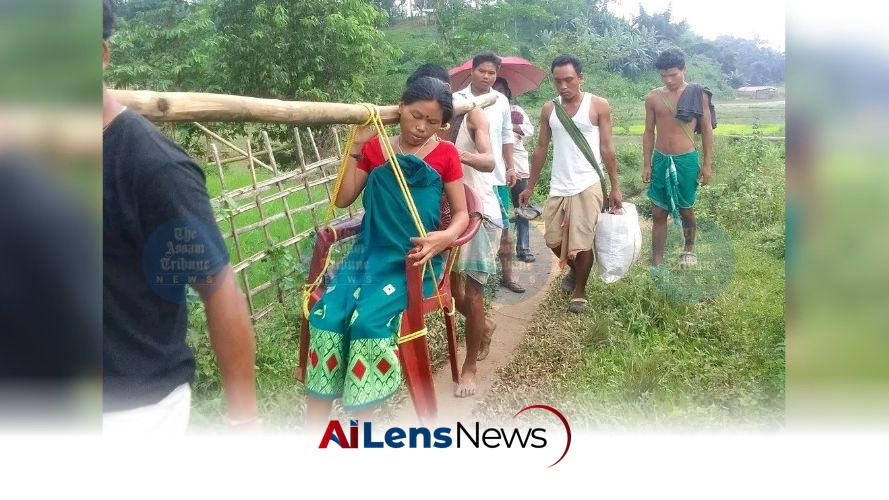


Residents of Garbhanga face dire healthcare challenges as a pregnant woman is carried on a makeshift stretcher due to lack of ambulance access.
Itanagar, India Jul 14, 2026 ALN: Despite government assurances of infrastructure development, a pregnant woman in the Garbhanga region of Kamrup district had to be transported on a makeshift stretcher, highlighting the ongoing issues with road connectivity and emergency medical access.
The woman was unable to receive ambulance assistance due to the lack of a motorable road in the Garbhanga reserve forest, located near Rani in the Palasbari Legislative Assembly Constituency. This incident raises critical questions about the adequacy of healthcare infrastructure in rural areas, where access to timely medical assistance can mean the difference between life and death.
This situation is not an isolated incident. The Garbhanga area has long been characterized by its difficult terrain and inadequate infrastructure, which poses significant challenges for residents, particularly in times of medical emergencies. The reliance on makeshift solutions, such as the stretcher used in this case, underscores a systemic failure to provide essential services in remote communities. The geographical layout of the region, combined with seasonal weather conditions, exacerbates the problem, making it increasingly difficult for emergency services to operate effectively.
The incident occurred on Sunday at Numoli Pathar village, where local residents were compelled to carry the woman for several kilometers through muddy and difficult terrain before she could be placed in a vehicle for medical treatment. This arduous journey reflects the broader struggles faced by many villagers who often find themselves cut off from essential services due to poor road conditions. The physical toll of such a journey, especially for a pregnant woman, cannot be overstated and poses significant risks to both her health and that of her unborn child.
Road access in rural areas is not merely a matter of convenience; it is a critical component of public health. When roads are impassable, emergency medical services cannot reach those in need, leading to tragic outcomes. In this case, the lack of a proper road meant that the woman could not be transported to a healthcare facility in a timely manner, raising concerns about the health of both the mother and the unborn child. The importance of swift medical intervention in obstetric emergencies is well-documented, and delays can lead to severe complications or even fatalities.
This situation underscores the grim reality faced by numerous villages in the Garbhanga area, where basic government infrastructure and emergency healthcare services remain inaccessible. Many families in these regions are forced to rely on community support and makeshift solutions in times of crisis, which can exacerbate existing health disparities and contribute to poorer health outcomes. The lack of adequate healthcare facilities is not just a logistical issue; it is a public health crisis that demands immediate attention from policymakers.
The community's plight has drawn attention to the urgent need for improved road access and healthcare facilities in remote regions, as residents continue to advocate for better services. Local leaders have been vocal about the need for government intervention to address these infrastructural deficiencies, emphasizing that the health and safety of their community depend on it. Grassroots advocacy has become a crucial tool for residents, as they seek to hold local and state governments accountable for their promises of development.
As the government promotes development initiatives, the stark contrast between promises and reality raises questions about the effectiveness of these efforts in truly reaching underserved areas. Numerous development programs have been launched over the years, with pledges to enhance rural infrastructure, but many communities continue to wait for tangible improvements. The gap between policy and practice has led to widespread disillusionment among residents, who feel abandoned by the very systems meant to support them.
In light of this incident, local leaders and residents are calling for immediate action to address the infrastructural deficiencies that jeopardize lives, particularly in emergency situations. They argue that without a concerted effort to improve road access, the health of vulnerable populations will continue to be at risk. The community is demanding not just temporary solutions, but sustainable infrastructure development that can withstand the challenges posed by the region's geography and climate.
The implications of this situation extend beyond the immediate health concerns. Poor infrastructure can hinder economic development, limit educational opportunities, and perpetuate cycles of poverty. When roads are impassable, it becomes difficult for farmers to transport their goods to market, for children to attend school, and for healthcare workers to reach those in need. This creates a vicious cycle that can entrench communities in a state of underdevelopment. The economic ramifications are profound, as isolated communities struggle to integrate into broader markets and benefit from economic growth.
Furthermore, the lack of reliable transportation can discourage healthcare professionals from serving in rural areas, exacerbating the existing healthcare shortages. Many qualified medical practitioners prefer to work in urban centers where facilities are better equipped and living conditions are more favorable. This creates a feedback loop where rural areas become increasingly isolated, making it even more challenging to attract the necessary talent to provide adequate care. The shortage of healthcare workers in these regions is a critical issue that compounds the challenges faced by residents seeking medical assistance.
In response to the ongoing challenges, community members have begun organizing to demand better services. Grassroots movements are emerging, with residents coming together to advocate for their rights and to push for government accountability. These efforts are crucial, as they not only raise awareness about the issues at hand but also empower local populations to take an active role in shaping their own futures. Community meetings, petitions, and public demonstrations are becoming more common as residents seek to amplify their voices in the face of systemic neglect.
Community leaders have also highlighted the importance of collaborating with non-governmental organizations (NGOs) and other stakeholders to address these issues. By partnering with organizations that specialize in rural development, local communities can leverage additional resources and expertise to advocate for their needs effectively. NGOs can play a vital role in facilitating dialogue between residents and government officials, ensuring that community concerns are heard and addressed.
As the situation in Garbhanga illustrates, the need for improved infrastructure is urgent. The government must prioritize investments in rural road networks and healthcare facilities to ensure that residents have access to the services they need. This will not only save lives but also contribute to the overall development of the region. Infrastructure investment is not merely a budgetary concern; it is an essential component of social justice and equity, ensuring that all citizens have the opportunity to thrive.
In conclusion, the case of the pregnant woman carried on a makeshift stretcher serves as a poignant reminder of the ongoing struggles faced by many rural communities in India. It highlights the critical need for government action to improve infrastructure and healthcare access in remote areas. As residents continue to advocate for their rights, it is essential that their voices are heard, and that meaningful changes are made to address the systemic issues that threaten their health and well-being. The time for action is now, as delays in addressing these issues can have dire consequences for future generations.
To learn more about the latest developments in Health News, stay updated with our exclusive reports and analyses on AiLensNews.

