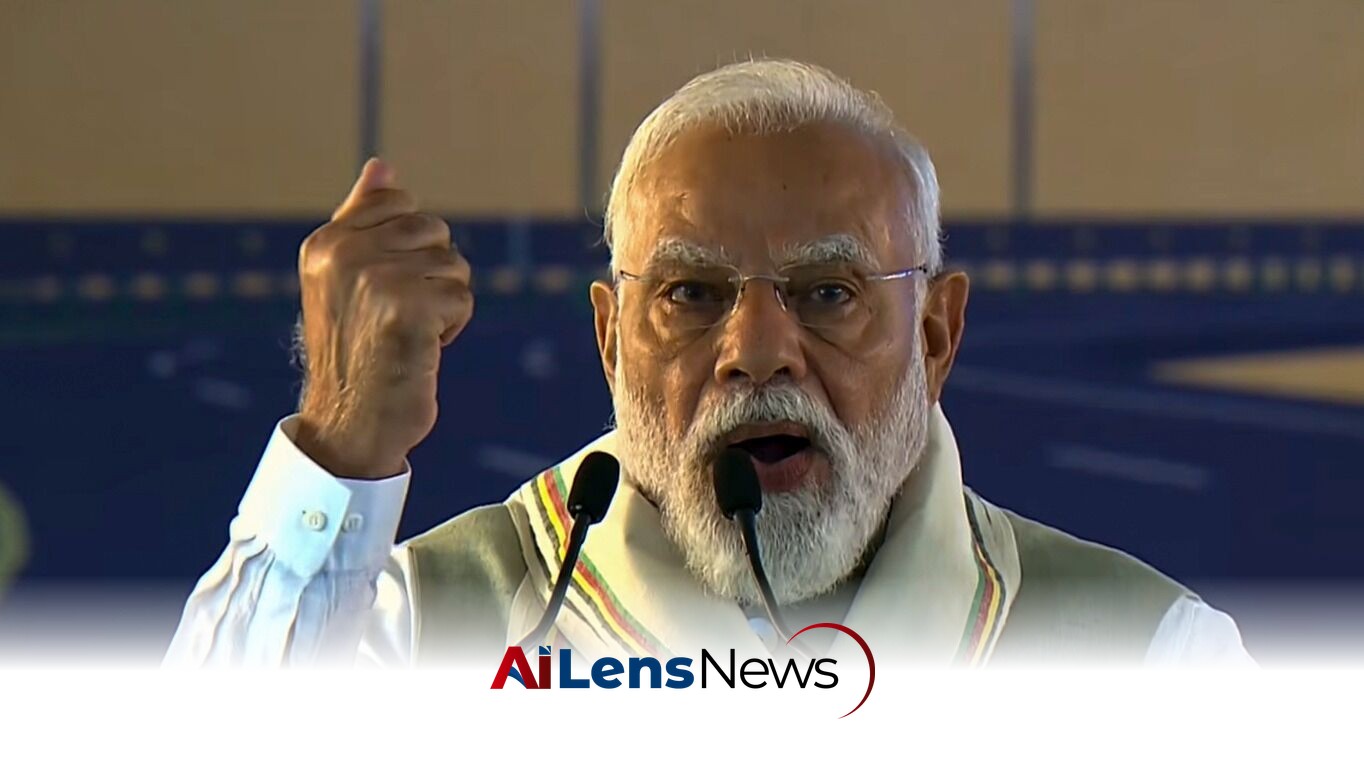


Prime Minister Modi initiates a 100-week campaign aimed at mobilizing youth against drug abuse, emphasizing the need for a drug-free society.
Itanagar, India Aug 2, 2026 ALN: Prime Minister Narendra Modi on Sunday launched the “Nasha Mukt Yuva for Viksit Bharat Sankalp Abhiyaan”, a 100-week nationwide campaign aimed at mobilising young people against substance abuse. This initiative comes at a crucial time when the issue of substance abuse among youth has reached alarming levels, with various studies indicating an increase in drug usage among young people in India.
The campaign, launched via video conferencing, marks the beginning of a nationwide Jan Bhagidari (people's participation) movement led by MY Bharat youth volunteers. This movement emphasizes the importance of community involvement in addressing social issues, particularly substance abuse, which has far-reaching implications not only for individuals but also for families and society as a whole.
Addressing the programme, Modi described the country's youth as the “Amrit peedhi” or the 'nectar generation', and urged them to stay away from drugs to realise the vision of a developed India. He emphasized that the commitment of the youth to building a drug-free society has strengthened his belief in India's potential. The Prime Minister stated, "This initiative is for an individual, family, society and, most importantly, for the country. When the country is moving forward towards the resolution of Viksit Bharat, the youth must be mentally and physically healthy and away from the problem of drugs."
Under the initiative, awareness activities will be organised every Sunday across the country to encourage public participation in the government's vision of a “Nasha-Mukt Bharat” (drug-free India) and the broader goal of Viksit Bharat 2047. The campaign aims to create a robust framework for awareness and education regarding the dangers of substance abuse, which has increasingly become a public health crisis.
The Prime Minister pointed out that the participation of young people from different walks of life has reinforced his faith in the country's youth. He said, "All of you have strengthened my belief that the youth of India is aware, socially conscious, and serious about their duties." This acknowledgment of youth engagement is significant, as it encourages young people to take an active role in shaping their futures and the future of the nation.
Calling upon the younger generation to play a defining role in India's future, Modi stated, "In the next 20-25 years, you will give direction to your lives. You will take India towards the resolution of Viksit Bharat by 2047 and reap the fruits of that achievement. The country needs your energy, creative imagination and talent. Hence, for the country and your own lives, keep yourselves away from drugs." This statement underscores the belief that a healthy youth population is essential for national development and progress.
Warning against the dangers of substance abuse, the Prime Minister highlighted that drug addiction not only destroys individuals and families but also weakens the nation. He articulated the broader societal implications of addiction, stating, "When a young person falls prey to drug addiction, it is not just that individual who loses; a dream is lost." He further elaborated that the national strength is compromised when the youth are ensnared in addiction, suggesting that external forces may exploit this vulnerability. He stated, "Hostile countries conspire to drag our youth into the trap of addiction. Profiting from supplying drugs and aiming to destroy a nation like ours is also part of their terror agenda." This perspective frames substance abuse as not just a personal issue, but a national security concern as well.
In his address, Modi urged families to seek professional help instead of hiding cases of addiction due to social stigma. He appealed to parents, teachers, and college professors to remain vigilant for behavioral changes among young people that could indicate substance abuse. He stressed the need for open communication, saying, "Do not hide it behind the pressure of social reputation. Those who need help should seek support. Talk openly with them, take the help of experts and make efforts to free your child from addiction with the support of medical professionals." This call to action emphasizes the role of the community and family in addressing substance abuse, highlighting the importance of breaking the stigma associated with seeking help.
The Prime Minister also referred to the Kashi Declaration, a five-year roadmap for a drug-free India adopted during the Youth Spiritual Summit in Varanasi in July 2025. This declaration signifies a collaborative effort among various stakeholders, including spiritual organizations, to combat substance abuse. Modi mentioned that 125 spiritual organisations had joined hands to support the national campaign against drug abuse, indicating a multi-faceted approach to tackling this issue, which includes both secular and spiritual dimensions.
The 100-week campaign will feature a wide array of activities designed to engage the youth and raise awareness about the dangers of substance abuse. Events such as sports competitions, walkathons, meditation sessions, cultural programmes, awareness drives, nukkad nataks (street plays), discussion forums, art competitions, and community engagement activities will be held every Sunday across the country. This diverse range of activities is intended to appeal to various interests and demographics, thereby maximizing participation and impact.
Moreover, the campaign aligns with the broader objectives of the Indian government to create a healthier and more productive society. Substance abuse has been linked to numerous social issues, including crime, unemployment, and mental health challenges. By addressing these issues head-on, the government aims to build a more resilient and capable youth population that can contribute positively to national development.
In conclusion, the “Nasha Mukt Yuva for Viksit Bharat Sankalp Abhiyaan” represents a significant step towards addressing the pressing issue of substance abuse among India's youth. Through awareness, education, and community engagement, the campaign seeks to empower young people to make informed choices and contribute to a drug-free society. As the nation strives toward the vision of a developed India by 2047, the health and well-being of its youth will undoubtedly play a crucial role in achieving this goal.
To learn more about the latest developments in Health News, stay updated with our exclusive reports and analyses on AiLensNews.

