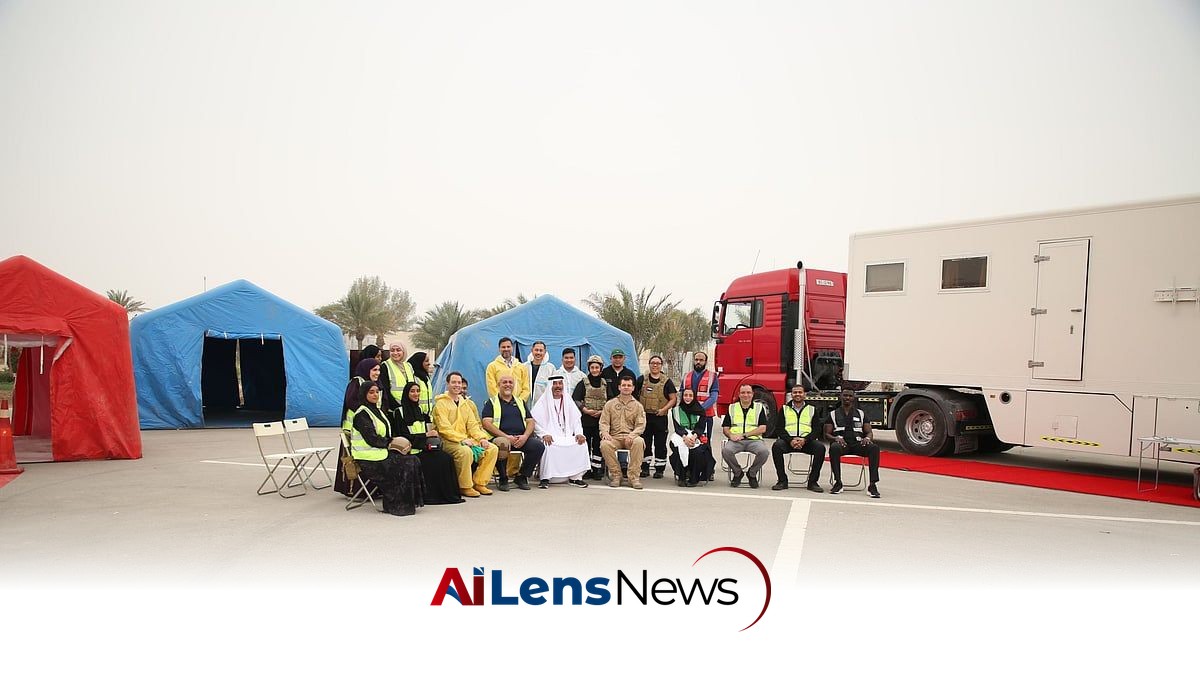


The UAE has launched a national programme aimed at training one million community responders to enhance emergency preparedness and response.
Kuwait City, Kuwait Jul 11, 2026 ALN: Abu Dhabi: The Integrated National Health Emergency Preparedness and Response Programme (Jaheziya) has launched the unified and integrated national programme for community preparedness and response, "Community Readiness", with the aim of training and qualifying one million community responders from members of the public, volunteers, students, employees and community teams. This initiative is crucial in enhancing the overall emergency response capabilities of the UAE, particularly in the initial critical minutes of emergencies, crises, and disasters, which are often the most crucial for saving lives and mitigating damage.
The "Community Readiness" programme is based on an integrated national framework encompassing institutional readiness, community readiness, and international readiness, in partnership with various sectors including government, private, civil, military, healthcare, security, ambulance, and community organizations, as well as public benefit institutions. This multi-sectoral approach is essential for creating a robust emergency response system that can effectively mobilize resources and personnel when needed.
The programme is supported by a network of international scientific, training, and accreditation partnerships with leading universities, training centres, and professional institutions in the United States, Canada, Europe, the United Kingdom, Australia, and New Zealand. These partnerships are designed to strengthen knowledge transfer and ensure that the training provided is of high quality and relevant to current best practices in emergency management. By localizing specialized programmes, qualifying national trainers, and implementing unified standards, the initiative aims to enhance the overall preparedness of the UAE's community responders.
The "Community Readiness" programme comprises four progressive training levels. The first, Basic Readiness, includes essential skills such as risk awareness, personal safety, family emergency planning, requesting assistance, first aid, cardiopulmonary resuscitation (CPR), use of automated external defibrillators (AEDs), bleeding control, choking management, safe evacuation, fire safety, emergency kit preparation, and psychological first aid. These foundational skills are critical for individuals and families to respond effectively in emergencies, providing them with the confidence and knowledge to act decisively when every second counts.
The second level, Advanced Community Responder, focuses on more complex skills and knowledge necessary for managing incidents. This includes incident command principles, incident scene management, primary triage, management of multiple casualties, evacuation and transportation, infection prevention and control, support for evacuation centres, crowd management, logistical support, information documentation, and participation in field exercises. This level is particularly important for those who may take on leadership roles during emergencies, ensuring that they can coordinate efforts effectively and provide support to those in need.
The third level is dedicated to qualifying community leaders, equipping them with skills in team leadership, emergency planning, risk assessment, resource and volunteer management, decision-making, strategic communication, exercise design, report preparation, and capturing lessons learned. By empowering community leaders, the programme aims to create a network of trained individuals who can lead their communities in times of crisis, fostering a culture of preparedness and resilience.
The fourth level is dedicated to preparing national trainers in teaching and training skills, simulation management, scenario development, trainee assessment, quality assurance, content standardization, and the development of national training programmes. This level ensures that the knowledge and skills gained through the programme can be sustained and expanded over time, creating a self-perpetuating cycle of training and preparedness within the community.
Dr. Adel Abdullah Al Shammari Al Ajmi, Chief Executive Officer of the Zayed Giving Initiative and Chairman of the UAE National "Jaheziya" Programmes, emphasized that "Community Readiness" reinforces a comprehensive national culture based on prevention, preparedness, readiness, rapid response, business continuity, and recovery. This holistic approach is critical for ensuring that communities are not only prepared for emergencies but can also recover quickly and effectively following a crisis.
Professor Roberto Mugavero, President of the European Centre for Disaster Medicine, remarked that the programme represents an innovative Emirati model that can benefit regional and international communities. Its progressive training levels, digital platform, national responder database, training quality assurance system, and readiness assessment framework are designed to ensure that trainees do not exceed the limits of their competencies or replace licensed and qualified professionals. This is an important consideration in emergency response training, as it maintains the integrity of professional standards while empowering community members to contribute effectively.
The implications of the "Community Readiness" programme extend beyond immediate emergency response. By fostering a culture of preparedness and resilience, the programme can help to mitigate the impact of disasters on communities, ultimately saving lives and reducing economic losses. Furthermore, as communities become more self-sufficient in their response capabilities, the burden on professional emergency services may be alleviated, allowing them to focus on more complex and critical situations.
Moreover, the initiative aligns with global trends in disaster management, which increasingly emphasize the importance of community involvement and preparedness. As the frequency and intensity of natural disasters and emergencies continue to rise due to climate change and other factors, initiatives like "Community Readiness" are becoming vital components of national and global strategies for disaster risk reduction.
In conclusion, the "Community Readiness" programme represents a significant step forward in enhancing the UAE's emergency preparedness and response capabilities. By training one million community responders, the initiative not only aims to improve immediate response efforts but also seeks to build a resilient society that is equipped to handle future challenges. As the programme unfolds, its success will likely serve as a model for other nations looking to bolster their own community preparedness efforts in the face of an increasingly unpredictable world.
To learn more about the latest developments in Public Health, stay updated with our exclusive reports and analyses on AiLensNews.

