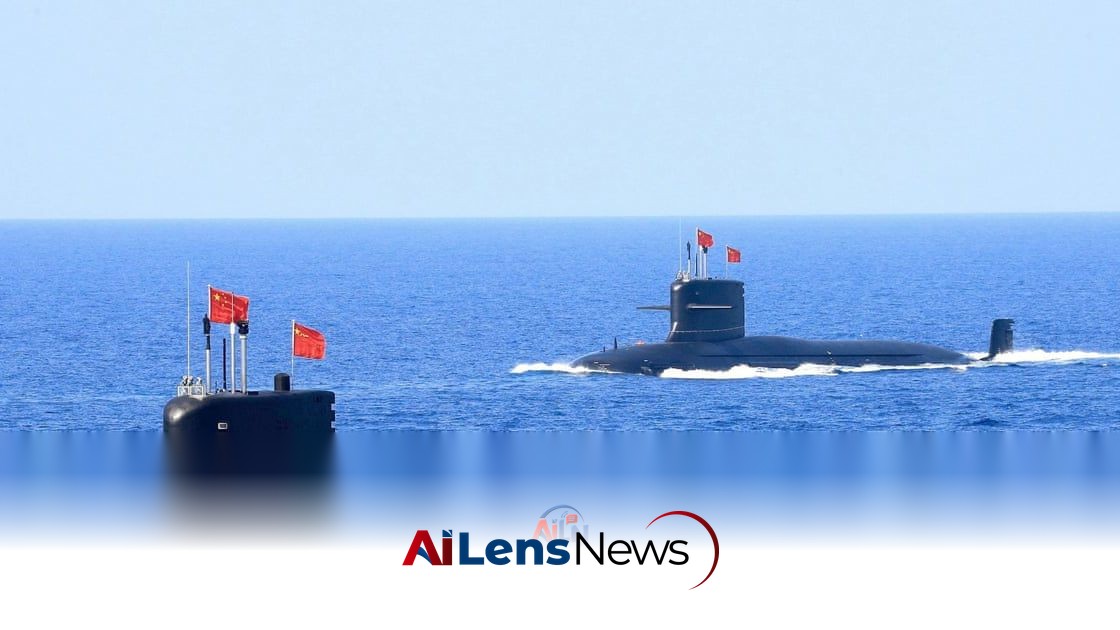


China's recent missile test in the South Pacific raises concerns for Australia, coinciding with Fiji's treaty alliance, reflecting tensions in the region.
New Delhi, India Jul 7, 2026 ALN: At 12:01 PM on Monday, a People’s Liberation Army Navy submarine test-fired a ballistic missile into the South Pacific nuclear-free zone. This marks the second time China has conducted a ballistic missile test in the Pacific within two years. The South Pacific, recognized for its strategic significance and its designation as a nuclear-free zone, has become a focal point for geopolitical tensions, especially between major powers like China and the United States. The implications of such tests extend beyond mere military capabilities; they resonate deeply within the political, economic, and social landscapes of the region.
The timing of this test is particularly noteworthy as it coincided with Fiji becoming Australia’s fourth formal treaty ally, joining the ranks of the United States, New Zealand, and Papua New Guinea. This alignment raises questions about the intentions behind the missile test, which could be interpreted as a provocation at best or outright coercion at worst. The establishment of formal alliances in the Pacific is a strategic countermeasure to China’s increasing influence, which has been met with both support and apprehension from various regional stakeholders. The juxtaposition of military maneuvers and diplomatic developments creates a complex web of interactions that shape the security dynamics of the Pacific.
This missile test does not appear to be a spur-of-the-moment decision. Given the sophistication of the Chinese military, such tests require extensive planning and coordination. The Chinese military, known for its strategic foresight, likely considered various factors, including regional responses and international perceptions, before proceeding with the launch. However, it is plausible that the signing of the Ocean of Peace Alliance pact prompted the acceleration of this test. This new alliance, perceived as a collective security arrangement among Pacific nations, could be seen by Beijing as a direct challenge to its aspirations in the region.
Washington's influence looms large in Beijing’s strategic calculations, and the implications for Australia and its regional partners are significant. While China has adhered to the letter of the law by notifying regional countries, including Australia and New Zealand, about the test, the spirit of transparency is lacking. Notifications received only hours before the test do little to build trust or alleviate suspicion. The lack of timely communication has been a recurring theme in China’s military engagements, often leading to heightened tensions and misunderstandings. This situation underscores the importance of establishing clearer channels of communication and building confidence among nations in the region.
Reports indicate that the missile tested was one of China’s new JL-3 SLBMs (submarine-launched ballistic missiles). These advanced missiles can be equipped with multiple warheads, allowing them to strike different targets simultaneously. The JL-3 missile represents a significant advancement in China’s military capabilities, enhancing its deterrence posture in the region. The ability to launch from submarines adds a layer of stealth and unpredictability to China’s military strategy, complicating defense calculations for neighboring countries.
Notably, the JL-3 missile boasts a range of approximately 10,000 kilometers, suggesting it could have been launched from a nuclear-powered ballistic missile submarine operating in the South China Sea. China currently operates six of these submarines, with its Bohai shipyards capable of producing up to six additional vessels annually. Recent images from Shanghai indicate that a second shipyard has commenced construction of nuclear-powered submarines. This expansion of naval capabilities not only enhances China’s deterrent capabilities but also reflects its broader ambitions to assert its influence over critical maritime routes and resources.
The missile test, combined with previous military activities, such as a Chinese naval task group's circumnavigation of Australia last year, points to an increasing willingness by China to employ military force to coerce states across the Indo-Pacific into adopting policies favorable to Beijing. The Chinese government appears intent on pressuring Australia to cease its legal passage operations in international waters, which would bolster its claims in the South China Sea. This coercive strategy aligns with China’s broader objective of asserting its territorial claims and expanding its influence in the region.
Historically, since the era of Mao Zedong, the People’s Liberation Army (PLA) has been tasked with implementing weishe, a term that roughly translates to coercion. Under Xi Jinping, the concept of weishe has expanded, focusing on preserving Beijing’s strategic opportunities and actively shaping regional dynamics. This missile test serves as the latest evidence of China’s readiness to engage in overt displays of military force as part of this broader strategy. Such actions are not merely military exercises; they are calculated moves in a larger geopolitical chess game, where each player seeks to enhance their position while minimizing the influence of rivals.
Whether or not the missile test was intentionally timed with the Ocean of Peace Alliance signing, it stands in stark contrast to the principles of mutual respect, equal treatment, mutual benefit, and win-win outcomes that are often espoused by China. Pacific nations, including Australia, have expressed their commitment to maintaining the Pacific as an ocean of peace, raising concerns about whether China’s actions align with this vision or if they prefer a more militarized presence in the region. The trajectory of China’s military activities in the Pacific will likely continue to influence regional security dynamics, prompting nations to reassess their defense strategies and diplomatic engagements.
In the broader context, the implications of such missile tests extend beyond immediate military concerns. They touch upon issues of sovereignty, regional stability, and the balance of power in the Indo-Pacific. As nations grapple with the challenges posed by an assertive China, the need for collective security arrangements and strategic partnerships becomes increasingly critical. The evolving situation in the Pacific will require careful navigation, as nations seek to balance their national interests with the imperatives of regional cooperation and stability.
To learn more about the latest developments in Climate Change, stay updated with our exclusive reports and analyses on AiLensNews.

