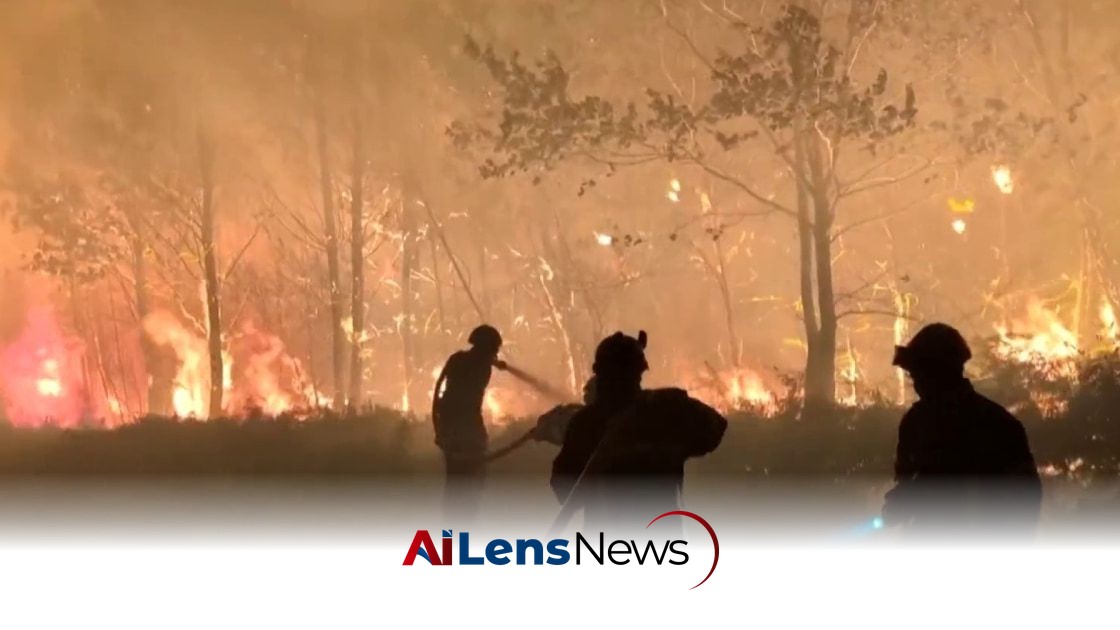


Hundreds of thousands are fleeing wildfires in France and Spain, prompting officials to alter the Tour de France route as containment efforts intensify.
Washington DC, United States Jul 26, 2026 ALN: An urgent effort is underway to contain multiple massive wildfires that have erupted across southern France and Spain, leading to the evacuation of hundreds of thousands of residents. The situation has escalated to a point where French officials were compelled to change the course of the final stage of the famed "Tour de France" race, a decision that underscores the severity of the ongoing disaster.
In France, the wildfires have ravaged vast areas of land, with firefighters battling the flames under challenging conditions. The government has mobilized additional resources, including aerial support, to combat the infernos that have spread rapidly due to dry weather and strong winds. The Mediterranean climate in southern France, characterized by hot, dry summers, has created a perfect environment for wildfires to ignite and spread. Areas such as the Gironde region have been particularly hard-hit, where flames have consumed large swathes of forest and vegetation, leading to significant ecological and economic impacts.
Local authorities have issued evacuation orders in several regions, urging residents to leave their homes as the fires approach populated areas. Emergency shelters have been set up to accommodate those displaced by the flames, as communities come together to support each other during this crisis. The psychological toll on affected residents can be profound, as many are forced to leave behind their belongings and seek refuge in unfamiliar places. This communal support is critical, as it fosters resilience and helps individuals cope with the immediate challenges posed by the disaster.
In Spain, similar wildfires have prompted a state of emergency in some regions, with firefighters working tirelessly to contain the blazes. The Spanish government has also deployed military resources to assist in firefighting efforts, reflecting the seriousness of the situation. Regions such as Catalonia and Valencia are experiencing severe fire conditions, with high temperatures exacerbating the risk of ignition. The deployment of military personnel not only provides additional manpower but also brings specialized equipment and expertise to the firefighting efforts.
The decision to alter the Tour de France route was made to ensure the safety of participants and spectators, highlighting the far-reaching impact of the wildfires on local events and tourism. The race, which is a significant cultural event in France, will now bypass areas directly threatened by the fires. This alteration not only affects the logistics of the race but also has economic implications for local businesses that rely on the influx of tourists and spectators during this time. The Tour de France is more than just a sporting event; it is a celebration of French culture and community, and changes to its route can ripple through the local economy.
As the situation develops, officials continue to monitor the fires closely, providing updates to the public and coordinating with emergency services to ensure the safety of all residents. The community's resilience is being tested, but efforts to combat the wildfires and support those affected are ongoing. Firefighters are working around the clock, often facing extreme heat and unpredictable fire behavior, which makes their job increasingly hazardous. The collaboration between local, regional, and national agencies is crucial in effectively managing the crisis and ensuring that resources are allocated where they are most needed.
Authorities are urging everyone to remain vigilant and to follow evacuation orders promptly. The wildfires serve as a stark reminder of the increasing frequency and intensity of such natural disasters, prompting discussions about climate change and environmental policies moving forward. Experts warn that the patterns of wildfires are likely to become more severe as climate change continues to impact weather conditions globally. The combination of prolonged droughts, rising temperatures, and shifting precipitation patterns creates a perfect storm for wildfire outbreaks.
In light of these events, discussions surrounding forest management practices, land use policies, and emergency preparedness are becoming increasingly urgent. Governments are being called to invest in better infrastructure for fire prevention and response, including controlled burns, which can help reduce the amount of fuel available for wildfires. Additionally, enhancing community awareness and preparedness can empower residents to take proactive measures to protect themselves and their properties.
The current wildfires also raise questions about the impact of human activity on natural ecosystems. Urban expansion, agricultural practices, and climate change are all contributing factors that increase the vulnerability of landscapes to wildfires. As communities reflect on these challenges, there is a growing recognition of the need for sustainable practices that prioritize environmental health alongside economic development.
Historically, southern France and Spain have faced wildfire challenges, especially during periods of extreme heat and drought. The Mediterranean region is particularly susceptible to wildfires due to its climate and vegetation. The presence of flammable plant species, combined with human activities such as land clearing and agricultural burning, often exacerbates the risk of wildfires. Climate change has intensified these risks, leading to longer fire seasons and more severe fire behavior.
In recent years, both France and Spain have experienced significant wildfires that have destroyed homes, forests, and wildlife habitats. The 2021 wildfires in Greece and Turkey serve as a stark reminder of the devastating impact of wildfires in the Mediterranean region. These events have prompted governments to reassess their fire management strategies and invest in more robust firefighting capabilities.
As the current wildfires rage on, it is essential to consider the long-term implications of these disasters on local ecosystems and economies. The destruction of forests not only affects biodiversity but also has far-reaching consequences for carbon sequestration, air quality, and water resources. Reforestation efforts and sustainable land management practices will be crucial in the recovery process.
In conclusion, the wildfires in France and Spain are not just a localized disaster but a reflection of a broader global challenge. The response to these fires will require a concerted effort from governments, communities, and individuals alike. As the situation continues to evolve, it is imperative for all stakeholders to engage in meaningful dialogue about the future of fire management and climate resilience. The hope is that through collective action and informed policy-making, communities can better prepare for and mitigate the impacts of future wildfires.
To learn more about the latest developments in Natural Disasters, stay updated with our exclusive reports and analyses on AiLensNews.

