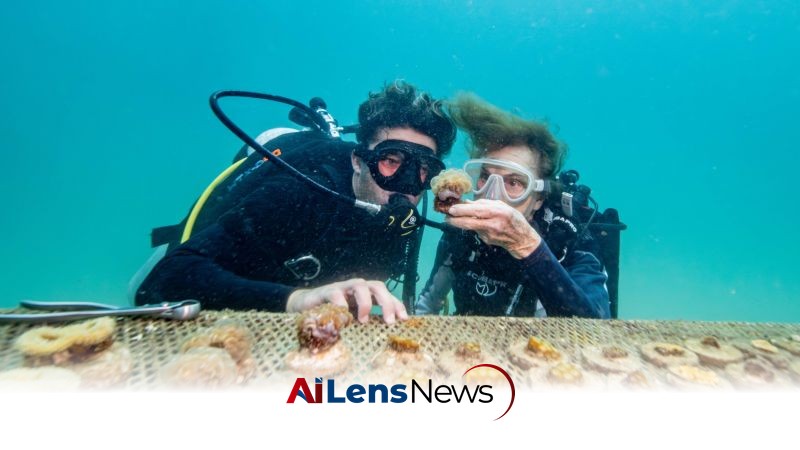


Renowned oceanographer Sylvia Earle and coral conservationist Titouan Bernicot share insights on protecting marine ecosystems and innovative conservation strategies.
Washington DC, United States Jul 21, 2026 ALN: EDITOR’S NOTE: Call to Earth is a CNN editorial series committed to reporting on the environmental challenges facing our planet, together with the solutions. Rolex’s Perpetual Planet Initiative has partnered with CNN to drive awareness and education around key sustainability issues and to inspire positive action.
Washington, DC — Sylvia Earle has many titles: oceanographer, marine biologist, and “Her Deepness,” to name a few. Perhaps the most endearing and characteristic of them all: “Ocean Sister” — a nickname given by friend and marine conservation ally Titouan Bernicot. Earle’s deep connection to the ocean and her relentless advocacy for its preservation have made her a pivotal figure in marine conservation, inspiring countless individuals and organizations to take action in the face of escalating environmental challenges.
Now 90, Earle has explored the ocean and advocated for its protection for more than seven decades — from cataloging aquatic plants to pioneering deep-sea research. Her life’s work is a testament to the importance of understanding and preserving marine ecosystems, which are vital not only to the health of our planet but also to human survival. Oceans cover over 70% of the Earth's surface and play a critical role in regulating climate, supporting biodiversity, and providing livelihoods for millions of people worldwide.
A trailblazer in her field, in 1979 she set a record for the deepest walk on the ocean floor in an untethered diving suit, and in 1990, she became the first female chief scientist of the NOAA (the US National Oceanic and Atmospheric Administration). Her groundbreaking achievements have opened doors for women in science and have highlighted the need for diverse voices in environmental stewardship. Earle’s experiences have shaped her understanding of the ocean’s complexities and the urgent need for conservation efforts as human activities continue to threaten marine life.
In 2009, she founded Mission Blue, a nonprofit that protects the ocean by establishing Hope Spots — marine areas recognized for their ecological importance and championed by local communities — and empowering conservation through education. The concept of Hope Spots is crucial in marine conservation, as it fosters community involvement and promotes sustainable practices that benefit both the environment and local economies. By raising awareness about the significance of these areas, Mission Blue aims to create a global network of protected marine environments that can recover from the impacts of climate change, pollution, and overfishing.
That vision has inspired and shaped the next generation of ocean advocates — including Bernicot. After witnessing the decline of the reef off his home in Mo’orea, French Polynesia, he made it his life’s mission to help restore the world’s coral reefs. Coral reefs are among the most diverse ecosystems on the planet, providing habitat for countless marine species and protecting coastlines from erosion. However, they are also among the most threatened, facing challenges such as coral bleaching, ocean acidification, and habitat destruction.
He founded Coral Gardeners in 2017, and what started as a local coral-planting effort has turned into an international movement. Today, the organization has planted more than 221,000 corals across 25,100 square meters (30,019 square yards) of reef and is working toward a presence in 10 countries by 2030. This ambitious goal reflects a growing recognition of the need for collaborative efforts to address the global crisis facing coral reefs. By engaging local communities and providing them with the tools and knowledge needed to restore their reefs, Coral Gardeners is not only helping to rehabilitate damaged ecosystems but also empowering individuals to take ownership of their marine environments.
Now, the two Rolex Testimonees are joining forces in the fight to save our ocean. In March, they dove together in Thailand, where Coral Gardeners’ latest outpost is helping restore bleached reefs around the remote Koh Mak and Koh Kood islands, which Earle believes could become a Hope Spot. This collaboration between seasoned experts and passionate young advocates exemplifies the power of mentorship and the importance of intergenerational dialogue in conservation efforts. By sharing knowledge and experiences, they are fostering a culture of stewardship that can inspire future generations to prioritize the health of our oceans.
The implications of their work extend beyond the immediate restoration of coral reefs. By addressing the root causes of marine degradation, such as climate change and pollution, Earle and Bernicot are contributing to a broader movement aimed at transforming how society interacts with the ocean. Their efforts highlight the need for systemic change in policies and practices that govern marine resources, emphasizing the importance of sustainable development and responsible consumption.
As the global community grapples with the escalating impacts of climate change, the urgency of protecting our oceans has never been more critical. With rising sea temperatures, increased ocean acidification, and heightened frequency of extreme weather events, the resilience of marine ecosystems is being tested like never before. The work of Earle, Bernicot, and organizations like Mission Blue and Coral Gardeners serves as a beacon of hope, demonstrating that collective action can lead to meaningful change.
In addition to their on-the-ground efforts, both Earle and Bernicot are advocates for policy changes that support marine conservation. They recognize that while grassroots initiatives are essential, they must be complemented by strong legislative frameworks that protect marine environments at a national and international level. This includes advocating for marine protected areas, sustainable fishing practices, and measures to reduce carbon emissions that contribute to climate change.
The lessons learned from their experiences underscore the importance of collaboration across sectors, including government, academia, and the private sector. Engaging diverse stakeholders in conservation efforts can lead to innovative solutions and more effective management of marine resources. This holistic approach is essential for addressing the multifaceted challenges facing our oceans and ensuring their health for future generations.
As we look to the future, the commitment of individuals like Sylvia Earle and Titouan Bernicot serves as a reminder that each of us has a role to play in the stewardship of our oceans. Whether through advocacy, education, or direct action, collective efforts can lead to significant progress in the fight against ocean degradation. The time to act is now, as the fate of our oceans hangs in the balance, and the opportunity to create a sustainable future for marine ecosystems is within our reach.
To learn more about the latest developments in Conservation, stay updated with our exclusive reports and analyses on AiLensNews.

