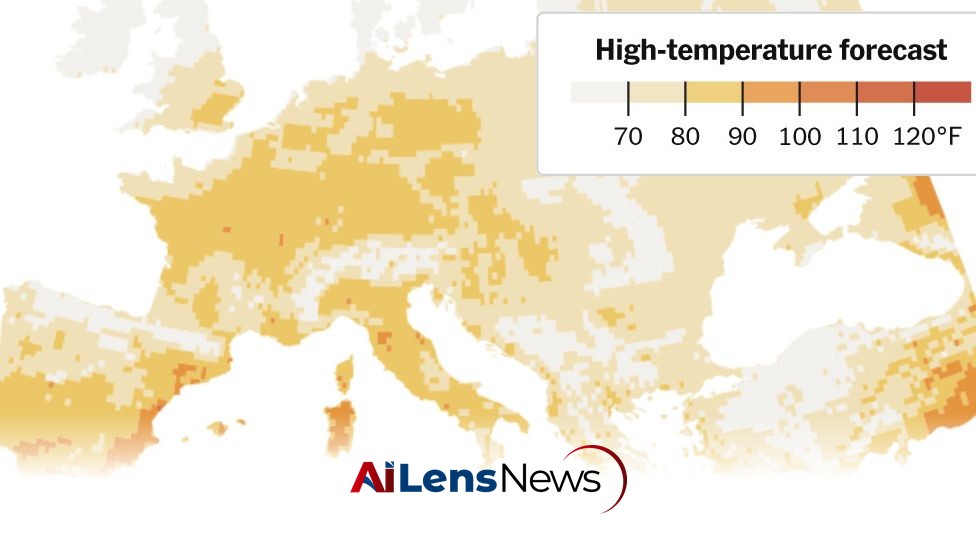


Intense heat waves are becoming more frequent and severe across Europe, with the continent warming faster than any other region. Explore the latest temperature forecasts.
Washington DC, United States Jul 26, 2026 ALN: Intense heat has contributed to record-breaking summer temperatures around the globe in recent years. The map above shows the latest forecast, indicating that Europe is currently experiencing some of the most severe heat conditions on record. This phenomenon is not isolated to Europe; rather, it is part of a broader trend of extreme weather events linked to climate change, which has become an increasingly pressing issue for scientists, policymakers, and the general public alike.
While the degree to which a single heat event is influenced by climate change requires specific attribution studies, scientists have no doubt that heat waves around the world are becoming hotter, more frequent, and longer-lasting. Europe, in particular, is warming faster than any other continent, a fact that has significant implications for its environment, economy, and public health. The European continent has seen a rise in average temperatures that is approximately 1.5 times greater than the global average, which raises concerns about the region's vulnerability to climate-related impacts.
The past 11 years have been the hottest on record. The World Meteorological Organization confirmed in March 2025 that 2024 was the hottest year and the first year in which Earth’s surface was more than 1.5 degrees Celsius above its average during the preindustrial era. This milestone is particularly alarming as it surpasses the threshold set by the Paris Agreement, which aims to limit global warming to well below 2 degrees Celsius, with efforts to limit the temperature increase to 1.5 degrees Celsius. Exceeding this threshold raises concerns about the potential for catastrophic climate impacts, including more frequent and severe weather events, rising sea levels, and disruptions to ecosystems. For example, the melting of polar ice caps and glaciers contributes to rising sea levels, threatening coastal communities across Europe.
The bouts of exceptional warmth are driven in large part by the continued emissions of heat-trapping gases, mainly from the burning of fossil fuels. The reliance on coal, oil, and natural gas for energy production has led to a significant increase in greenhouse gas concentrations in the atmosphere. According to various studies, the concentration of carbon dioxide (CO2) has risen to levels not seen for millions of years, contributing to the greenhouse effect that traps heat in the Earth’s atmosphere. This increase in greenhouse gases is largely attributed to human activities, including industrial processes, transportation, and deforestation, which underscores the need for a transition to more sustainable energy sources.
As Europe grapples with these extreme temperatures, various sectors are feeling the impact. Agriculture is particularly vulnerable, with heat stress affecting crop yields and livestock productivity. Farmers are facing challenges such as droughts, which can lead to water shortages, and reduced harvests, impacting food security. The agricultural sector is crucial for the economy and sustenance of the population; therefore, the implications of changing climate conditions on crop viability and livestock health can lead to increased food prices and potential shortages. Additionally, the economic implications are significant; higher temperatures can lead to increased energy demand for cooling, straining power grids and leading to higher electricity prices. This can disproportionately affect lower-income households, exacerbating existing inequalities.
Public health is another critical area impacted by rising temperatures. Heatwaves pose direct health risks, particularly for vulnerable populations such as the elderly, children, and those with pre-existing health conditions. Heat-related illnesses, including heat exhaustion and heat stroke, can become more common during periods of extreme heat. Furthermore, higher temperatures can exacerbate air quality issues, leading to respiratory problems and other health complications. The healthcare systems in Europe may become increasingly burdened as they address these heat-related health crises, necessitating a proactive approach to public health planning and resource allocation.
In response to these challenges, European countries are implementing various strategies aimed at mitigating the effects of climate change and adapting to the new reality of a warmer climate. Initiatives include investing in renewable energy sources, enhancing energy efficiency, and developing infrastructure that can withstand extreme weather events. The European Union has set ambitious climate targets, including achieving carbon neutrality by 2050, which involves reducing greenhouse gas emissions across all sectors of the economy. This transition not only aims to address climate change but also seeks to create green jobs and stimulate economic growth in sustainable industries.
Additionally, governments are focusing on building resilience within communities to better cope with the impacts of climate change. This includes improving public health systems to manage heat-related illnesses, enhancing water management practices to address drought conditions, and investing in sustainable agriculture practices that can withstand changing climate conditions. Urban planning is also being re-evaluated to incorporate green spaces and cooling measures that can help mitigate the urban heat island effect, which exacerbates temperature extremes in cities.
Moreover, public awareness and engagement are crucial components of the response to climate change. Education campaigns aimed at informing citizens about the importance of reducing carbon footprints and participating in sustainability initiatives are essential. Grassroots movements and community-led projects are gaining traction, encouraging individuals to take action at the local level to combat climate change. These initiatives often emphasize the importance of collective action and community resilience, highlighting that individual choices can contribute to broader societal change.
International cooperation is also vital in addressing the global nature of climate change. Countries must work together to share knowledge, technologies, and resources to effectively tackle the challenges posed by rising temperatures. Global agreements, such as the Paris Agreement, serve as frameworks for nations to commit to reducing emissions and supporting climate adaptation and mitigation efforts. The interconnected nature of climate change means that actions taken in one part of the world can have far-reaching effects, making collaboration essential for effective solutions.
As Europe faces record-breaking heat, the implications of climate change are becoming increasingly apparent. The need for immediate and sustained action is critical to address the root causes of rising temperatures and to adapt to the changes that are already underway. The decisions made today will shape the future of the continent and the planet, underscoring the urgency of addressing climate change comprehensively and collaboratively. As the situation evolves, it will be essential for all stakeholders—governments, businesses, communities, and individuals—to engage in meaningful dialogue and take decisive steps towards a sustainable future.
To learn more about the latest developments in Climate Change, stay updated with our exclusive reports and analyses on AiLensNews.

