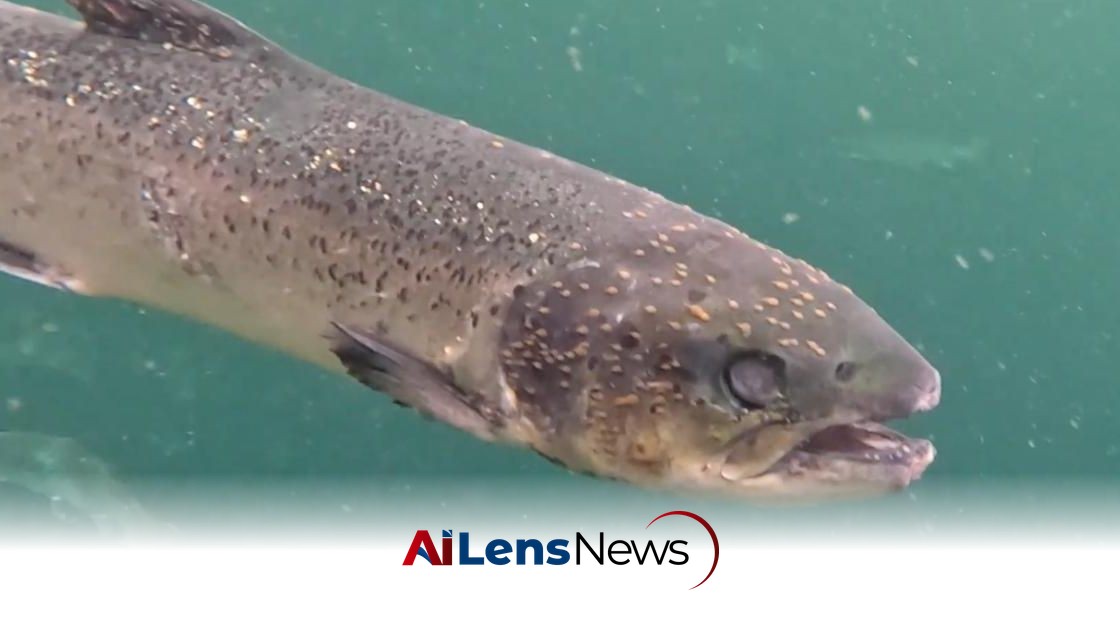


A recent scientific review has intensified calls for stronger regulations on salmon farming in Scotland, highlighting the impact of sea lice on wild salmon populations.
London, United Kingdom Jul 16, 2026 ALN: Campaigners have called on Scottish ministers to strengthen stopgap protections for wild salmon and sea trout after the Scottish Government’s own scientific advisor rejected claims of “misrepresentation” of scientific findings by the regulator as “unfounded”.
Nick Underdown, Scotland Director at WildFish, stated: “For years, the salmon farming industry has been stalling regulation by arguing that the science linking farm-origin sea lice to impacts on wild salmon has been exaggerated or misrepresented. The Scottish Government’s most senior scientific adviser on marine issues has now examined that claim and rejected it.”
Ministers tasked the Chief Scientific Adviser Marine, Professor Mark Innall, to conduct a major review examining the scientific basis underpinning the Scottish Government’s proposed Sea Lice Regulatory Framework (SLRF) designed to tackle the problem of sea lice spilling out of salmon farms into the path of migrating fish.
Atlantic salmon are classified as an endangered species in Scotland, and fears for local extinction are rising as catches of salmon fell to record lows last year.
The report’s findings, published just before the election, come at a critical moment for salmon farming laws in Scotland. The report stated: “There is a genuine scientific debate/disagreement over the quantitative statistics regarding the effect of parasites on the return-rate of wild salmon… The view of CSA Marine is that the balance of scientific evidence does indicate a statistically significant negative impact of parasites on wild salmon return rates, and that this evidence is not misrepresented by the regulator.”
Government regulations imposed by the Scottish Environmental Protection Agency (SEPA) are currently subject to a mass appeal by multiple multinational corporations and members of Salmon Scotland that dominate Scotland’s farmed salmon production.
The salmon farm companies have repeatedly argued in recent years that the framework significantly overstates the risks posed to wild fish and have instead been lobbying for planning regulations to be streamlined.
In February last year, Fish Farming Expert reported that fish farmers had claimed SEPA’s modelling massively overestimates the number of lice on farms and the threat to wild smolts. Speaking to the industry publication, Mowi Scotland’s COO and Salmon Scotland director Ben Hadfield stated that the current SEPA model over predicts sea lice concentrations, “possibly by a factor of 4–5…” He also warned that unless it changes “it will over regulate and force unnecessary treatment of farm-raised salmon which will challenge the high welfare of stocks.”
Tavish Scott, chief executive of Salmon Scotland, also stated at that time: “We support better regulation, not more red tape. We want an evidence-based, scientifically backed framework that helps local authority planners make decisions.”
“We will continue to work with regulators on a better approach. SEPA’s current plan will not work and leaves business with no option but to appeal. Now that process is underway we can’t say anything further.”
The Scottish Government’s scientific review concludes that the “evidence indicates there is potential for significant effects on wild salmon populations.”
Nick Underdown stated: “Our salmon farms are operating in a regulatory vacuum. It’s unconscionable that the environmental impacts of salmon farming, as one of the key pressures on our wild salmon, are simply not being effectively controlled.”
“For anyone who has seen a young salmon riddled with sea lice in waters around salmon farms, it’s patently obvious that these farms are impacting wild salmon, but this report now puts to bed any doubts and confirms that sea lice pose a credible and significant risk to wild salmon populations.”
WildFish stated that the review is particularly significant because the industry’s ongoing legal challenge has delayed implementation of Scotland’s proposed sea lice regulatory regime. The charity has expressed concern that the industry’s appeal has effectively downgraded protection of wild Atlantic salmon at a time when populations remain in severe decline across much of Scotland.
In March 2025, WildFish and the Coastal Communities Network jointly submitted a complaint to Environmental Standards Scotland concerning the adequacy of Scotland’s sea lice regulatory framework.
The complaint raised concerns about how regulations would fail to meaningfully tackle farms with historically high levels of sea lice on salmon farms and prevent the cumulative effects of sea lice dispersing from multiple farms. That complaint remains under consideration, pending the outcome of the industry’s legal appeal.
John Aitchison, aquaculture forum chair of the Coastal Communities Network stated: “Whilst large multinational corporations are stalling long-awaited regulations, the sea lice counts on many Scottish salmon farms continue to regularly exceed the industry’s own Code of Good Practice thresholds. Many coastal communities have a deep connection to our wild salmon and depend on them for jobs. It would be tragic for that connection to be broken by regulations that are too weak to hold back the sector's relentless pursuit of profit.”
WildFish also stated that the review highlights important tensions within the operation of the framework itself.
Underdown described: “The Scottish Government’s top scientist for marine issues has explicitly warned of what he describes as a ‘performance paradox’, where salmon farms that have historically been infested by sea lice are in fact rewarded by being held to looser standards than farms without that track record. This should also give Ministers serious pause for thought. It suggests that while regulation is necessary, there remain important questions about whether the current framework is capable of driving the environmental improvements that Scotland’s wild salmon and sea trout populations urgently need.”
The charities argue that the scientific review should now help shift the debate away from arguments about whether sea lice pose a risk and towards the adequacy of Scotland’s regulatory response.
Aitchison added: “The new Parliament and Government have inherited a live dispute over salmon farming regulation. They now have clear scientific advice that sea lice from Scotland’s fish farms represent a significant risk to wild fish. They must ensure that Scotland’s regulatory response is equal to that challenge.”
A Salmon Scotland spokesperson stated: “WildFish is misrepresenting a complex issue by conflating Professor Inall’s scientific review with separate legal appeals.”
“Salmon Scotland welcomed the review and supports further development and independent validation of the framework. The appeals concern the legal basis on which the proposed controls were introduced, not Professor Inall’s findings.”
“We remain committed to an evidence-based framework that protects wild salmon and supports sustainable salmon farming.”
“Salmon Scotland’s leadership has long backed the idea of science-based regulation while attacking SEPA’s new Sea Lice Risk Framework as over-precautionary and poorly designed.”
A Scottish Government spokesperson stated: “As the new licence conditions are subject to live appeals, it would not be appropriate to comment at this time.”
To learn more about the latest developments in Pollution & Waste, stay updated with our exclusive reports and analyses on AiLensNews.

