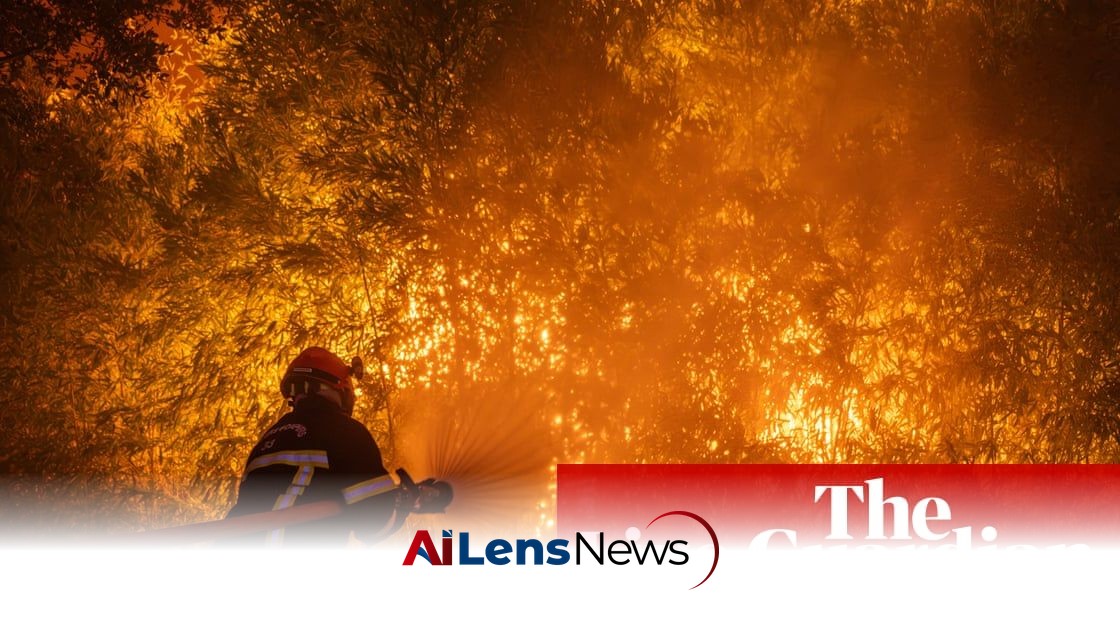


Wildfires in France and Spain have led to the evacuation of more than 300,000 people, with authorities battling extreme conditions and extensive damage.
London, United Kingdom Jul 26, 2026 ALN: France’s interior minister, Laurent Nuñez, has reported that the wildfire situation in certain areas of the country is "very unfavourable" following a challenging night of battling the blazes. In a post on X, Nuñez noted that the fire in the Gironde region in the south-west of France became "extremely virulent and unpredictable" at the start of the night, generating its own wind and spreading erratically toward the Bordeaux metropolitan area.
The Gironde region, known for its vineyards and picturesque landscapes, has faced significant challenges in recent years due to climate change, which has led to drier conditions and an increased risk of wildfires. This year, the situation has escalated dramatically, prompting officials to take swift action to protect residents and property. Despite some calming of the fire, it has caused extensive damage, with an area of 42,000 hectares burned and an additional five municipalities evacuated overnight. A total of 2,500 firefighters, including a Swiss firefighting team, 1,500 military personnel, and about 1,200 police have been deployed to combat the blazes in Gironde, according to Nuñez. Approximately 55,000 residents from the Gironde region have been evacuated for their safety.
The rapid spread of the fire has raised concerns among local authorities and residents alike. The unpredictable nature of wildfires, which can change direction and intensity in a matter of minutes, complicates firefighting efforts and poses a significant risk to those in the vicinity. In the south-west Landes region, where 3,600 hectares have already been scorched, Nuñez stated that "a flare-up at the front was tackled yesterday using aerial resources," emphasizing that "the edges remain highly active." Nearly 550 firefighters are mobilized in this area, and 36,000 people have been evacuated, highlighting the scale of the emergency response required.
Similarly, in the Var region in south-east France, Nuñez mentioned that nearly 3,000 individuals have been evacuated as a preventive measure, with 1,100 firefighters still engaged in efforts to contain the flames. The proactive evacuation of residents is a critical strategy employed by authorities to minimize the risk of casualties and injuries, as wildfires can quickly engulf populated areas.
“Meanwhile, other ongoing fires are currently being fought across the national territory, such as in Corsica and the Hautes-Alpes," Nuñez added, highlighting the widespread nature of the crisis. Corsica, an island in the Mediterranean Sea, is particularly vulnerable to wildfires due to its hot, dry summers and dense vegetation. The Hautes-Alpes, known for its mountainous terrain, also faces unique challenges in battling wildfires, as steep slopes can make access difficult for firefighting crews.
The situation has triggered one of the largest peacetime civilian evacuation operations ever carried out in France, with more than 250,000 people fleeing wildfires in both France and Spain. This unprecedented scale of evacuation underscores the severity of the crisis and the urgent need for coordinated emergency response efforts. The implications of such mass evacuations extend beyond immediate safety concerns, as displaced individuals often face challenges related to housing, healthcare, and mental health in the aftermath of such traumatic events.
Scientists have warned that climate breakdown is leading to more frequent and extreme weather events, which are exacerbating conditions that fuel wildfires and contribute to thousands of excess deaths. Europe is heating at approximately twice the global average rate, a trend that has significant implications for public health, agriculture, and ecosystems. The increasing intensity and frequency of wildfires are not only a direct threat to human life but also pose long-term challenges to biodiversity and environmental sustainability.
Spain’s environment ministry reported that 32 major forest fires have been recorded so far this year, compared to just seven during the same period in 2025. This stark increase in wildfire incidents reflects broader patterns of climate change impacting the Mediterranean region, where rising temperatures and prolonged drought conditions create a perfect storm for wildfire outbreaks. As the battle against the wildfires continues, authorities are urging residents to remain vigilant and heed evacuation orders to ensure their safety.
The situation in both France and Spain serves as a stark reminder of the urgent need for comprehensive strategies to address climate change and its impacts. Governments and communities are increasingly recognizing the importance of investing in wildfire prevention measures, including controlled burns, forest management, and community preparedness initiatives. Additionally, the role of international cooperation in addressing climate-related disasters is becoming more critical, as countries face similar challenges and can benefit from shared resources and expertise.
As the wildfires rage on, the emotional and psychological toll on affected communities cannot be overlooked. Many residents are grappling with the loss of homes, livelihoods, and cherished landscapes. The recovery process will likely be long and arduous, requiring not only physical rebuilding but also mental health support for those traumatized by the experience. Community resilience and solidarity will play a vital role in helping individuals and families navigate the aftermath of these devastating events.
In conclusion, the wildfires in France and Spain highlight the urgent need for action on climate change and disaster preparedness. As the frequency and intensity of such events continue to rise, it is imperative for governments, communities, and individuals to work together to develop effective strategies to mitigate risks and protect lives. The ongoing crisis serves as a call to action for all stakeholders to prioritize environmental sustainability and resilience in the face of an uncertain future.
To learn more about the latest developments in Environmental Policy, stay updated with our exclusive reports and analyses on AiLensNews.

