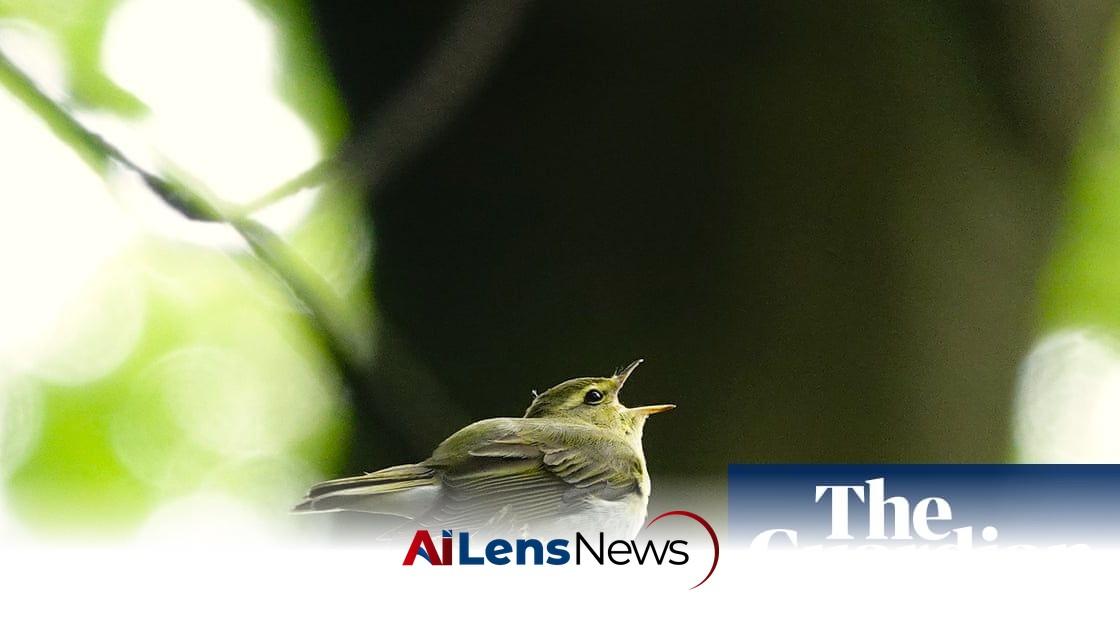


After a 50-year absence, wood warblers have returned to Buxton, Derbyshire, highlighting both the beauty and vulnerability of this species.
New Delhi, India Jul 7, 2026 ALN: Buxton, Derbyshire: What a fine sight it is to see one throwing its head back in song, especially after a 50-year absence. Yet this is a journey of vulnerability.
The wood warbler is one of my signature birds, a highlight of schooldays when a pair bred annually in Lightwood five minutes from my house. They were also widespread at other local sites and while we took them in our stride, they were always special too. Seeing the bird was less frequent than hearing its song, which comes down from the high canopy as a hard, brittle repeat note delivered with increased pace and volume, until it swells to a final exhilarating trill.
Yet the full impact of the species cannot truly be understood without observing the song’s delivery. His head is thrown back. His pink bill is agape and points skywards, often translucent against the sunlight, rather like the brilliant green of the beech leaves, to which he brings an unfathomable synaesthetic effect. His lemon breast is thrust forward and the long wings shiver as the sounds emerge, and with each climactic trill, the bird pauses, his wood is given back to silence, the warbler shifts location, and – way above your head – the song builds again.
Until last week, I hadn’t encountered this magic here since 1979, fitting a pattern of British decline that has seen its range withdraw northwards and numbers collapse by 82%. (We should note that Poland’s 9 million hectares of woodland, three times our own paltry total, holds a million pairs.) Even so, for an individual to return to this exact place aroused all sorts of questions, as well as a melancholy joy.
The likelihood is that such a late-singing bird, whose kind normally arrives in early May, failed to find a mate at a previous location in, say, Herefordshire or Wales. It then moved, probably at night, flying across unknown terrain, almost all of it treeless and chemically controlled, and unsuitable for a wood-dwelling bird. It passed over possibly at a kilometre above the ground, until some mysterious cue brought it down to the precise place where other wood warblers had sung and bred 50 years before. That feat alone by a bird weighing 10 grams, having already arrived from West Africa, speaks at once of extraordinary resilience and deep vulnerability.
The story of the wood warbler is not just a tale of individual birds but is emblematic of broader ecological shifts and the impact of human activity on wildlife. The decline of the wood warbler population in the UK has been attributed to several factors, including habitat loss, changes in land use, and the intensification of agriculture. These factors have resulted in the loss of the dense, mature woodlands that are crucial for the breeding and survival of this species. The wood warbler prefers deciduous forests, particularly those rich in oak and beech, where it can find the insects that make up a significant part of its diet.
In the past, the UK was home to a thriving population of wood warblers, with their presence marking the arrival of spring in many woodlands across the country. However, as urbanization and industrial agriculture expanded, many of these habitats were lost or degraded. The wood warbler's decline is a stark reminder of the fragility of our natural ecosystems and the urgent need for conservation efforts to protect the remaining habitats.
Conservationists have been working tirelessly to reverse the decline of the wood warbler and other species that share similar habitats. Initiatives aimed at restoring woodlands, creating wildlife corridors, and promoting sustainable land use practices are essential for the survival of these birds. The return of a wood warbler to Buxton may be a small but significant victory in the ongoing battle to protect our natural heritage.
Moreover, the wood warbler's journey from West Africa to the UK is a testament to the incredible migratory patterns of many bird species. Each year, millions of birds embark on perilous journeys across continents, facing numerous challenges along the way, including extreme weather, predators, and the ever-present threat of habitat destruction. For the wood warbler, the journey is particularly arduous, as it must navigate through a landscape that has changed dramatically over the decades.
Bird migration is not only a remarkable phenomenon but also a critical aspect of ecological balance. Migratory birds play essential roles in their ecosystems, from pollination to pest control, and their presence indicates the health of the . The decline of species like the wood warbler can serve as an early warning sign of broader ecological issues that could affect other wildlife and even human populations.
As we reflect on the bittersweet return of the wood warbler to Buxton, it serves as a call to action. The sight and sound of this beautiful bird remind us of the importance of preserving our natural s and the species that inhabit them. It is crucial for individuals, communities, and policymakers to come together to support conservation initiatives that protect and restore habitats, ensuring that future generations can also experience the joy of witnessing such remarkable wildlife.
In conclusion, the return of the wood warbler, while a moment of joy for birdwatchers and nature enthusiasts, underscores the challenges faced by many species in a rapidly changing world. It invites us to consider our role in the stewardship of the and the legacy we leave behind. As we strive to understand and protect the delicate balance of our ecosystems, we must remember that every song heard in the trees is a reminder of the intricate web of life that sustains us all.
In light of this, it is essential to foster a culture of appreciation for nature, encouraging people to engage with their local s and advocate for wildlife conservation. Whether through community initiatives, educational programs, or simply by spending time in nature, we can all contribute to a future where the wood warbler and countless other species can thrive once again.
To learn more about the latest developments in Conservation, stay updated with our exclusive reports and analyses on AiLensNews.

