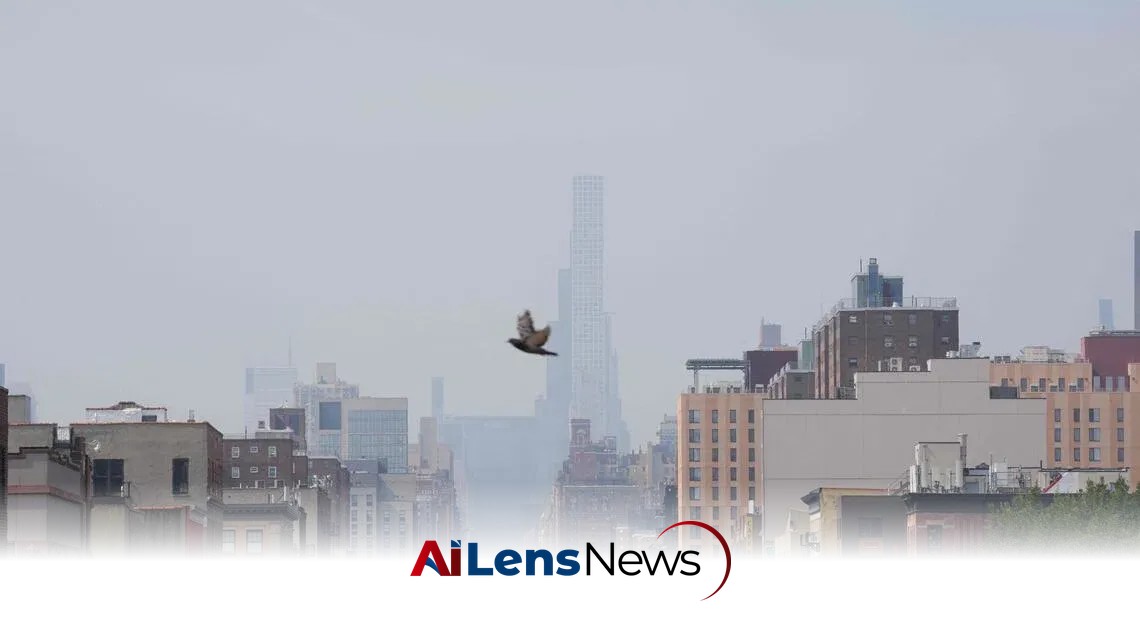


Wildfire smoke from Canada has severely impacted air quality across the eastern US, raising health concerns and affecting the World Cup final preparations.
Singapore, Singapore Jul 19, 2026 ALN: NEW YORK - Heavy, acrid wildfire smoke blanketed much of the eastern United States on July 18, marring preparations for the weekend’s highly awaited World Cup final to be held in an open stadium in New Jersey. The event, which features two of the world’s most prominent football teams, Argentina and Spain, is expected to draw large crowds and significant media attention, making the air quality issues particularly concerning.
The wildfires burning in Canada have sent noxious smog billowing across the border, affecting air quality in several major cities, including New York, Washington D.C., and various locations in the American Midwest. Residents in these areas have been urged to stay indoors due to dangerously low air quality levels. The situation has raised alarms among health officials, as prolonged exposure to such conditions can lead to serious respiratory issues and other health complications.
At one point on July 18, the smoke made New York the most polluted city in the world, followed closely by Toronto and Washington, according to air tracker IQAir. This level of pollution is particularly alarming considering that urban areas are often already burdened with various pollutants from traffic, industry, and other sources. The sudden spike in pollution due to wildfire smoke can exacerbate existing health problems for vulnerable populations, including those with asthma, heart disease, and other chronic conditions.
The marquee World Cup match, pitting Argentina against Spain, will be played on July 19 in an open-air stadium across the river from Manhattan, where the skyline was obscured by dense smoke and people wore masks outdoors. The visibility issues not only affect public health but also pose logistical challenges for event organizers, who must ensure the safety and well-being of fans and athletes alike. Tournament organizers are “monitoring closely,” White House World Cup task force executive director Andrew Giuliani told a briefing, indicating that contingency plans may need to be activated depending on the air quality conditions leading up to the match.
But a respite of sorts was expected to come in the form of heavy storms hitting the Big Apple on July 18, which could wash some of the smoke away – but also trigger flash flooding and dangerous winds. Weather patterns can be unpredictable, and while rain might alleviate some of the air quality issues, it could also create new hazards for residents and emergency services. New York Mayor Zohran Mamdani asked residents to stay indoors and avoid travel during this time, emphasizing the dual threat posed by both the smoke and the incoming storms.
“Thunderstorms are expected to bring damaging winds strong enough to down trees and power lines, along with heavy rainfall that could cause flash flooding,” Mamdani wrote on X, a social media platform. This highlights the interconnected nature of climate events, where one emergency can compound another, leading to a more complex situation for city officials and emergency responders.
“Smoke will continue to affect the area through this afternoon,” the US National Weather Service said, underlining the ongoing risk to public health. In Washington, the city’s department of homeland security and emergency management reported that air quality was “unhealthy for at-risk groups,” including children and the elderly, urging people to limit time outdoors. Such advisories are crucial, as they help to mitigate health risks among the most vulnerable populations.
As of the morning of July 18, more than 950 wildfires were raging across Canada, according to the Canadian Wildland Fire Information System. This unprecedented number of wildfires is indicative of a broader trend linked to climate change, which has led to hotter, drier conditions that can fuel wildfires. The implications of these wildfires extend beyond immediate health concerns, as they also contribute to long-term environmental degradation and climate instability.
US President Donald Trump has blamed Canada for the smoke pollution, threatening to impose additional tariffs and accusing the northern neighbor of “willful negligence” by “not properly maintaining” its forests. This political rhetoric adds another layer to the situation, as it can strain diplomatic relations between the two countries, which have historically cooperated on various environmental and emergency management issues. The accusation of negligence also raises questions about forest management practices and policies in both nations, prompting discussions about how to better prevent and manage wildfires in the future.
Ontario province’s premier, Doug Ford, blasted the accusations as shameful and “absolutely unacceptable,” noting that Canadian crews have routinely deployed to US states to help with wildfire and other emergency operations. Ford’s response underscores the importance of mutual aid agreements and cooperation in addressing natural disasters, emphasizing that while the current situation is dire, collaboration is often necessary to effectively manage such crises. “You don’t get on and start threatening and criticizing because guess what? One day it’s going to be your turn,” Ford told journalists in Thunder Bay, where many residents have evacuated due to the wildfires.
“We’re going to be down there without hesitation to support our neighbors – which we should be,” he added, reinforcing the idea that cross-border cooperation is essential in tackling environmental challenges that do not respect national boundaries.
Advocates have stressed the connection between repeated episodes of wildfire smoke and climate change, calling for more robust policies and actions to combat the underlying causes of these natural disasters. Climate change is increasingly recognized as a significant driver of extreme weather events, including droughts and heatwaves that can set the stage for wildfires. The growing frequency and intensity of wildfires pose a challenge not only for public health but also for emergency response systems, infrastructure, and local economies.
The implications of the current wildfire situation extend beyond immediate health concerns and political tensions. They highlight the urgent need for comprehensive climate action, better forest management practices, and enhanced preparedness for natural disasters. As the world grapples with the realities of climate change, events like these serve as a stark reminder of the interconnectedness of environmental issues and the necessity of collective action to protect public health and safety.
In conclusion, the heavy wildfire smoke affecting the eastern United States underscores a complex interplay of environmental, health, and political factors. As preparations for the World Cup final continue amidst these challenges, the situation serves as a critical reminder of the ongoing impacts of climate change and the pressing need for collaborative solutions to address these multifaceted issues.
To learn more about the latest developments in Pollution & Waste, stay updated with our exclusive reports and analyses on AiLensNews.

