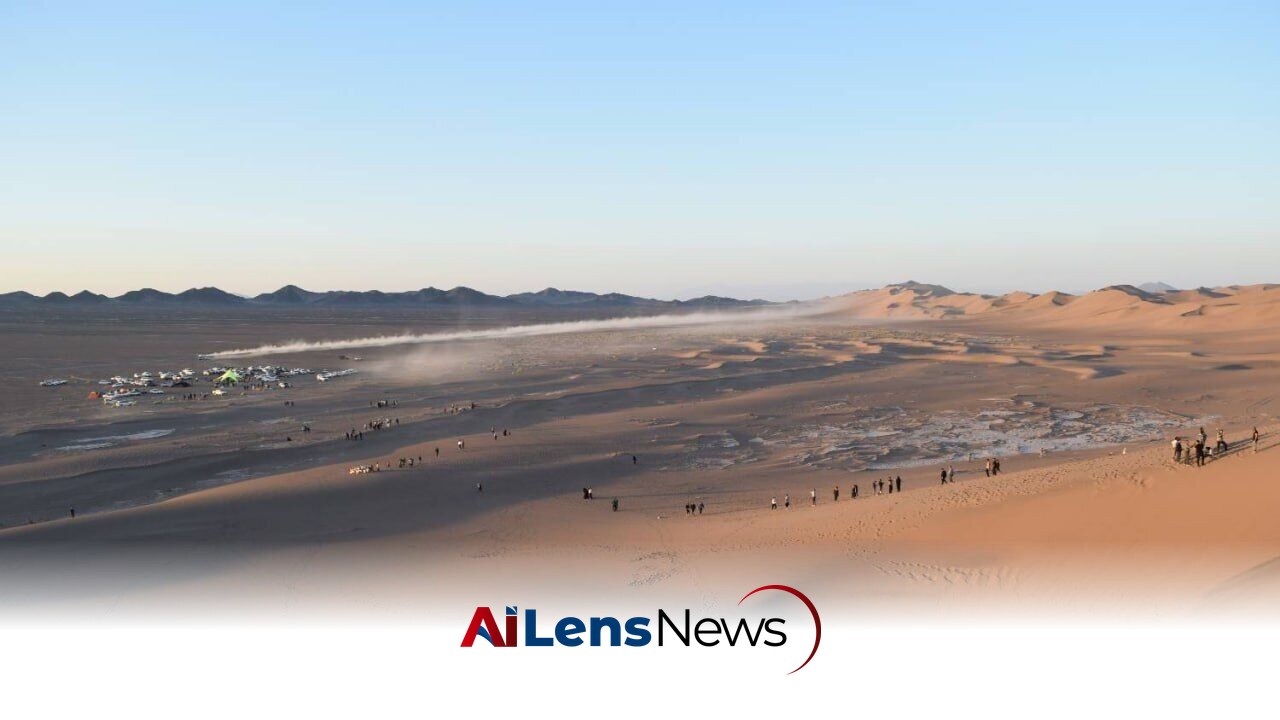



Iran's Lut Desert, a UNESCO World Heritage site, is poised for significant advancements in scientific research and geotourism, experts say.
Tehran, Iran Jul 31, 2026 ALN: Iran’s Lut Desert, recognized as one of the hottest places on Earth and designated a UNESCO World Heritage site, is increasingly acknowledged for its potential as a hub for scientific research, education, and nature-based tourism. This was a focal point during a recent online conference marking the 10th anniversary of the desert’s inscription on the World Heritage list. The event was organized by the University of Tehran’s International Desert Research Center and the Lut World Heritage Base, and it attracted specialists from various fields including geomorphology, environmental science, geology, climatology, and tourism.
The Lut Desert, known locally as Dasht-e Lut, is characterized by its extreme temperatures and unique geological features. Researchers at the conference emphasized the site’s scientific, ecological, and management values, underscoring its importance not only as a natural wonder but also as a source of valuable data for understanding climate and environmental changes.
Nasser Mashhadi, a geomorphologist from the University of Tehran, described the Lut Desert as a natural museum filled with diverse wind- and water-shaped landforms. Among these, he highlighted the yardangs, known locally as kaluts, which are elongated ridges formed by wind erosion. The desert also features vast sand dunes, alluvial plains, and the rare geological phenomenon of “armoured mud balls,” which are clumps of mud that have hardened and are often found in the region. Mashhadi pointed out that the geomorphological diversity of the desert provides an exceptional setting for scientific research and education, as well as opportunities for developing geotourism.
Hesam Ahmadi Birgani, a faculty member at the University of Urmia’s Faculty of Natural Resources, contributed to the discussion by noting that Iran’s sand seas span approximately 5 million hectares, placing the country among those with the largest expanses of sandy deserts globally. He argued that these sand landscapes should be viewed as economic and tourism opportunities rather than threats. Birgani emphasized the potential for sustainable tourism, which could be developed through attractions such as the region's dark skies, the profound silence of the desert, and the involvement of local communities in tourism initiatives. He also highlighted the increasing industrial uses of sand, which could lead to economic benefits if managed responsibly.
Hamidreza Naseri, head of the International Desert Research Center at the University of Tehran, presented groundbreaking findings related to the Lut Desert’s surface temperature. He mentioned that previous satellite observations from NASA’s Moderate Resolution Imaging Spectroradiometer (MODIS) had estimated land surface temperatures in Lut at approximately 70.7 degrees Celsius, with some analyses suggesting temperatures could approach 80 degrees Celsius. In a significant development, Naseri reported that the first field measurements conducted in July 2022 recorded a maximum surface temperature of 73.5 degrees Celsius, thereby confirming the satellite data and reinforcing Lut’s status as one of the hottest places on Earth. He emphasized that the desert serves as a natural laboratory for research on climate, geography, and the impacts of climate change.
In addition to its extreme temperatures, Naseri highlighted the desert’s biodiversity, which includes heat- and drought-resistant plant species such as Calligonum leucocladum and Haloxylon persicum. These plants, along with animal species adapted to the harsh environmental conditions, contribute to the ecological richness of the desert. The presence of such biodiversity underscores the importance of conservation efforts in the region.
Mehran Maqsoudi, director of the Lut World Heritage Base, provided insights into the significance of the site’s World Heritage inscription. He noted that Lut became Iran’s first natural property to be listed by UNESCO in 2016 under criteria (vii) and (viii), which pertain to the site’s outstanding natural beauty and its geological features. Maqsoudi discussed studies of the permanent Shur River and observed changes over the past two decades, including the emergence of young lakes in parts of the desert, which have increased the site’s scientific value and presented new management challenges.
Maqsoudi also pointed out that Lut’s kaluts are recognized as the tallest, longest, and most continuous yardangs known worldwide, reaching heights of over 225 meters and extending for more than 40 kilometers. These features are not only visually striking but also serve as critical indicators of the geological processes at work in the region.
As the conference concluded, participants reached a consensus on the need for science-based management strategies to protect the Lut Desert. They emphasized the importance of greater involvement from local communities in conservation efforts and the necessity for continued climate monitoring. Additionally, stronger national and international cooperation was deemed essential for effective management of the site. The participants called for a paradigm shift in how the desert is perceived—moving from viewing it as a threat to recognizing it as a valuable opportunity for research and responsible tourism.
The implications of this shift are significant. By promoting sustainable tourism and scientific research, the Lut Desert can serve as a model for other arid regions facing similar challenges. The integration of local communities into tourism initiatives could provide economic benefits while fostering a sense of stewardship for the environment. Furthermore, ongoing research in the desert could yield important insights into climate change and its effects on fragile ecosystems, contributing to global knowledge and understanding.
In conclusion, the Lut Desert stands as a testament to the intricate relationship between nature and science. Its extreme conditions, unique geological formations, and rich biodiversity present both challenges and opportunities. As researchers and policymakers work together to harness the desert's potential, the Lut Desert may not only enhance our understanding of natural processes but also promote sustainable tourism that respects and preserves its remarkable landscapes for future generations.
To learn more about the latest developments in Conservation, stay updated with our exclusive reports and analyses on AILensNews.

