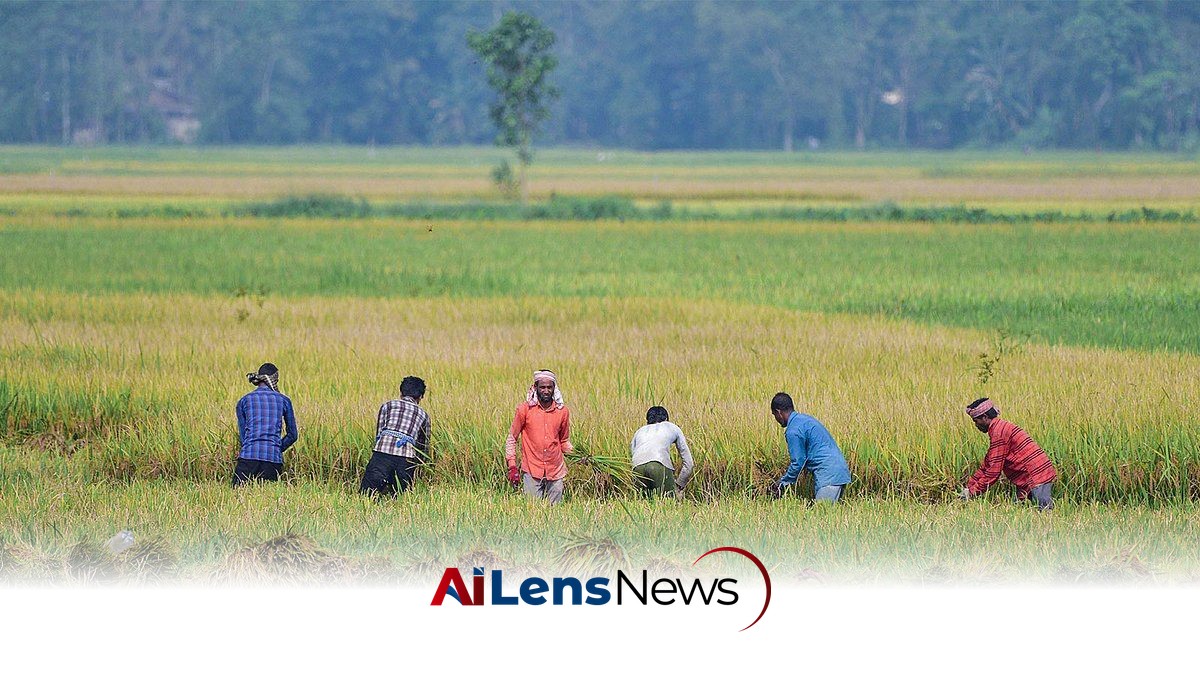


As El Nino conditions intensify, Nalgonda's farmers are advised to reduce paddy cultivation and switch to low-water crops to mitigate losses.
Hyderabad, India Jul 17, 2026 ALN: With El Nino conditions expected to tighten their grip over Nalgonda, the district agriculture authorities have warned farmers against relying on water-intensive paddy cultivation, cautioning that falling groundwater levels and a possible power shortage for agricultural motors could leave them staring at heavy losses.
Officials said groundwater levels have already declined and are likely to fall further over the next two months if prevailing conditions continue. The groundwater table, which stood at 8.68 metres at the end of June last year, was recorded at 7.62 metres by the end of June 2026. This significant drop in groundwater levels is raising alarms among agricultural experts and local authorities, who are increasingly concerned about the sustainability of current farming practices in the region.
The warning comes as farmers who have sown rain-fed crops and raised paddy nurseries prepare to begin transplantation using borewells, open wells, and lift irrigation. In Telangana’s highest paddy-producing district, the department has advised farmers using borewell and well irrigation to restrict paddy cultivation to 25% of their land and shift the remaining 75% to dry-land crops. This shift is not merely a recommendation but a necessary adaptation to the changing climatic conditions that threaten traditional agricultural practices.
The department also warned that irrigation projects such as Nagarjunasagar, AMRP, Musi, and Dindi are unlikely to receive adequate inflows. With low storage expected to affect hydel power generation, officials said supplying sufficient electricity to borewell and open-well motors could also become difficult. This situation poses a dual threat: not only are farmers facing the challenge of reduced water availability, but they are also contending with potential power shortages that could further hinder their ability to irrigate crops.
Instead, farmers have been urged to prioritise low-water crops such as pigeon pea (kandi), sorghum (jonna), pearl millet (sajja), finger millet (raagi), and foxtail millet (korra). These crops are more resilient to dry conditions and require significantly less water compared to traditional paddy cultivation. The shift towards these drought-resistant crops is part of a broader strategy to enhance food security and ensure that farmers can sustain their livelihoods even in the face of adverse climatic conditions.
The implications of this shift are far-reaching. For generations, paddy has been the staple crop in Nalgonda, and a significant part of the local economy relies on its cultivation. Transitioning to dry-land crops may not only require changes in farming techniques but also adjustments in market strategies, as these crops often have different harvesting and selling periods. Farmers will need to educate themselves about the best practices for cultivating these alternative crops to ensure successful yields.
Moreover, the socio-economic impact of this transition cannot be overlooked. Many farmers depend on the income generated from paddy, and a sudden shift to different crops could lead to short-term financial instability. It may also require investments in new seeds, equipment, and possibly even training in new agricultural techniques. The agricultural department may need to step in with support programs to facilitate this transition, offering financial assistance, resources, and education to farmers.
Additionally, the changing climate patterns influenced by El Nino are not isolated to Nalgonda. They represent a larger trend affecting agricultural practices across the globe. As weather patterns become increasingly unpredictable, farmers everywhere are being forced to adapt. This could lead to a reevaluation of agricultural policies and practices on a broader scale, as governments and organizations seek to ensure food security in the face of climate change.
In the context of India, where agriculture is a crucial part of the economy and a primary source of livelihood for a large segment of the population, the challenges posed by climate change are particularly pressing. The government may need to invest more heavily in research and development for drought-resistant crop varieties and sustainable agricultural practices. Furthermore, improving irrigation infrastructure and water management systems will be essential in mitigating the effects of climate variability.
As farmers in Nalgonda prepare for the upcoming planting season, the stakes are high. The decisions they make now will not only impact their immediate harvest but also set the course for their long-term agricultural viability. The urgency of adapting to these new conditions cannot be overstated, and the collaboration between farmers, agricultural officials, and policymakers will be key to navigating this challenging landscape.
In conclusion, the shift from water-intensive paddy cultivation to dry-land crops in Nalgonda is a necessary response to the looming threats posed by El Nino and declining groundwater levels. While this transition presents challenges, it also offers an opportunity for farmers to diversify their crops and build resilience against climate change. The future of agriculture in Nalgonda will depend on the ability of its farmers to adapt and innovate in the face of these pressing environmental challenges.
The El Nino phenomenon, characterized by the periodic warming of sea surface temperatures in the central and eastern tropical Pacific Ocean, has significant implications for weather patterns globally. Its effects can lead to altered rainfall patterns, droughts in some regions, and excessive rainfall in others. In India, El Nino years have historically correlated with below-average monsoon rainfall, which can have dire consequences for the agricultural sector, particularly in states like Telangana, where paddy is a dominant crop.
Groundwater depletion is a critical issue in many agricultural regions of India, where over-extraction for irrigation purposes has led to declining water tables. The reliance on borewell irrigation has increased, but as groundwater levels fall, the sustainability of this practice comes into question. Farmers in Nalgonda, like many others across the country, face the challenge of balancing immediate water needs with long-term sustainability. The shift to dry-land crops could serve as a model for other regions facing similar circumstances, highlighting the need for adaptive strategies in agriculture.
The agricultural landscape in India is also shaped by government policies aimed at ensuring food security and supporting farmers. The introduction of crop insurance schemes, minimum support prices for certain crops, and initiatives for sustainable farming practices are all part of a broader effort to stabilize the agricultural economy. However, these measures must be continually assessed and adapted in light of changing climatic conditions and the challenges posed by phenomena like El Nino.
As Nalgonda farmers navigate this transition, they will likely encounter both opportunities and challenges. The cultivation of drought-resistant crops may lead to diversification of income sources, potentially reducing dependency on a single crop. However, the initial phase of transition could be fraught with uncertainty, as farmers adjust to new crop cycles and market dynamics. Support from agricultural extension services, research institutions, and local cooperatives will be vital in providing the necessary guidance and resources for farmers during this period.
In summary, the situation in Nalgonda serves as a microcosm of the broader challenges facing agriculture in the context of climate change. The proactive steps being taken by farmers and agricultural authorities in response to the anticipated impacts of El Nino reflect a growing recognition of the need for resilience in agricultural practices. As the region adapts to these changes, the lessons learned could inform strategies for other agricultural communities across India and beyond, ultimately contributing to a more sustainable and secure food system in the face of climate variability.
To learn more about the latest developments in Climate Change, stay updated with our exclusive reports and analyses on AiLensNews.

